
Driving a project to develop a stylish electric motorcycle that does not fall over
“Electric mobility is now drawing attention as part of efforts toward the SDGs and reducing CO₂ emissions. Among them, I think the reason two-wheelers, which excel in agility and light handling, have been slow to spread is that there are no attractive electric motorcycles.”
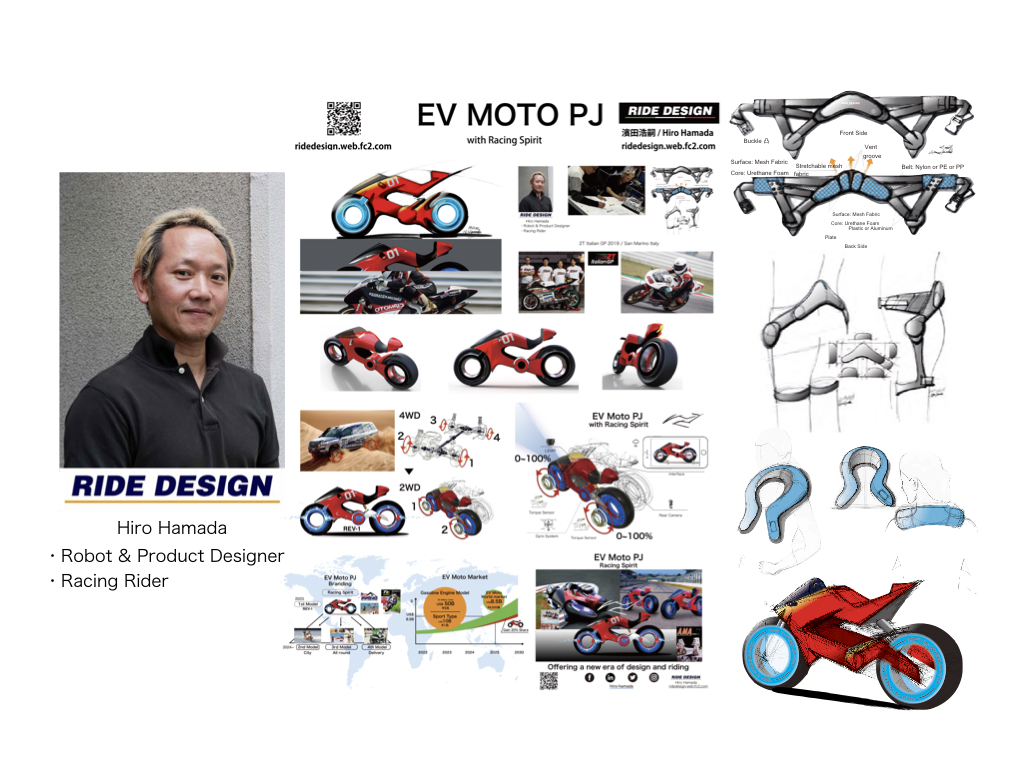
So says Hamada, head of the design studio RIDE DESIGN. Hamada is a product designer and motorcycle racer who draws on personal experience to pursue the ideal electric motorcycle, and also teaches in the car design and robot development departments of a design college.
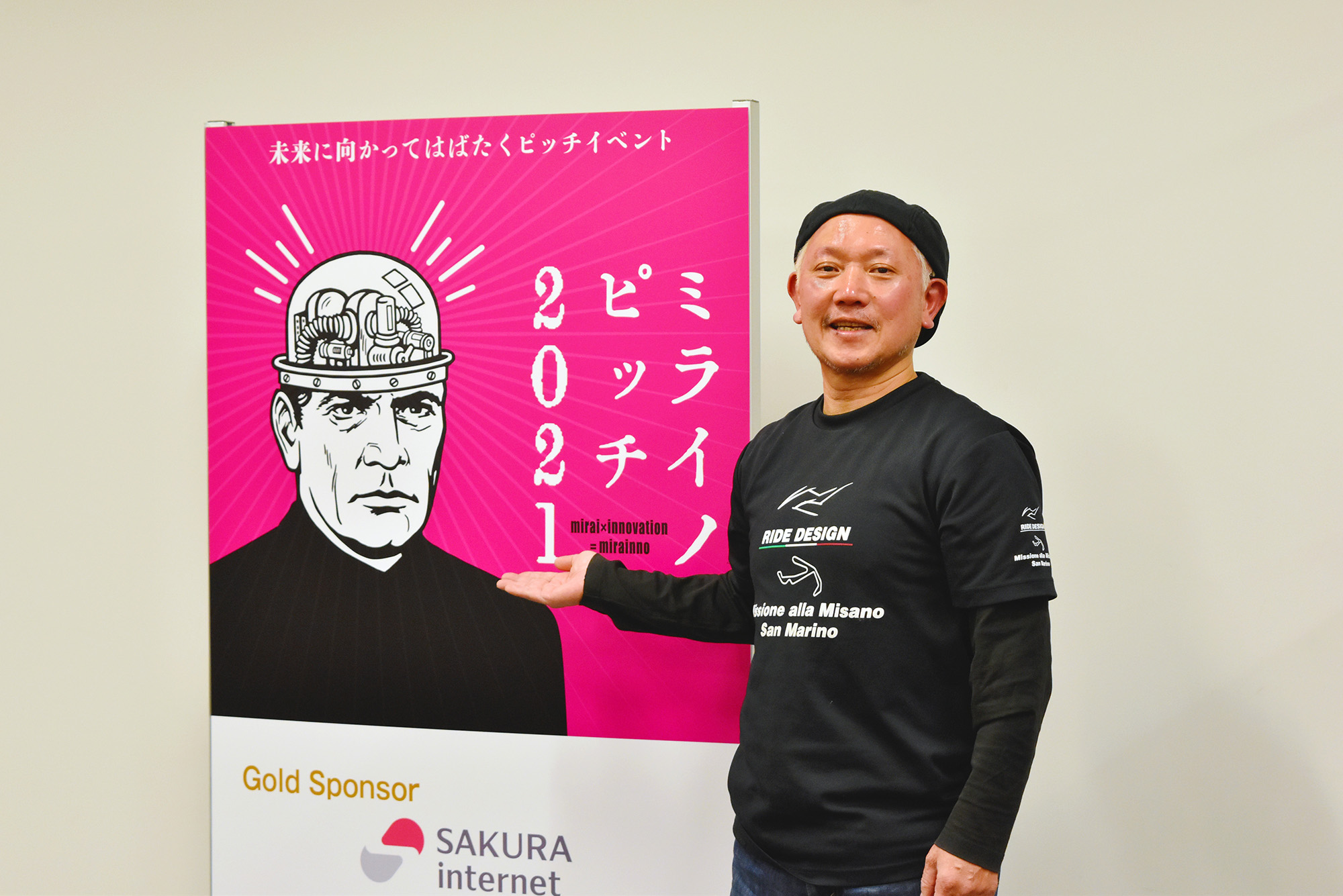
In December 2021, the Non-Falling Electric Motorcycle / EV MOTO development project, presented at Mirainno Pitch 2021, a pitch event specializing in ICT, won an award in the general division. The plan is to greatly reduce motorcycle slip accidents, which number 100,000 a year in Japan and the United States combined, with an electric motorcycle equipped with original control technology.
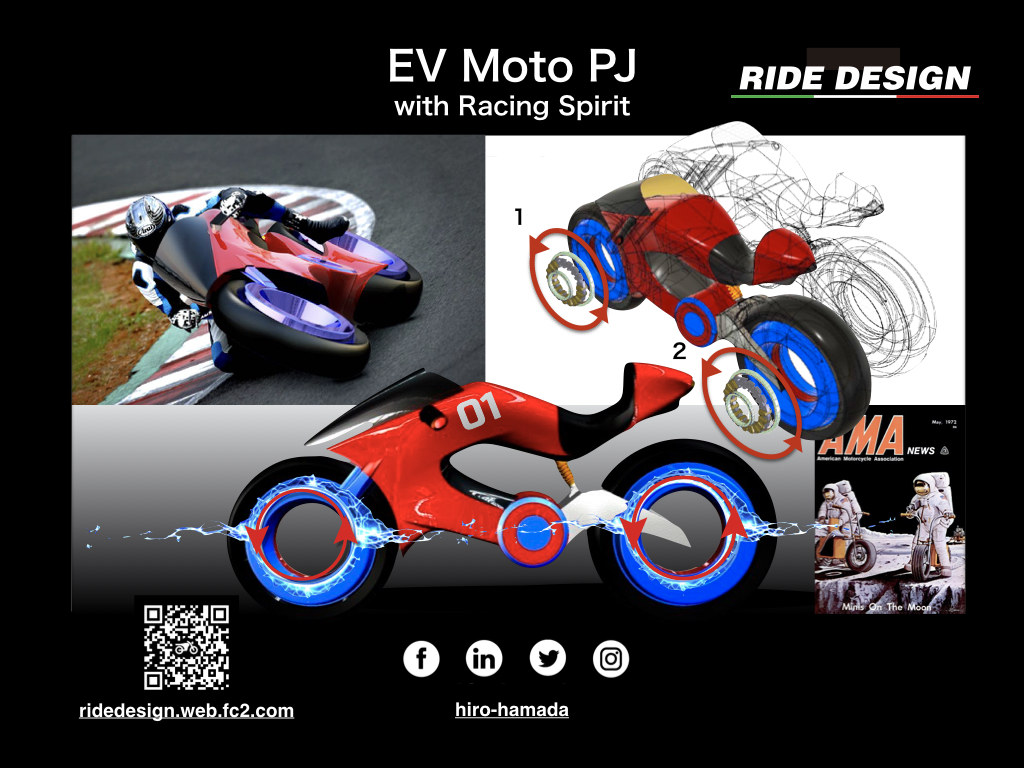
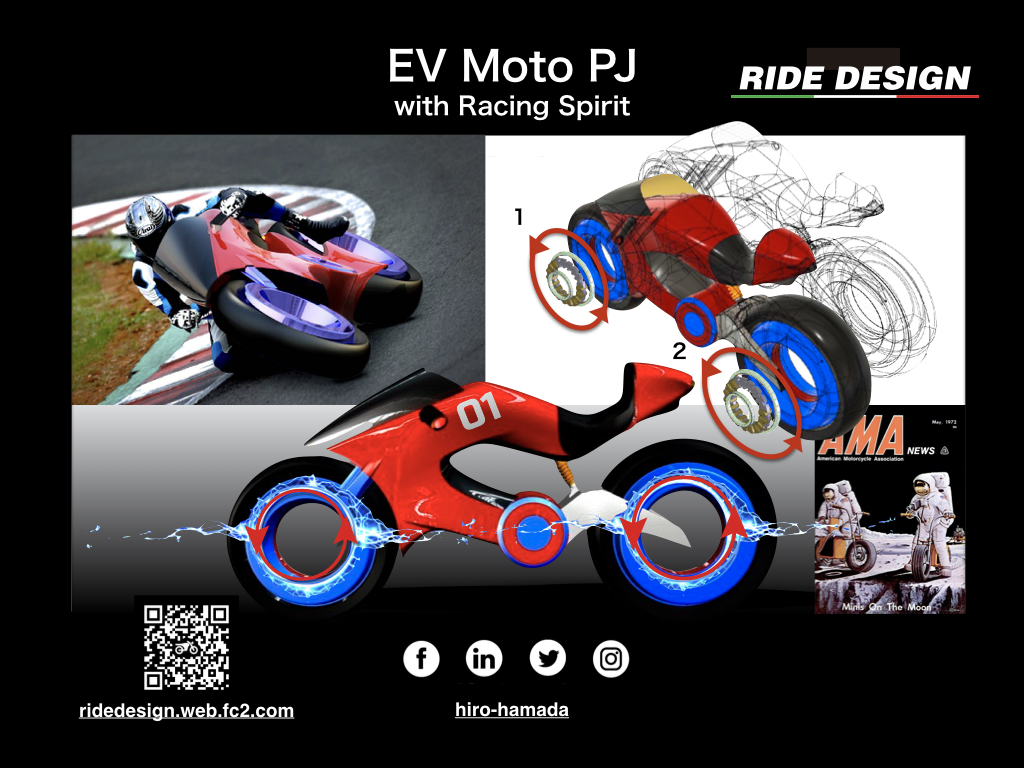
“Most motorcycles send engine power only to the rear wheel, so once the tire slips, it turns into a slip accident. Preventing accidents depends on the rider’s skill. Four-wheel-drive vehicles, however, control all four tires in real time to compensate for a slipping tire. We apply that to two-wheelers: even if the rear wheel slips, the front wheel’s drive control prevents a fall,” Hamada explains. Against the strong preconception that two-wheelers are rear-wheel drive, Hamada found a way to drive both the front and rear wheels through electrification.
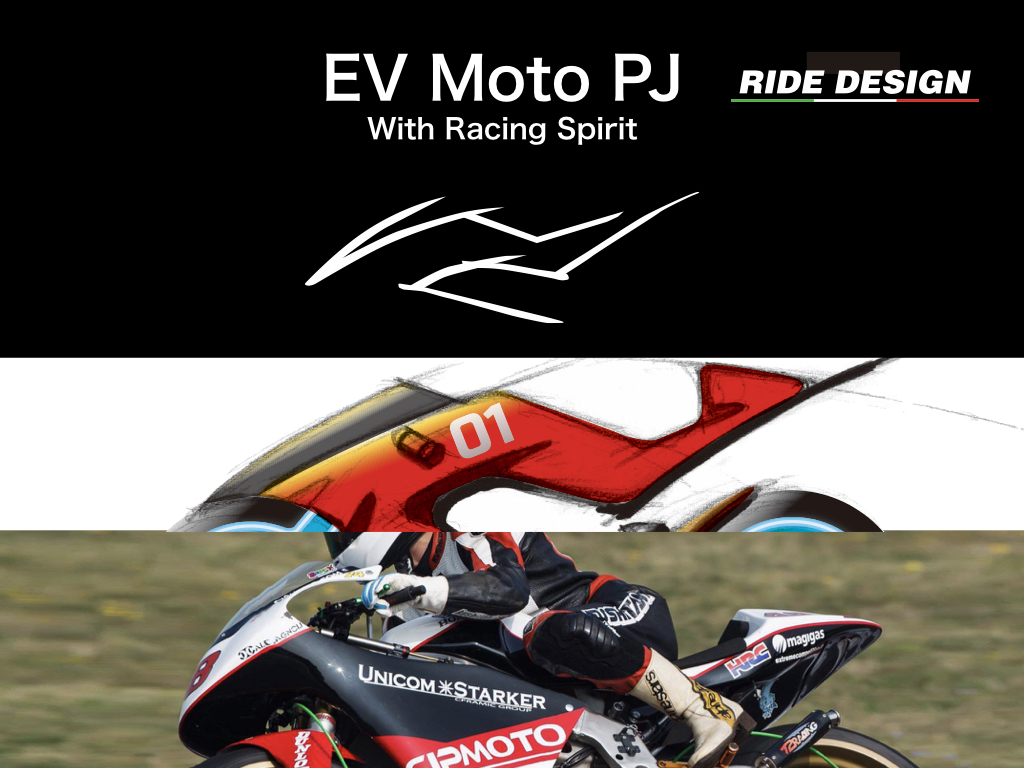
The concept model has a stylish design that makes use of the characteristics of electric power, with in-wheel motors in both the front and rear wheels. The normal front-to-rear drive ratio is 50:50, but on slippery surfaces the drive force is optimally controlled between 40:60 and 70:30 to match road conditions, so the bike can be ridden safely without slipping and falling.
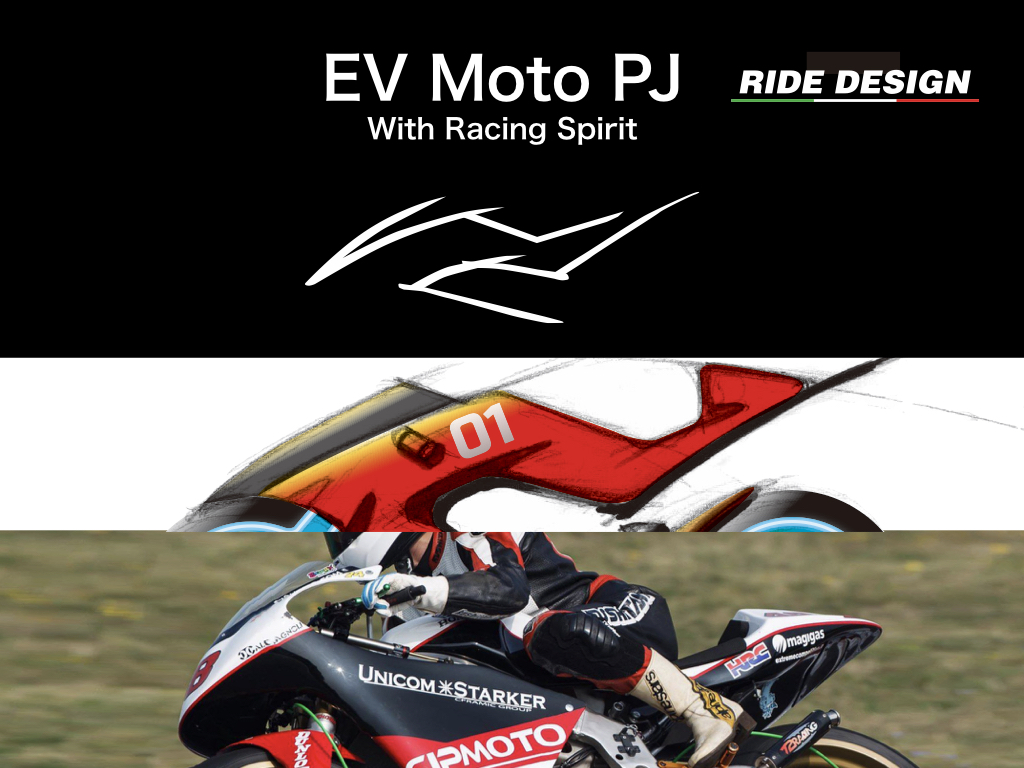
“If a highly safe electric motorcycle is completed, it could become a means of transportation for people who avoided two-wheelers as dangerous, and for older people in mountain villages and depopulated areas. With its high agility on rough roads, it could also contribute to rescue activities in disasters and to polar exploration, such as in Antarctica,” Hamada says, also proposing ways electric motorcycles can solve social issues.
The battery targets a range of 300 km, and charging will support various methods, such as swappable cartridges. Plans include adopting the latest lithium batteries that charge in three minutes, compared with the usual three hours for a scooter, and preparations are steadily under way for a prototype debut in 2023.
Experiences in Silicon Valley and at an international race in Italy built confidence
Hamada first proposed the Non-Falling Electric Motorcycle EV/MOTO development project at Osaka City’s “Silicon Valley Dispatch Program 2014,” run by OIH.
Selected as a member, Hamada stayed in Silicon Valley in the United States for a week, visited Stanford University and VCs, and had the chance to present. During that time, Hamada refined the business plan with advice from mentors and other participants. At the presentation on the last day, Hamada received the President’s Award from the VC SunBridge.
“I was very happy to be told that there was potential in my vision of becoming a global mobility maker like Tesla, but for two-wheelers.”
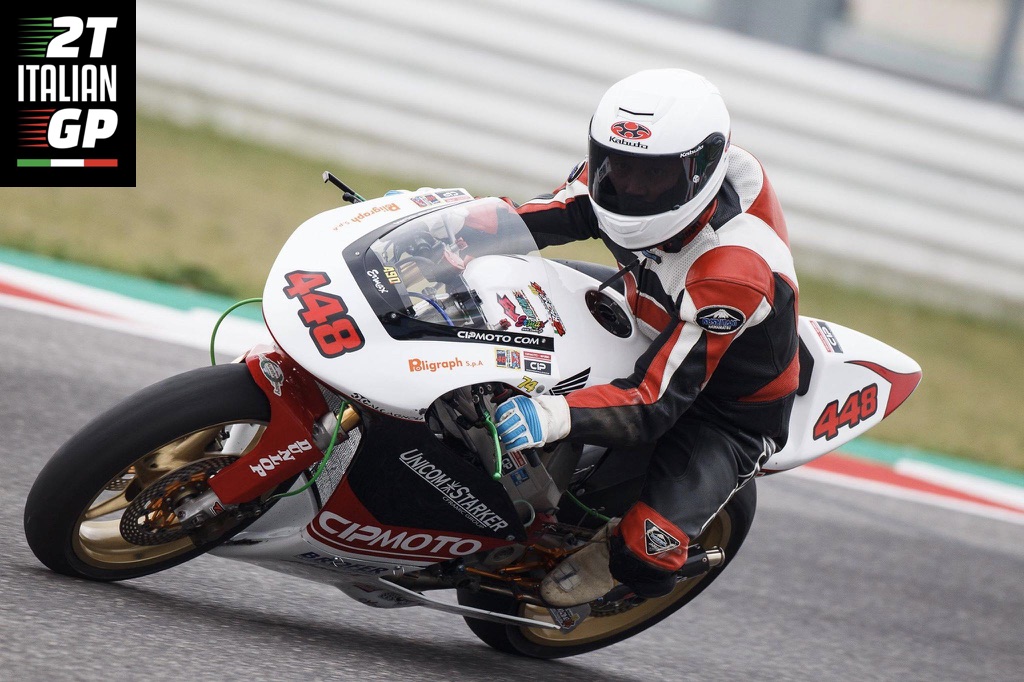
In 2019, Hamada ran a crowdfunding campaign to take part in an international touring race in Italy as a racer. While there, Hamada interviewed people about the electric motorcycle project and got a good response. Being well received in a place where motorsport is rooted as culture was a big confidence boost.
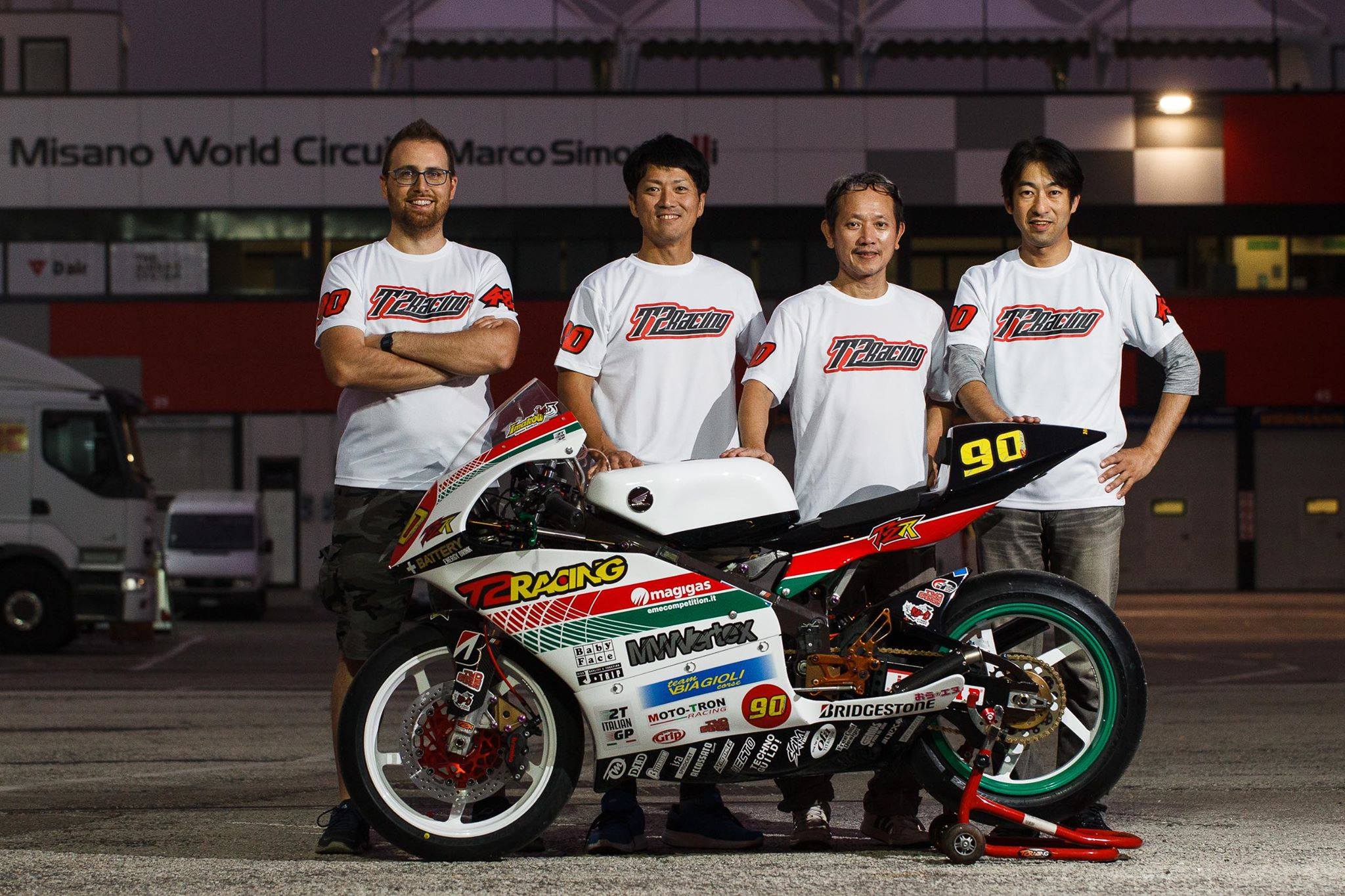
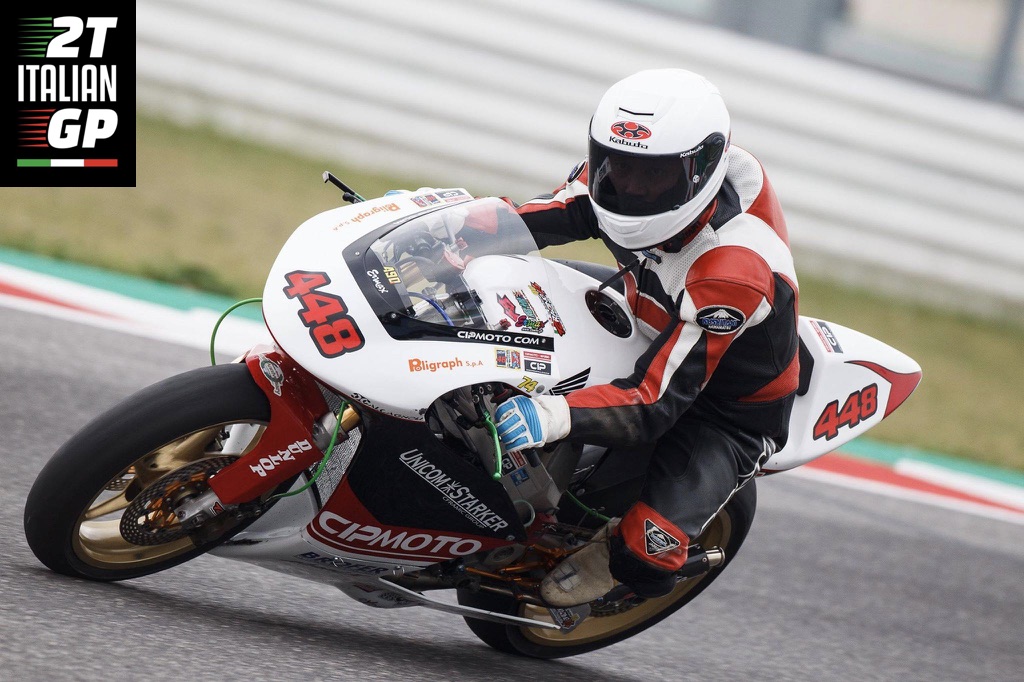
At the same time, Hamada says, “I also felt the difference in how Italy and Japan value motorsport.”
“In Italy, whole families, from grandparents to grandchildren and even dogs, were enjoying motorsport at the circuit. In Japan, on the other hand, motorcycles have a dangerous image, right? Although Japan is packed with car and motorcycle makers, there has been no education in how to use them well, so it has not taken root as culture. The environment for enjoying racing is getting better, but I hope motorsport itself will become more widespread.”
Going independent by drawing on experience as a racer and in product design
Hamada got hooked on motorcycles as a university student. Commuting by motorcycle to a university in a hard-to-reach location led to a love of riding, and eventually to racing as a racer.
While improving motorcycles with attention to body designs with low air resistance and materials that help reduce weight, Hamada became interested in developing racing gear before realizing it.
After graduating from university, Hamada focused on racing for a while, then learned that the first school in Japan to teach car design had opened. Having long wanted to build an ideal motorcycle someday as a racer, Hamada decided to study again while continuing to race. After graduating, Hamada worked as a product designer at a medical device maker, then moved to a major sporting goods maker, working as a designer in the product development division on all kinds of sporting goods design.
“I worked on every kind of sport, including gear and wear used by Olympic athletes and Major League players. The way sporting goods are developed, evolving them with the latest technology such as new materials and fluid dynamics, has a lot in common with motorsport.”
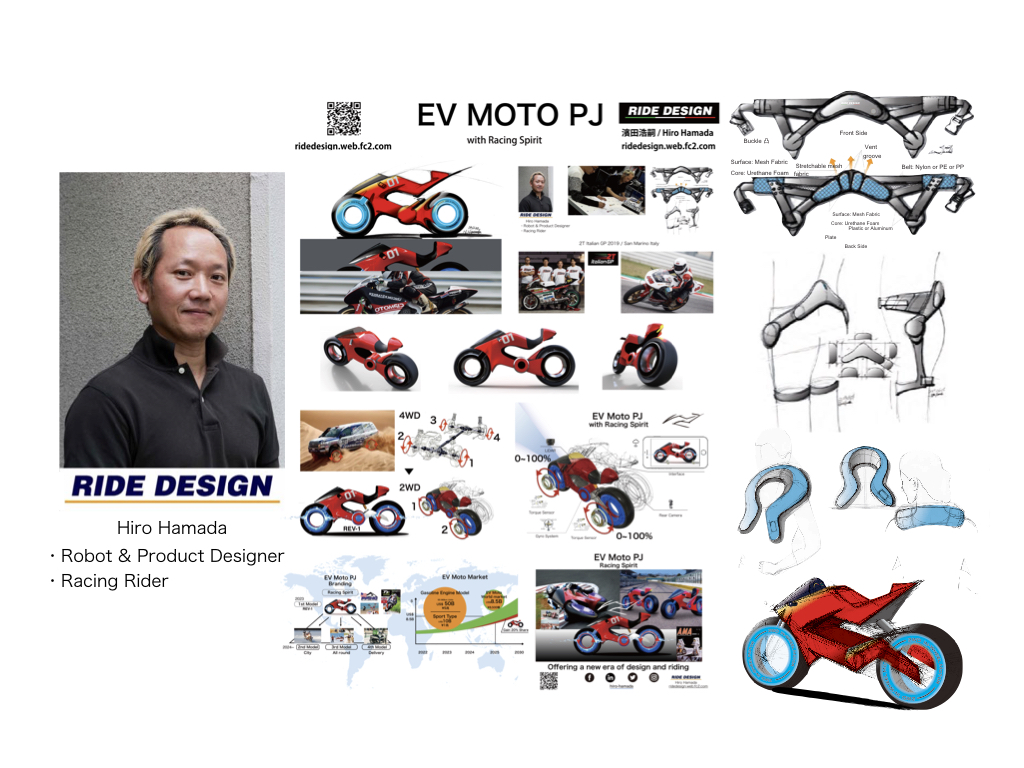
After about 20 years at the major sporting goods maker, Hamada went independent and founded RIDE DESIGN, taking on new designs as a product designer and art director that aim to combine “functional beauty” and “fun” in many fields.
Starting with a sports model that showcases design and racing spirit
With the global two-wheeler market said to be worth more than 5 trillion yen, the electric motorcycle market is expected to exceed 850 billion yen by 2025, partly because of efforts to reduce CO₂ emissions. The Japanese two-wheeler market is about 200 billion yen, and as with the global market, the electric motorcycle market is expected to grow.
“While many eco-friendly, inexpensive electric vehicles are being developed, I want to stick to designs based on racing spirit, which is my strength,” says Hamada.
The project currently has a few main supporters, with cooperation from an engineer and programmer of electronic devices such as robots and electric wheelchairs, the president of a manufacturer that develops amusement park rides such as roller coasters, people involved in racing, and others.
The plan is to first build a sports model based on racing spirit, then expand to a general model and a delivery model. The target is high-end users who own several motorcycles and enjoy motorcycle racing, as well as motorsport fans who enjoy riding on circuits on weekends.
There are high-end users around the world interested in high-performance, luxury motorcycles, and products costing more than 3 million yen reportedly sell out as soon as they are announced.
“We expect our electric motorcycle to cost about 3.5 million yen, and we plan to produce 1,000 units first. If electrification eliminates noise and exhaust, people can enjoy motorsport in urban areas too. I think it can also help revitalize communities, as in Europe.”
Using electric motorcycle know-how to develop a lunar motorcycle
To raise funds and gather people to support the project, Hamada attends as many meetings of academic societies and organizations as possible to present the project, and actively takes part in entrepreneur support programs.
“We were selected for the Startup Initial Program OSAKA (SIO) two years in a row and receive R&D support and advice. Just recently, we were also selected for an acceleration program organized by JETRO and are continuing to refine the plan.”
As Hamada works toward commercializing the Non-Falling Electric Motorcycle / EV MOTO development project, the places where electric motorcycles can be useful have also expanded.
NASA announced the Artemis program to send humans back to the moon in 2024, and business leaders around the world are heading to space one after another: interest in space is soaring. Hamada wants to develop a lunar exploration motorcycle, making use of the advantages of electric motorcycles, which can run where there is no air and in extreme places such as deserts and Antarctica.
“The lunar exploration vehicle announced by JAXA weighs 6 tons and is expensive to launch. A lunar motorcycle could be lightened to about 100 kg, and it is superior in cost, agility, and ability to cross rough terrain. And we aim for cars and motorcycles to complement each other, making use of the strengths of each.”
What should be stressed here is that what Hamada has in mind in building electric motorcycles is not a fully autonomous motorcycle, but a motorcycle that is fun to ride.
“Even in an era of fully autonomous driving, I want to pursue the joy of riding a motorcycle yourself. Now that electric mobility has gained social recognition is exactly the time to commercialize this project and widely share the safety, functional beauty, and fun of electric motorcycles,” Hamada says.
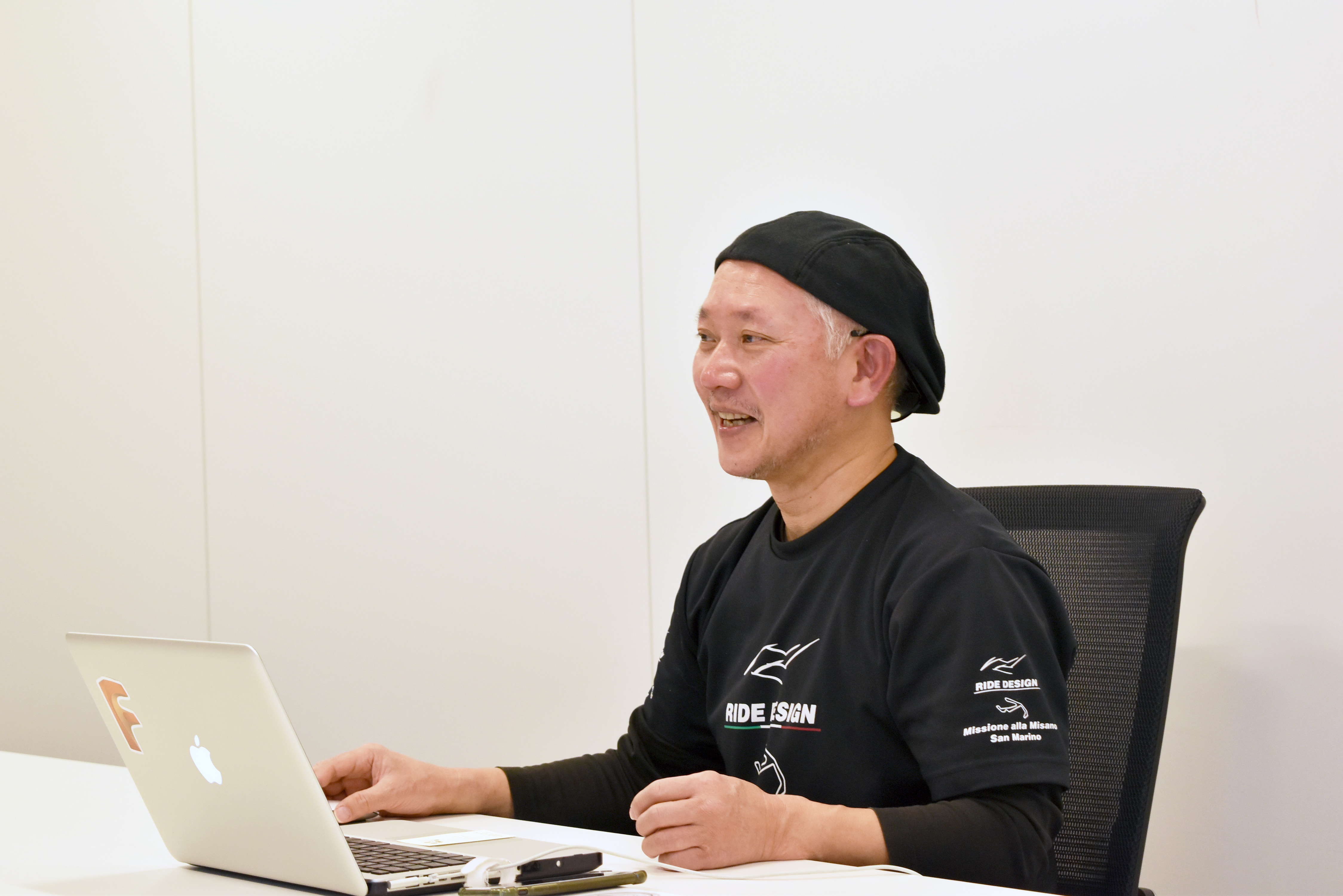
“I haven’t achieved results yet, so I can’t give advice to people who want to start a business,” Hamada says modestly, but the sight of Hamada running toward realizing an ideal electric motorcycle project is itself the entrepreneurial spirit that gives others courage.
Interview date: February 25, 2022
(Interview and text: Tomoko Hanatani)