HeCNOS AWARD Winners Featured at Expo 2025: Carbon Neutral Startups to Watch (Part 1)

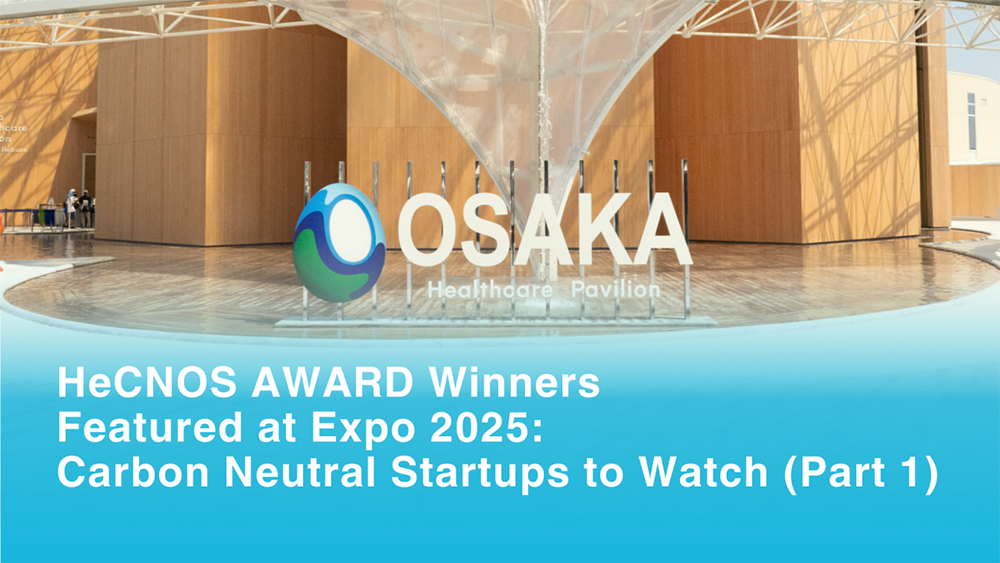
The journey toward a carbon-neutral future is gaining momentum at Expo 2025 Osaka. Inside the Osaka Healthcare Pavilion’s Reborn Challenge, startups and SMEs are presenting breakthrough solutions to cut emissions, recycle resources, and build a more sustainable society.
This article introduces three HeCNOS AWARD-winning companies from the Carbon Neutral Treasure Hunt:
- ・EneCoat Technologies: developing flexible, lightweight solar cells for power generation in places conventional panels can’t reach.
- ・BIOTECHWORKS-H2: optimizing hydrogen production from diverse waste streams with AI-driven, IoT-enabled systems.
- ・Hemicellulose: turning agricultural byproducts into bioplastics for packaging, textiles, and beyond.
Together, they represent the cutting edge of Japan’s efforts to tackle climate change through innovation and global collaboration.
EneCoat Technologies
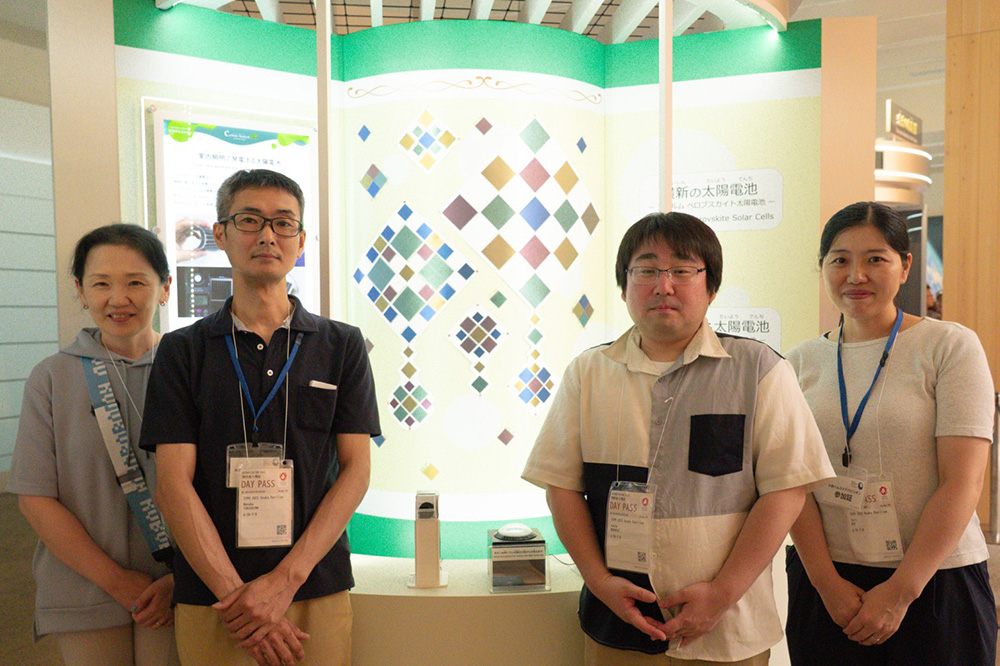
Photo: The EneCoat Technologies team
Q: What technology are you developing?
A: We develop perovskite solar cells in collaboration with Kyoto University’s Wakamiya Lab. Unlike silicon panels, they are thin, lightweight, flexible, and even colorful—making them suitable for indoor use, low-light environments, and installation in places where silicon panels cannot be used.
Q: What applications are you targeting?
A: Our main focus is indoor environments and lightweight structures like factory roofs and walls. We’re also developing transparent perovskite cells for in-tandem use with normal silicon photovoltaic cells, allowing each to capture different light spectra for higher efficiency. Our vision is “Power Anywhere”—from homes and offices to unconventional spaces.
Q: What challenges remain?
A: The biggest are durability and cost. While silicon lasts 30–40 years, we aim for 10 years with perovskite. The technology is still young, so durability testing and production methods are evolving. For now, we target niche applications where our unique properties offer the most value.
Q: How do you differentiate from competitors?
A: We excel in low-light efficiency, a technically difficult area, and benefit from direct collaboration with Kyoto University. By focusing solely on perovskite, we can commit all resources to advancing the technology, unlike larger firms with multiple R&D priorities.
Q: What partnerships and future plans do you have?
A: We’ve secured investment from Toyota’s CVC and are collaborating with JAXA on space-ready, lightweight, radiation-resistant cells—targeting deployment within 1–3 years. Overseas, we see opportunities in both indoor and outdoor markets and will strategically expand to ensure Japan takes the lead globally.
BIOTECHWORKS-H2
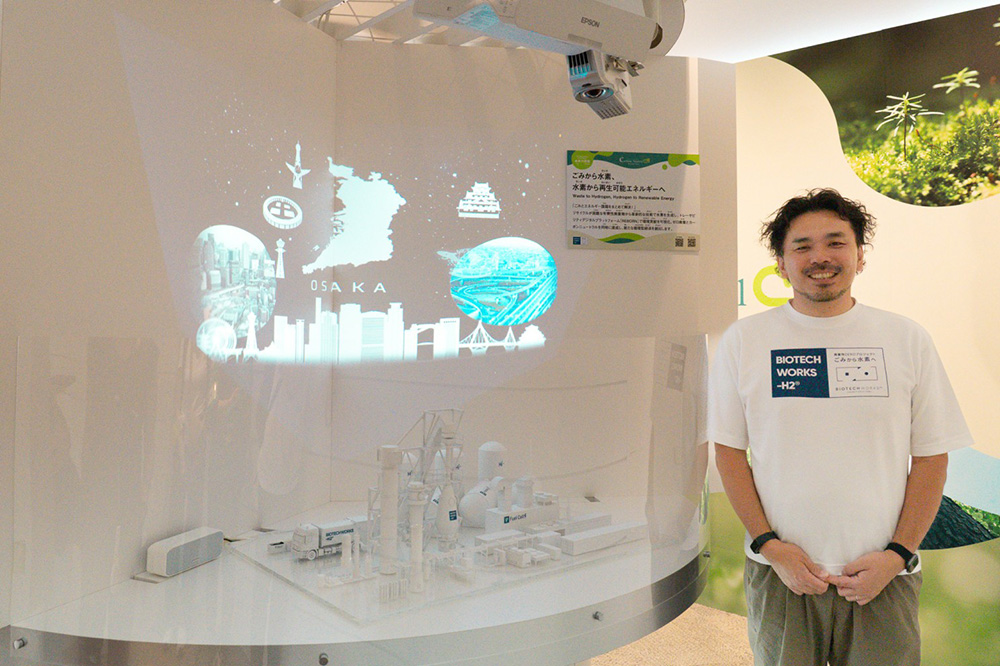
Photo: Akihide Nihsikawa, CEO of BIOTECHWORKS-H2
Q: What’s your core business?
A: We turn waste into hydrogen, then into renewable energy—while making the entire process fully transparent. Our system tracks exactly which waste streams produce how much gas and CO₂ reduction, offering a fully traceable solution.
Q: How did the idea start?
A: Coming from an apparel background, I first aimed to recycle discarded apparel into hydrogen, but costs were too high. Realizing it was similar to general waste, we broadened to all municipal waste and began developing the technology in 2020 in Silicon Valley before scaling in Japan.
Q: What sets your business apart?
A: We optimize waste before processing using IoT devices to maximize hydrogen yield, with data fed to an AI system for efficient, traceable production—valuable for carbon credit markets. By partnering with existing facilities instead of building our own plants, we can handle diverse waste types while reducing costs and tapping into Japan and ASEAN’s upgrading plant market.
Q: What’s your growth and funding strategy?
A: We use an “overseas-style” approach—small early funding followed by large rounds—targeting a $1B valuation pre-IPO in 2028–29. Speed is essential, as many overseas investors expect returns in 3–4 years.
Q: Where are you headed globally?
A: Our first focus is ASEAN, starting with Indonesia and the Philippines, then expanding to the Middle East, where future demand for CO₂ + hydrogen-based e-fuels will grow. Long-term, we aim to contribute to Africa as well.
Hemicellulose
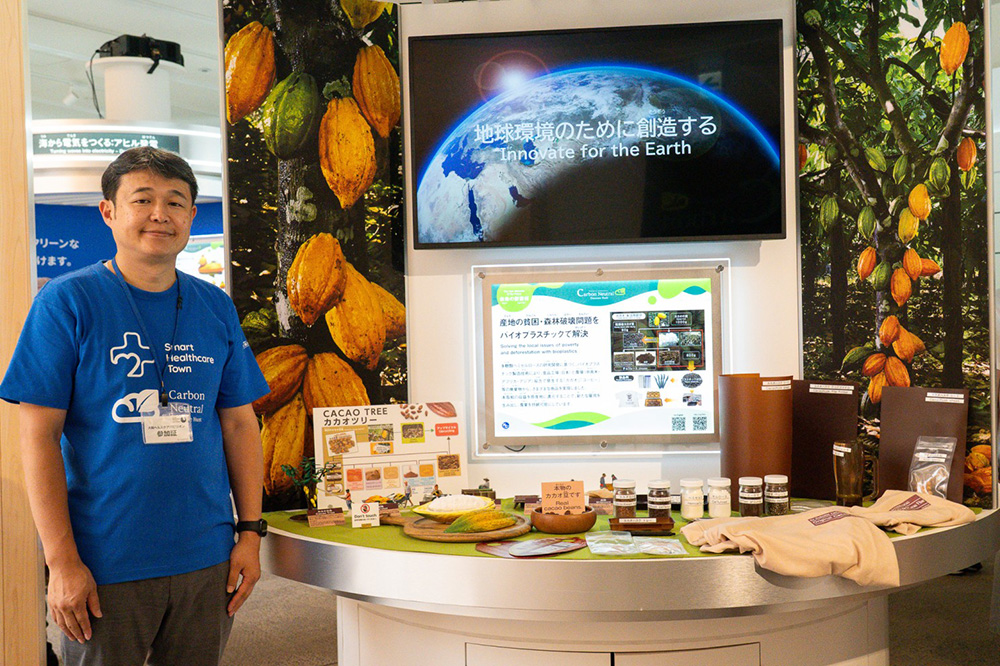
Photo: Jin Nasukawa, CEO of Hemicellulose
Q: What does Hemicellulose do?
A: We turn agricultural byproducts from the food and beverage industry—like cacao husks, coffee grounds, and spent barley—into bioplastic materials. These are processed into pellets, then shaped into sheets, molded into cups, or spun into fibers for textiles.
Q: What inspired you to start the company?
A: Seeing Japan’s mold manufacturing industry decline, I decided to move upstream into materials. Running both materials and molding operations lets us turn plant waste into finished products under one roof.
Q: What sets Hemicellulose apart from other bioplastics companies?
A: Unlike competitors that focus on a single input, we work with any plant waste our partners provide—cacao husks, coffee grounds, spent barley—producing tailored, small-lot, high-variety materials.
Q: How do you develop and scale such diverse products?
A: Our scientists analyze each feedstock’s structure to match it with the best applications, supported by a database of material properties. Partnering with global food and beverage manufacturers, we process waste at its source, with cacao projects in Mexico and plans to expand into coffee, barley, and potential materials like avocado pits.
Q: How do you ensure long-term supply from local producers?
A: We believe in giving back. Collecting waste requires paying fair compensation to producers, and we reinvest revenue into these communities. A sustainable economic loop is essential—environmental benefits alone aren’t enough to ensure participation.
Q: What do you hope to achieve through events like the Expo?
A: Kansai has a strong manufacturing and packaging industry, and we’re eager to explore collaborations with more companies here to expand applications and impact.
About the Event
Technology for a greener tomorrow Carbon Neutral Treasure Hunt
Exhibition period at the Osaka-Kansai Expo: July 1st Tue –July 7th Mon, 2025
Article Source
Osaka Startup Digest
Exploring the startup ecosystem of Osaka & Kansai.