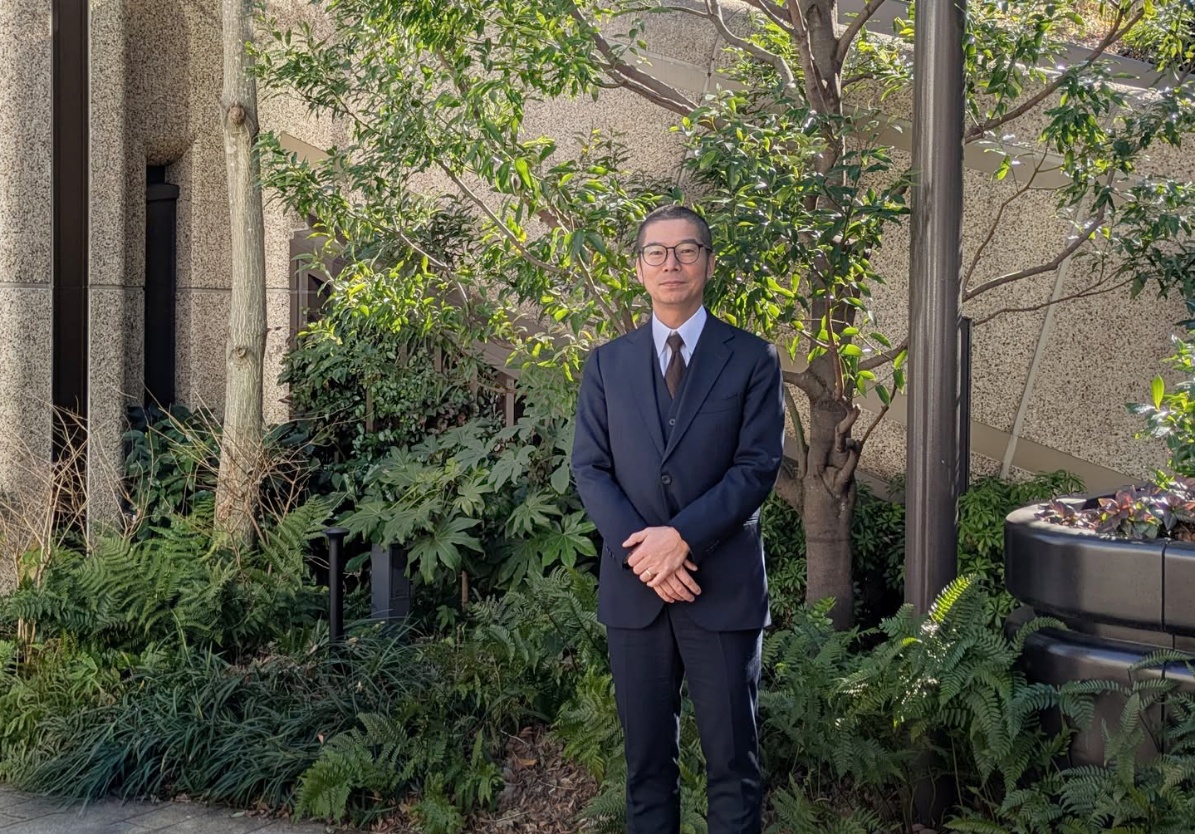
miibio, Inc. owns the technology that enables low-cost manufacturing of components for biochemical products by optically controlling microbial metabolism. Kensho Hayamizu, the CEO of this University of Tokyo-based startup, envisions replacing petroleum-based products with biomass-based products. We talked to him about his current work and his future.
What is miibio’s biomanufacturing like?
Biomanufacturing is manufacturing that harnesses the power of microorganisms. It’s a technology that uses, instead of petroleum, ingredients such as sugars, together with the activities of microorganisms, to create materials that can replace petroleum-derived products. While corporations and researchers around the world are working on biomanufacturing, we believe our low cost gives us a clear advantage.
One reason why biomanufacturing is gaining attention is climate change, driven by CO2 emissions. The other reason is diminishing oil reserves. According to Japan’s Ministry of Economy, Trade, and Industry, oil’s reserves-to-production ratio is estimated at approximately 50 years.
In light of this situation, biomanufacturing offers one method of creating a substitute for petroleum. This technology is an absolute necessity for our lives as we look to the future.
*1 Reference:Chapter 2, 国際エネルギー動向(”International Energy Trends”), Section 2 一次エネルギーの動向(”Trends of Primary Energy”), by the Agency of Natural Resources and Energy, METI
Please tell us about the challenges of biomanufacturing and the technologies that miibio offers.
Carbon is the main ingredient of sugar, which is a key element of biomanufacturing. Photosynthesis in plants produce sugar (carbon); this is the raw material that, when combined with the activities of microorganisms, is converted into various carbon-based substances such as materials, fuel, medicines, and foods.
When the biochemical products made from the above ingredients are discarded or burned, the carbon in those products is converted to CO2 and returned to the atmosphere. That CO2 is then absorbed by plants, forming a cycle. I believe that the essence of biomanufacturing is this cycle, or “Earth’s carbon management.”
There is global excitement for this technology; however, the biochemical components are considered difficult to mass-produce and hence expensive. Our technology offers and innovative solution: we use a foundational technology developed by Professor Moritoshi Sato of the University of Tokyo called “photo-switchable proteins.” These proteins can optically control the fermentation process in biomanufacturing using light, enabling mass production at low cost.
What’s next for miibio?
Many unique and socially valuable research projects are underway across various Japanese universities and public research institutes. These researchers are eager to address social issues through their work. To do so, however, there is a need for entrepreneurs who can work with researchers to start up companies based on the research. Unfortunately, these businesspeople are hard to find in Japan. The Japanese government organizes many events to match researchers and businesspeople, and I met Professor Sato at one of these events.
Currently, we are designing and building a pilot plant to socially implement biochemical manufacturing, while continuing our research with other businesses and cultivating customers.
We believe our technology has potential not only in Japan but globally, so we are working with potential customers from around the world. In the future, we are considering licensing our optical-controlled biomanufacturing process, and are also looking into becoming a green chemical manufacturer ourselves, so we can contribute to decarbonization and reduce our dependence on oil.
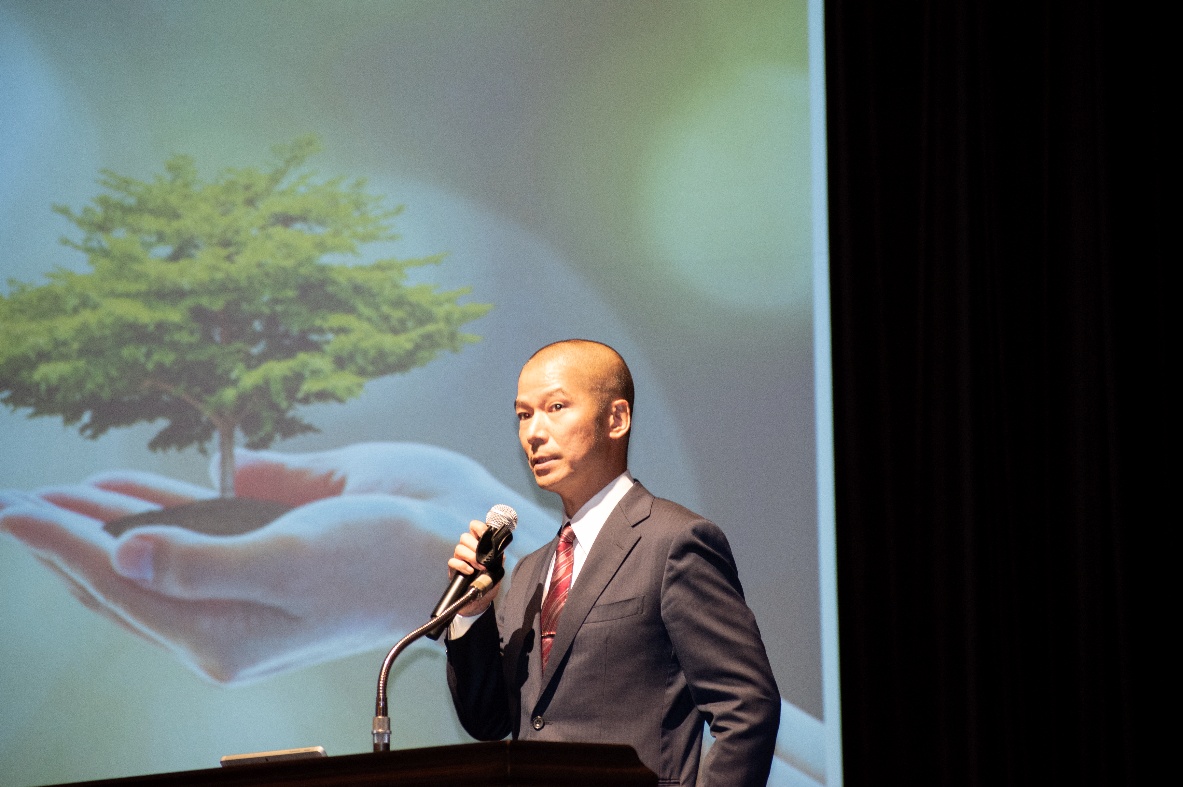
miibio was selected in the first round of the incubation program Kido, where resources from the Kansai area gather; after six months of hands-on support and funding, they successfully grew their business.