
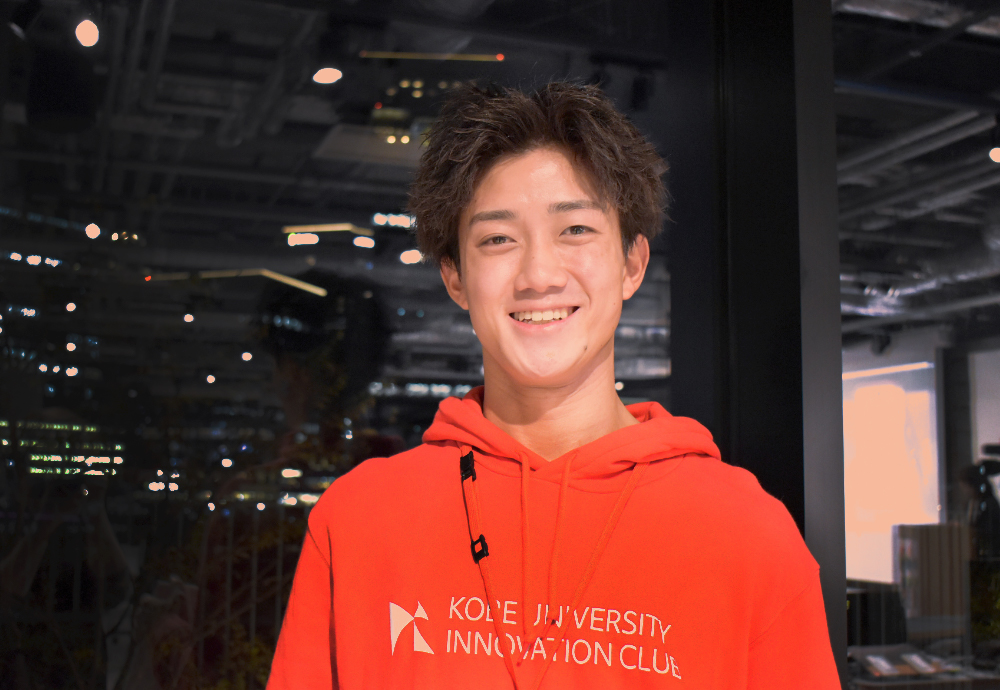
Developing entrepreneurs who create new technologies and services and bring change to society has become an important national priority. Support and education for would-be entrepreneurs are reaching more people, now including junior high and elementary school students. We spoke with Takuto Onishi of Standy, Kobe University’s entrepreneurship club, who presented an original entrepreneurship education program at “Mirainno Pitch 2025” and won the OIH Award (Student Division).
Working with a diverse team on children’s entrepreneurial mindset
At Standy, Kobe University’s entrepreneurship club, we work on entrepreneurship education for high school students and younger. The key feature of our business plan as a whole is that it offers an integrated program from elementary through high school. Because we can offer programs matched to children’s development and to how far they have acquired knowledge and skills, and because an integrated curriculum allows consistent teaching, we call this program “the J.League model of entrepreneurship education.”
Of the three phases (elementary, junior high, and high school), we have already started with education for elementary school students. For them, we developed a board game for learning about entrepreneurship while having fun. The game, played like sugoroku (a Japanese roll-and-move board game), is set in a school. Players aim for the goal while overcoming, with wisdom and ideas, all kinds of challenges (quests) that could come up in an elementary school student’s daily life.
Examples of quests include “I spilled oil” and “The stove won’t light” in the home economics room. Players tackle these quests by combining the cards in their hand, such as “Things” and “Abilities”. Solving a quest earns money as a reward, and the money can be used to grow the company, for example by hiring people or investing in equipment.
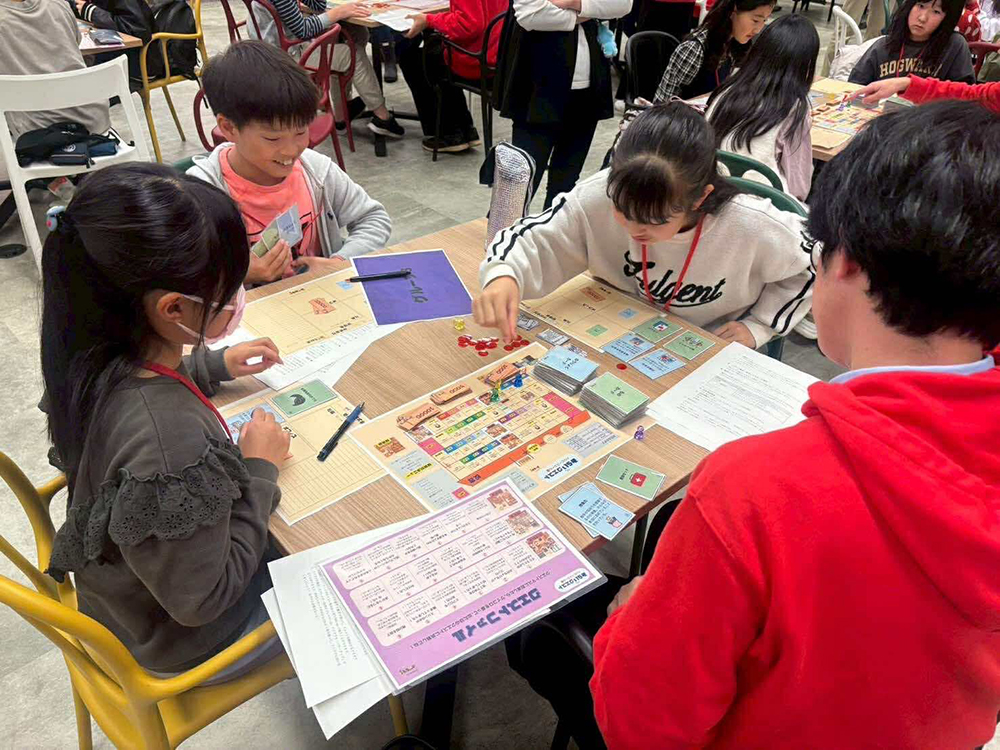
Combining cards to solve problems corresponds to innovation. Using the money you earn to hire people and invest in equipment while moving toward the goal means growing a company by investing funds effectively. The aim of the game is to let players experience entrepreneurship in a simulated way while having fun, and to build the mindset and skills that entrepreneurs have.
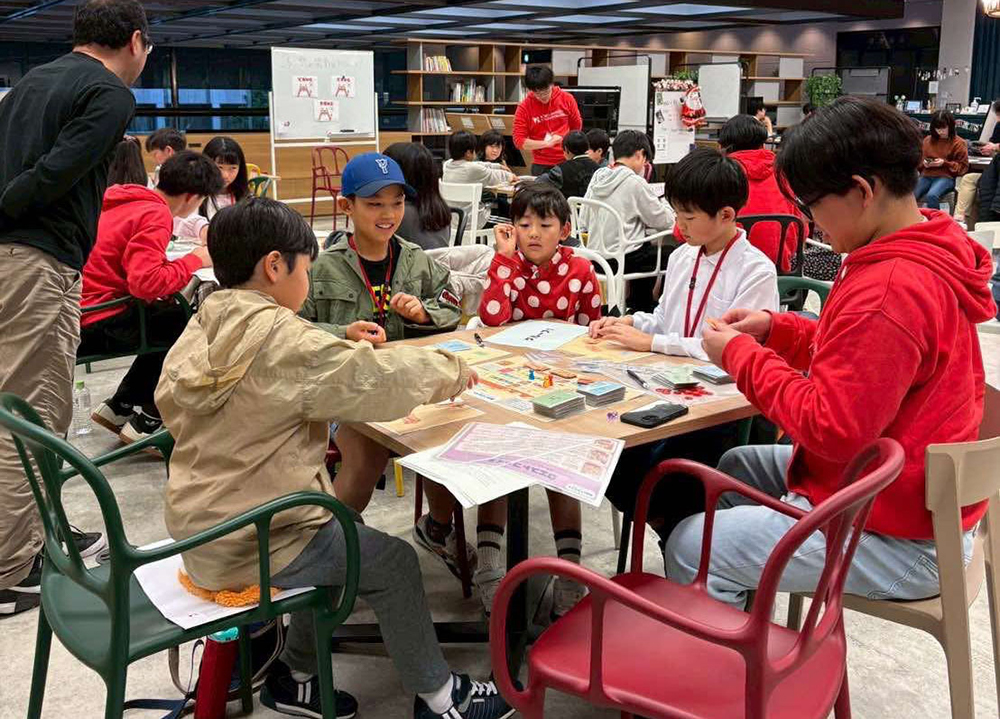
We had children try the game in actual elementary school classes. The children said things like “It was fun. I want to play it at home too.” Teachers also liked it and said they would like to use it in future classes. When we held an event open to the general public, we also heard comments like “Please start selling it soon.”
Offering chances to learn with excitement
At the root of our business plan is a sense that today’s education has problems. Many children study without much purpose, just to get into the next school. Most of their studying is cramming knowledge, and there is no excitement in it. I always wished there were more chances to study with excitement toward their dreams and goals, and to learn through experience rather than just sitting at a desk listening to the teacher.
I also saw problems in how society views starting a business. Many people think starting a business is very risky. Quite a few believe that if they fail, they will never recover. There is also an image that it is something only a few highly driven people take on. We want to change these perceptions.
Our education program is not only about increasing the number of people who start businesses. We would be extremely happy if more people started businesses through the program, but what we really aim for is to help many people, even those who never start a business, gain the mindset and skills that entrepreneurs have.
The drive to set goals and take on challenges, the habit of combining ideas and technologies to solve problems, and the ability to work as a team are needed not only by entrepreneurs but in many situations in today’s society. Entrepreneurship education is perfect for building them. That is also why we have children start entrepreneurship education from elementary school.
Making entrepreneurship education standard in Japan
Going forward, with the board game and related apps and cloud services at the core, we envision three main business areas: “toC” for individuals, “toB” for cram schools, after-school programs, companies, and others, and “toG” for local governments and schools.
The board game we developed has the distinctive feature of teaching the entrepreneurial mindset, and it can also be played team against team. Because of this, people have told us they hope to use it as material for in-house employee training.
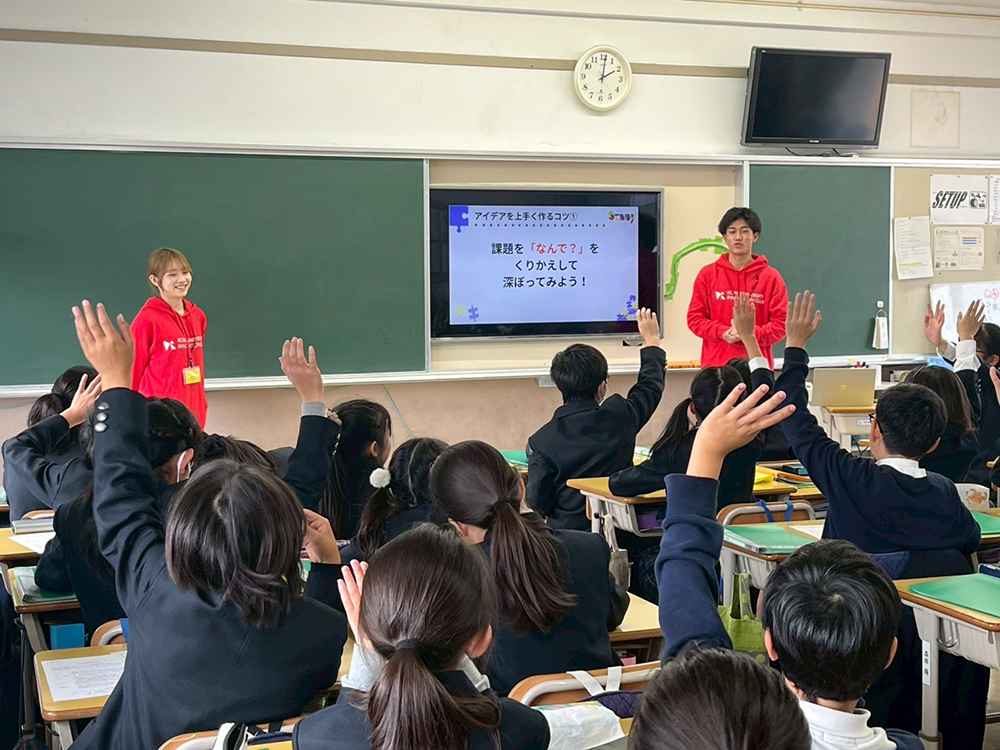
Another goal is to offer more learning events using the board game. Until now they have been limited to a few hours each, but we will expand the program and develop longer versions with overnight stays. Building on the results, we want to strengthen our proposals for toC and toG.
All of this requires funding. So from February 2026, we will launch a crowdfunding campaign. We want to use the funds we raise to quickly improve our services and step up our sales activities.
Standy, part of Kobe University’s entrepreneurship club, has four members including me. I mainly handle planning and business strategy. Sakura Ishikawa, a second-year student in the Faculty of Business Administration, handles PR and marketing and actively supports our work, saying, “I want to try out lots of things!” Ryusei Ito, a first-year student in the Faculty of Global Human Sciences, handles AI and product to gain startup experience. Nao Hinoguchi, a first-year student in the Faculty of Letters, passionately takes on event design and sales, saying, “I want to put myself in the entrepreneurship club, which people say is tough, on purpose.”
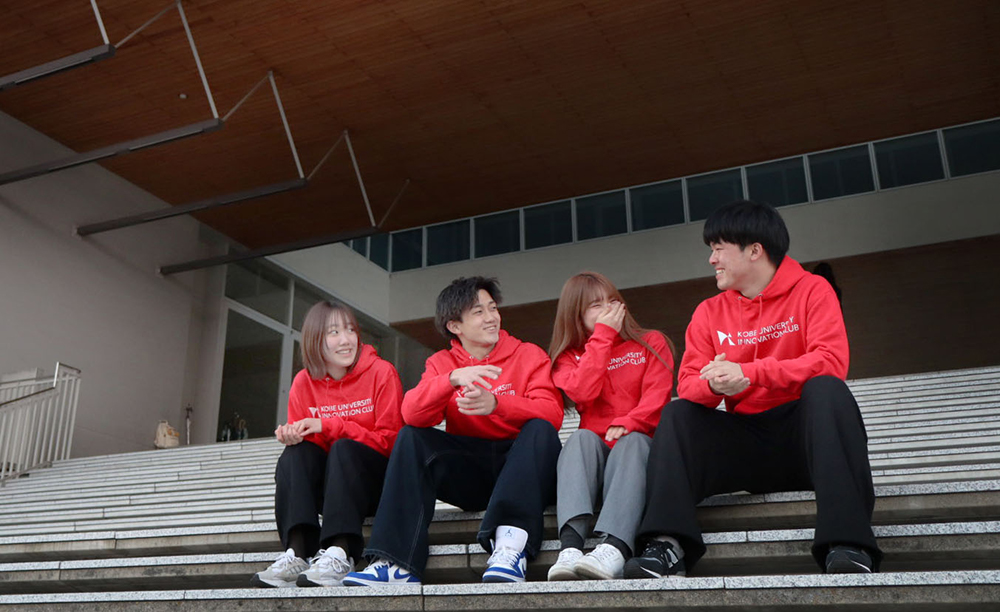
Entrepreneurship education is still unfamiliar in Japan. Our goal is to change that and make it “Japan’s standard,” something everyone naturally learns at school. Then, surely, children will talk about their future dreams with sparkling eyes and start walking toward making them come true. We strongly hope to create that kind of society.
How We Used OIH
Partly because it is the policy of our club, Kobe University’s entrepreneurship club, we actively take part in pitch and business plan contests held around the country. What I appreciated about OIH’s “Mirainno Pitch” was that you get mentoring once you pass the second round of screening. Thanks to that, I was able to improve my presentation. Getting feedback on your business plan from both venture capitalists and entrepreneurs is another great thing about Mirainno Pitch.
Besides that, I often took part in entrepreneurship events such as “KSAC Entrepreneurs Fes 2025.” Listening to talks by well-known people helped me think about the direction of my career and broaden my perspective.

Interview date: January 27, 2026
(Interview and text: Morinaga Matsumoto)