
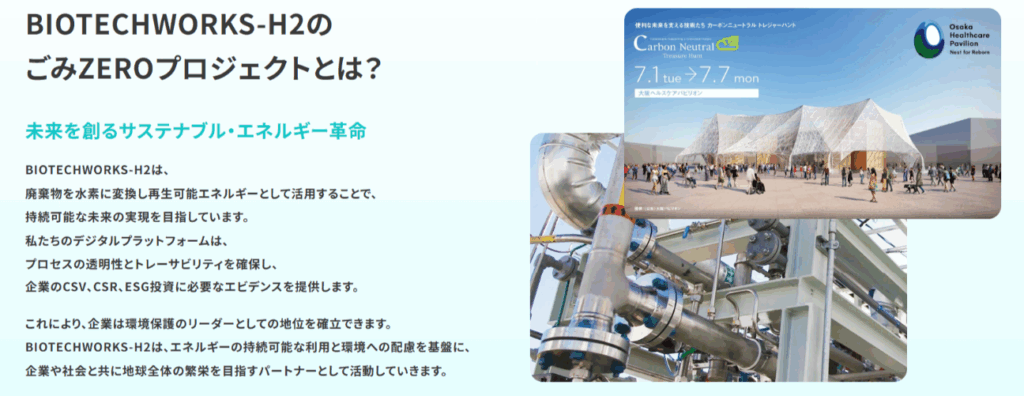
BIOTECHWORKS-H2, Inc. (BIOTECHWORKS-H2) is building a scheme that produces hydrogen (H2) from waste and converts it into energy. It can process a wide range of organic waste and reportedly cuts carbon dioxide (CO2) emissions by up to about 80% compared with conventional incineration. From the garbage generated in each region of Japan, it can produce carbon dioxide and hydrogen and use them as raw materials to make e-fuel (synthetic fuel). We asked CEO Akihide Nishikawa, who says, “In the future, we want to set up plants across the country and turn all of Japan into an oil-producing region,” about the passion behind the business and the path so far.
Waste is not something to throw away but a “valuable resource”
Our big strength is that we can produce hydrogen from the organic waste generated in each region and propose ways of using it that suit the region’s characteristics. In urban areas, for example, where a lot of waste is generated, a certain amount of hydrogen can be mixed into the gas used at natural gas power plants and used to generate power. Hydrogen does not produce CO2 when burned, so overall CO2 emissions can be reduced.
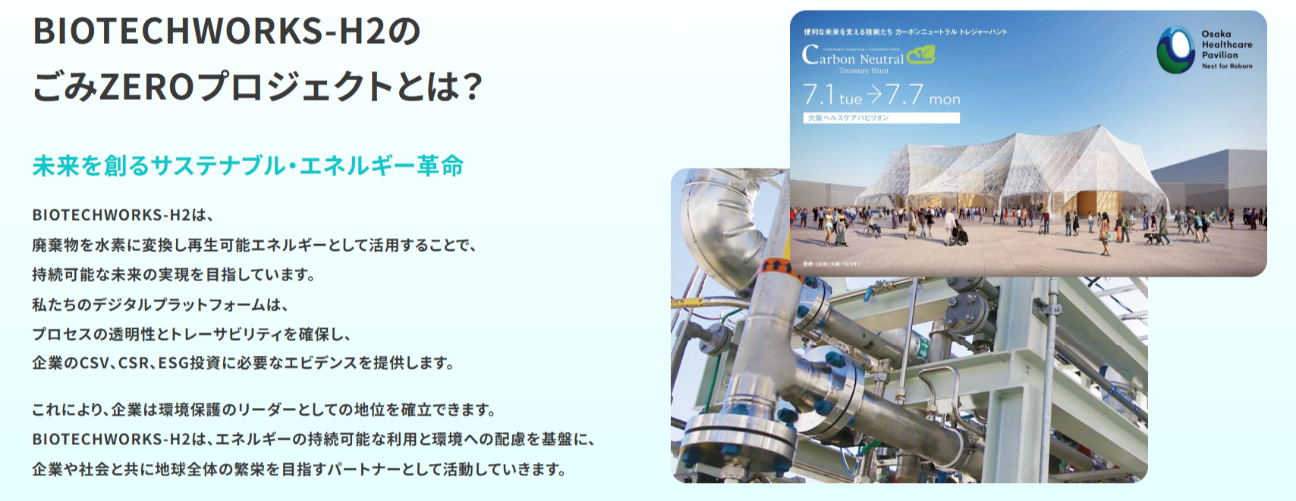
In areas with heavy snowfall, where daylight hours are short in winter, hydrogen power can make up for the winter electricity that solar power alone cannot supply. Many other uses are possible too, such as making agricultural fertilizer from ammonia produced from hydrogen, or producing methane gas for gas-fired power generation.
In Japan, with its small land area, the focus has been on processing waste as compactly and cheaply as possible to secure landfill space. Our approach focuses not on “how to process it as compactly and cheaply as possible” but on “how to make effective use of it as a resource.”
Local governments spend about 20,000 yen per person per year in taxes on processing waste from homes and businesses (*). If that cost can be cut, the money can go to education, welfare, medical care, and more, and the people living in the area can lead safer, happier lives. As the population grows and the town becomes livelier, tax revenue rises as a result, creating a virtuous circle.
Circumstances such as population size and industry differ, but by introducing our scheme, many local governments can reduce the cost of waste processing and create profits. In other words, waste turns from “something unwanted” into “something valuable.”
*Source: Ministry of the Environment press release, “On the Discharge and Treatment of General Waste (FY2023)” (in Japanese),
“III. Waste Management Expenditure”
Building a business model by working with existing companies
While studying economics at university, I founded a company that planned and developed apparel products at the age of 22. After that, I launched several more businesses, drawing on my knowledge of marketing and branding. I have more than 25 years in the industry, and BIOTECHWORKS-H2 is the sixth company I have founded.
The starting point for this venture was the serious waste problem in the apparel industry. The industry is said to be second only to the oil industry in CO₂ emissions, and mass production and mass disposal are the norm. My motivation was to find some way to recycle discarded textile products.
A single textile product mixes natural fibers such as cotton with synthetic fibers such as polyester and polyurethane, and its buttons and zippers use other materials such as plastic and metal. When we analyzed textile waste, we found that its composition was almost the same as household garbage. So our idea is to properly turn all organic waste that cannot be recycled, not just textiles, into energy by producing hydrogen.
Another important point is that our business does not replace the existing companies that have been handling waste processing. We provide our method as a system and license without breaking down barriers to entry, and with power and energy companies, our relationship is one of buying and selling the energy we produce. We focus on co-creation, not competition.
Our goal is not to take control of waste processing but to put waste to proper use as energy. That is why we believe building cooperative relationships with existing companies is also important.
Contributing to world peace by solving energy problems
Our ultimate goal is to produce e-fuel synthesized from CO2 and hydrogen. E-fuel could be called artificial crude oil: it can be processed into gasoline, kerosene, jet fuel, diesel, and more. Making it requires large amounts of hydrogen, and our method of producing hydrogen from the waste generated every day is a perfect source.
Incineration is the norm in Japan, but many countries around the world dispose of waste in landfills. They want to avoid the cost of incineration, but problems around landfills, such as water and soil pollution and fires caused by methane gas, are serious. What is more, as populations grow, landfill disposal has its limits. How can countries that have spent almost nothing on waste processing be helped to process it properly? We believe our approach, “waste is a resource and can become fuel,” can be the answer.
One of our current goals is to build waste processing facilities using our scheme in every prefecture by 2050. This is our “plan to turn all of Japan into an oil-producing region,” producing e-fuel in each area with hydrogen made from local waste. If it comes true, the day may come when Japan no longer needs to import crude oil from oil-producing countries. In fact, we have even received inquiries about our technology from oil-producing countries in the Middle East.
Energy problems lie behind the wars happening in the world today. Our technology can offer a clue to solving them, and waste, as a resource, can contribute to peace and happiness. Bringing peace to the world and contributing to people’s happiness: I am convinced that our business has that kind of great potential.
How We Used OIH
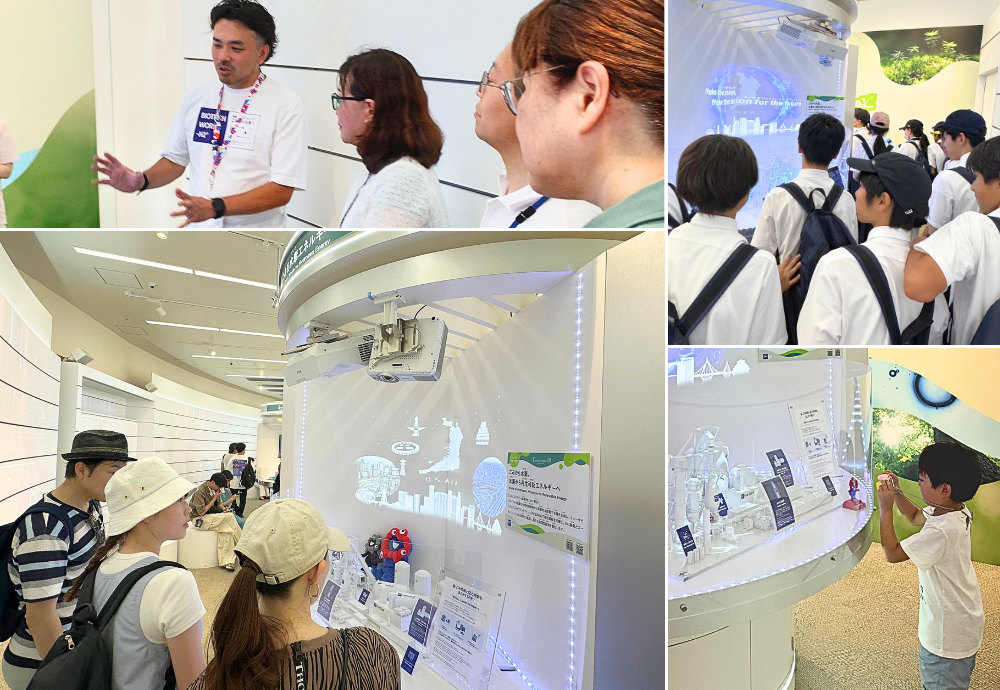
Winning the 2nd HeCNOS AWARD led to our exhibit at Expo 2025 Osaka, Kansai, Japan. That in turn led us to join a pitch event at a startup facility in Nagoya. And when “HORIE ONE,” Takafumi Horie’s YouTube show on NewsPicks, came to Osaka, OIH recommended us, and we took the stage at “Make Money Survive on Tour in Osaka.” We want to keep making the most of the connections we have made through OIH to energize Osaka, where I was born and raised!
Interview date: June 10, 2025
(Interview and text: Aya Iwamura)