

From an exploitative company to unemployment, then to business school
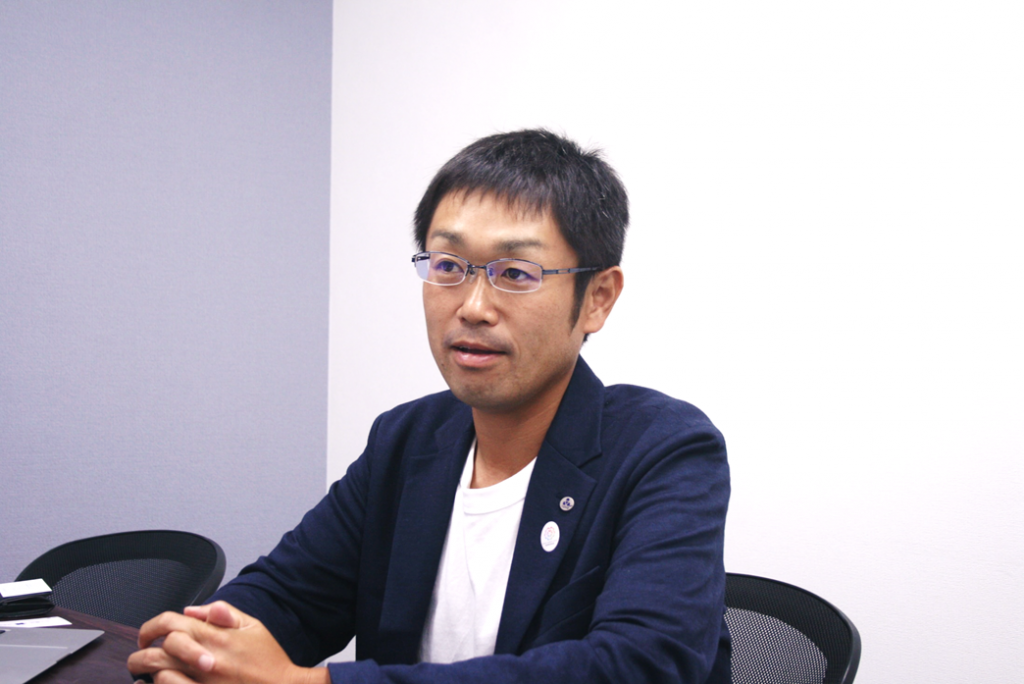
Of the roughly 700,000 university students who graduate each year, about 140,000 graduate without a job offer, and about 200,000 quit shortly after joining a company because “it’s not right for me.” Companies invest in training them in advance, but a common worry is that they quit just when they seem to have become an asset. Tomoya Nakano of i-plug stood up to resolve this mismatch between companies and students.
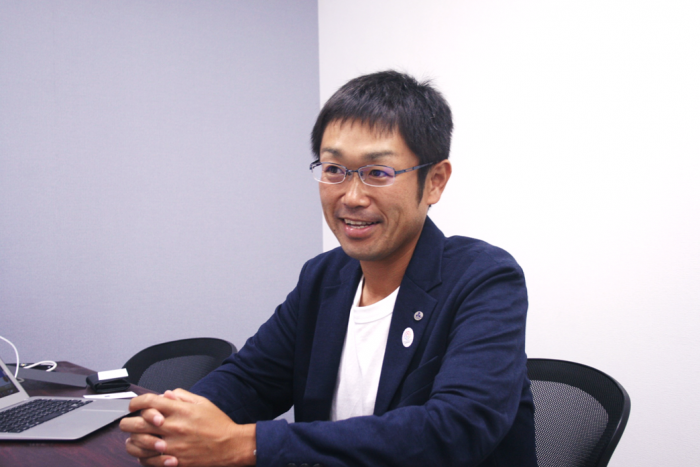
Nakano graduated from university in 2001, in the middle of the employment ice age. In June after graduating, Nakano joined a job advertising company mid-year, but it was an exploitative company where even bathroom breaks had to be written in the daily report. Nakano quit right away and spent 10 months unemployed. Nakano then joined another job advertising company, but ranked last out of 600 salespeople in western Japan, a miserable result. Nakano looks back on that time as “rock bottom.” Working from early morning until late at night to somehow climb out, Nakano reached average results two years later and top-class sales results seven years later, but the Lehman shock caused work to plunge. With “nothing to do” after work, Nakano went to classes at a business school, and started i-plug with two peers met there.
A business plan that suddenly came to mind when cornered
i-plug started out with a placement business for new graduates, but its sales efforts went nowhere. Unable to win any contracts at all, the team was cornered: “At this rate we’ll go bankrupt. This is bad!” That was when the business plan that became the prototype of OfferBox suddenly came to mind.
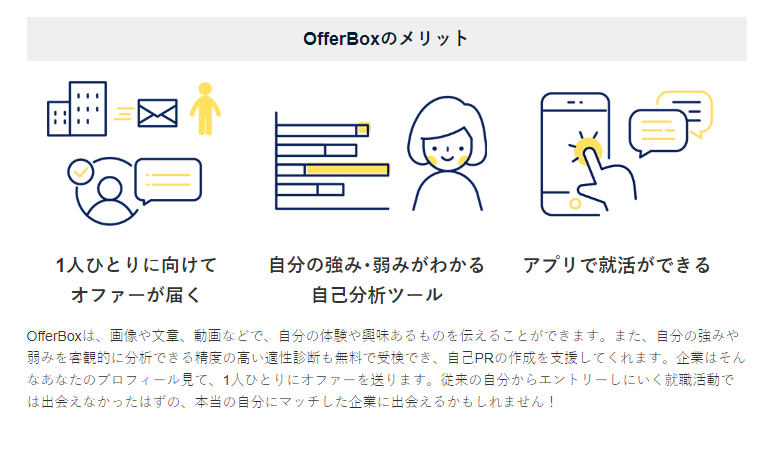
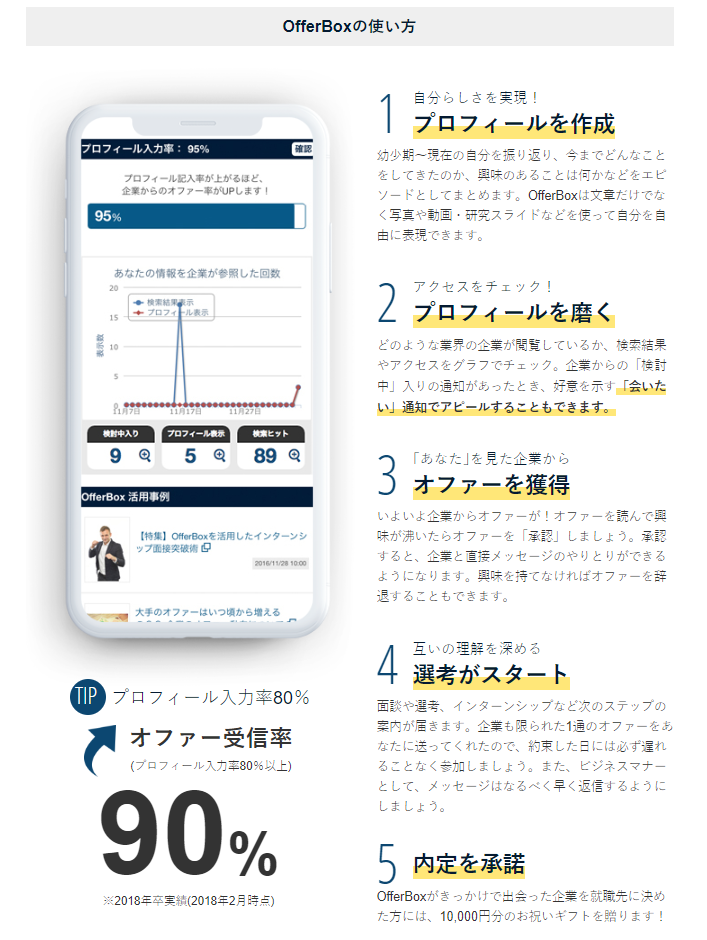
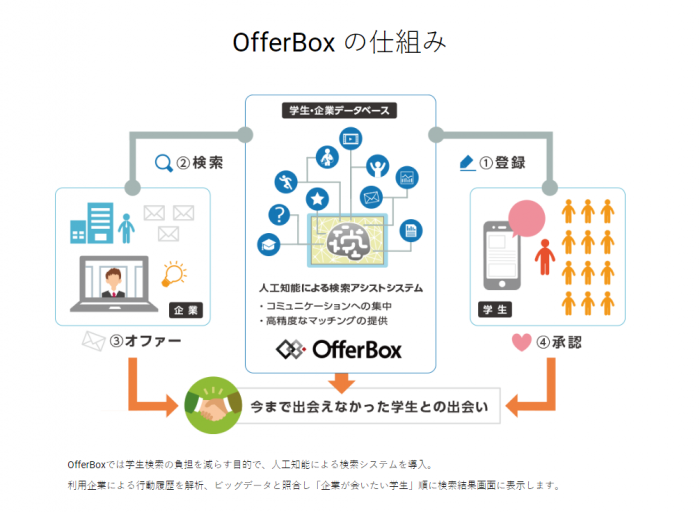
OfferBox is a service specialized in new graduates that lets companies send offers directly to students. Companies can search the information of registered students and efficiently contact students they want to meet, with the advantage that it is completely success-based, free to use up to an informal job offer. Students, for their part, can post their self-promotion not only as text but also as videos, photos, research slides, and more, making it easier to convey their appeal, so they can receive offers from companies they never expected.
At the time, there was no placement service with this “offer-based × success fee” model, and judging that “this can set us apart from other companies,” the i-plug members listened to 200 students and 100 companies and built a system that directly reflected what they heard.
A business plan they were sure would succeed: meeting peers with the same ambition and even enjoying adversity
OfferBox prepared for launch in high spirits, but a big wall suddenly stood in the way. Just before OfferBox’s release, a major staffing company started a similar service and launched a large-scale promotion with TV commercials and national newspapers. Against a rival with huge funds and organizational strength, i-plug was just three people, at an overwhelming disadvantage. The launch was full of anxiety, but on the first day, 208 students from well-known national universities registered, and it turned into conviction: “This will work!”
However, because of the success-based nature of the service, money does not come in right away. At one point, Nakano’s assets, company and personal savings combined, were just 90,000 yen. Even in such a tough situation, Nakano says there was confidence that this business would definitely succeed.
“I knew there was a path to the summit of success. I just couldn’t see the distance. It felt like walking toward a small light far away in the dark. I didn’t know how long I had to keep going to reach success, but I had to be getting closer to the goal. Besides, I had experienced rock bottom: living unemployed and ranking last out of 600 at a job advertising company. Compared with then, I didn’t think this was a big deal, and above all, I thought I was extremely lucky just to have met wonderful peers, partners for life you could say, and started a business with them. I don’t think anyone is more fortunate than me. I’m an optimist by nature (laughs),” Nakano said, showing a toughness that can enjoy adversity.
Wanting to resolve the mismatch between students and companies
Today, among job sites for new graduates, OfferBox has an overwhelming share of the offer-based segment. It has grown to be used by 4,250 companies, with more than 100,000 registered students, about one in four new graduates. Although it has established a certain position in the industry, Nakano says there is no satisfaction with the status quo.
“In usage, we are still far behind the two major job sites, and the percentage of young people who quit shortly because of job-hunting mismatches has hardly changed from 20 years ago; we have not yet changed the market environment. We want to listen to companies and students, make improvements, raise our share, and pursue our philosophy of ‘resolving the mismatch between students and companies,’” Nakano said of the goals ahead.
What separates people who succeed from those who don’t is “how much they act”
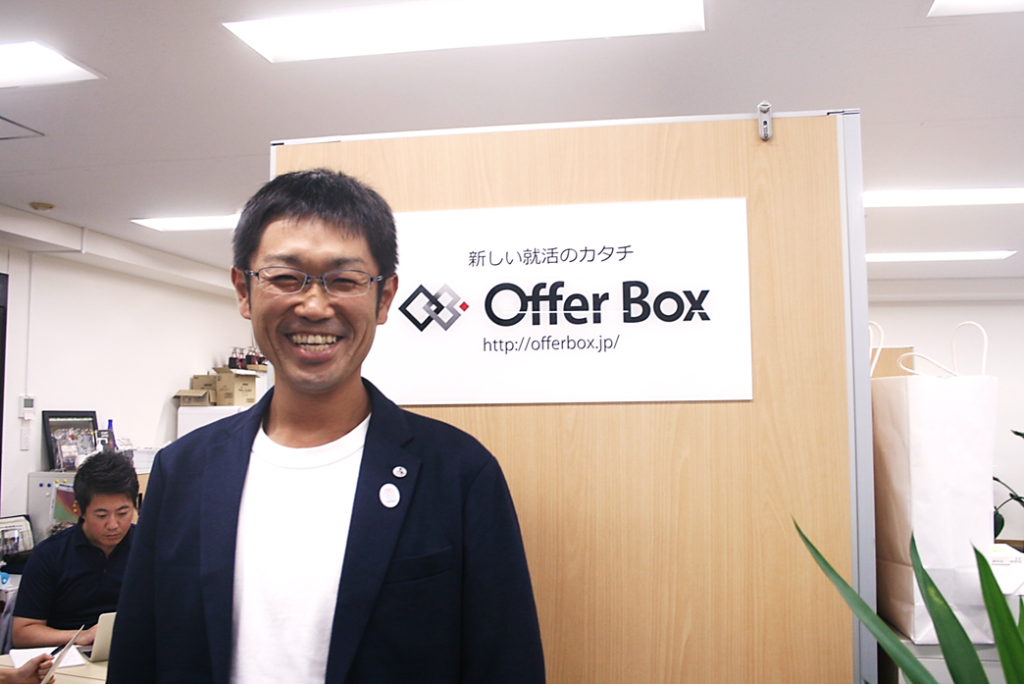
While growing i-plug’s business strongly, Nakano also works hard to support entrepreneurs. One example is Nishinaka Valley, a nonprofit group of business owners based around Nishinakajima who are eager to change Osaka, Kansai, Japan, and the world, which Nakano leads. It holds networking events several times a month and a business plan contest as a big event every six months, and Nakano personally gives one-on-one advice on things such as introductions to financial institutions and drafting business plans that can win loans.
We asked Nakano for a message to people aspiring to start businesses. “What separates people who succeed from those who don’t is ‘how much they act.’ Nothing comes from just worrying because you’re afraid of failing. Any business is fine to start with; just get moving, meet many people, talk about what you are thinking and doing, and as you keep moving while making corrections, you will find a plan that succeeds.” It is a persuasive message of encouragement typical of Nakano, who never stopped walking even in hard times and got the business on track while enjoying it.
Interview date: July 27, 2018
(Interview and text: Isshin Ohashi)