
The development began with “Is this treatment really right for me?”
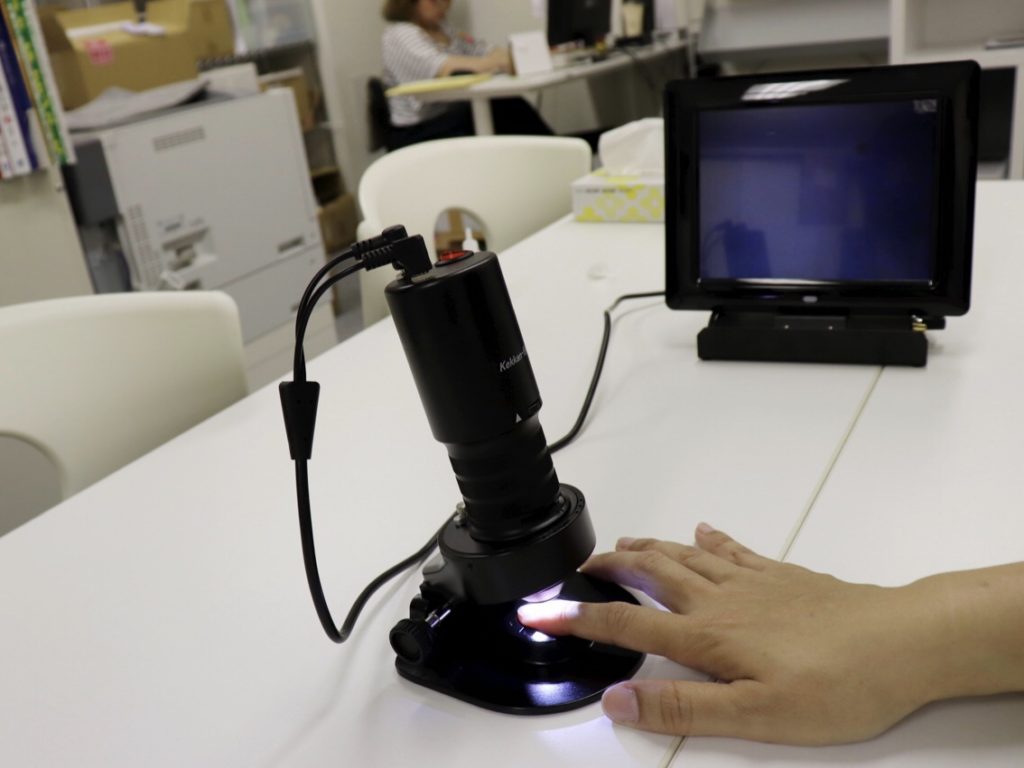
The capillary scope Kekkan Bijin is a device, made and sold by At Co., Ltd., for observing blood flow in the capillaries. Since the company was founded in 2009, about 1,000 units have already been sold. The main customers are medical institutions, pharmacy chains, the health insurance society of a major automaker, and the product development department of a major sanitary products company, which uses it to evaluate the effectiveness of its products.
The developer of Kekkan Bijin was Teruo Takeno, the father of CEO Dan Takeno. “When my father was found to have colon cancer, that led my father to start developing the capillary scope Kekkan Bijin,” recalls Takeno. Teruo, who ran an electronics store among other businesses, was a humorous person and a self-described inventor. Teruo loved coming up with groundbreaking ideas, such as a system to prevent train derailments and a system for going up and down pedestrian bridges.
After the illness was found, Teruo tried various therapies, such as hyperthermia, but was frustrated at not knowing whether they were right for Teruo’s own body. Amid this, what Teruo focused on to see the effects of treatment firsthand was the “capillaries.” While thinking it over, Teruo came across a certain paper. Learning that observing blood flow in the capillaries reveals small changes happening in one’s body, Teruo resolved, “I’ll make such a device myself!” That was the beginning of Kekkan Bijin.
Osaka’s “Why not just do it?” pushed the start of the business
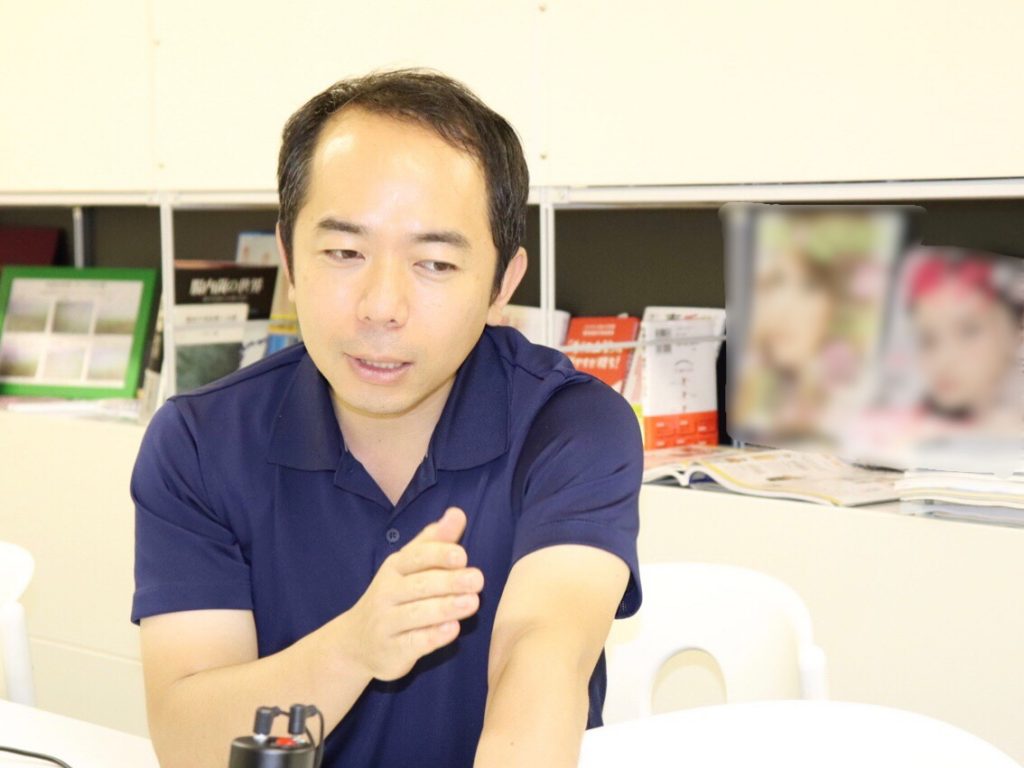
Teruo, whose own illness led to the invention, died in 2009, eight years after being diagnosed with cancer, despite an initial prognosis of six months to live. To carry on the Kekkan Bijin business developed by Teruo and spread it in the world, Takeno left the JASDAQ-listed electronic components maker where Takeno had worked and founded At Co., Ltd., a research and development venture, in Osaka in 2009. The company name “At” comes from the “@” (at sign). “I named it ‘At’ because I wanted it to be a company that plays the role of delivering the right information to the right people.”
Having grown up watching a father who ran businesses while immersed in inventing, Takeno says starting a business did not itself feel like a hurdle.
Takeno is originally from Kyoto. Asked why the company was started in Osaka, Takeno says, “People in Osaka are tolerant of challengers, so it was an environment where I could get a push to take on a challenge.”
“With anything, the more you think about it, the more risks and negatives you see, and you start to think it might be better not to try. In Osaka, people often say, ‘Why not just do it?’ And people in Osaka tend to value things that are interesting, even if new. That is exactly why, if you can make them think something is really interesting, there are many chances for them to spread the word or introduce you, which I think is another good point. I often do things without thinking too deeply (laughs), so for someone like me who values the ‘why not just do it?’ spirit, Osaka may have been just right (laughs),” Takeno said cheerfully. In reality, though, there were many struggles when the company was founded.
“When I first started, no one would lend me money, and when someone finally did, it was at a high interest rate. Looking back, I was still feeling my way at the start, and I think the reasons were that I could not write a good business plan and could not prepare enough of my own funds. Besides, I’m not very smart (laughs),” Takeno says modestly. Even so, At has never posted a loss since its founding and has increased revenue for nine consecutive terms. Perhaps it is the result of Takeno’s positive personality, pushing toward goals rather than dwelling on hardships.
Increasing what Kekkan Bijin can reveal, from healthcare to medicine
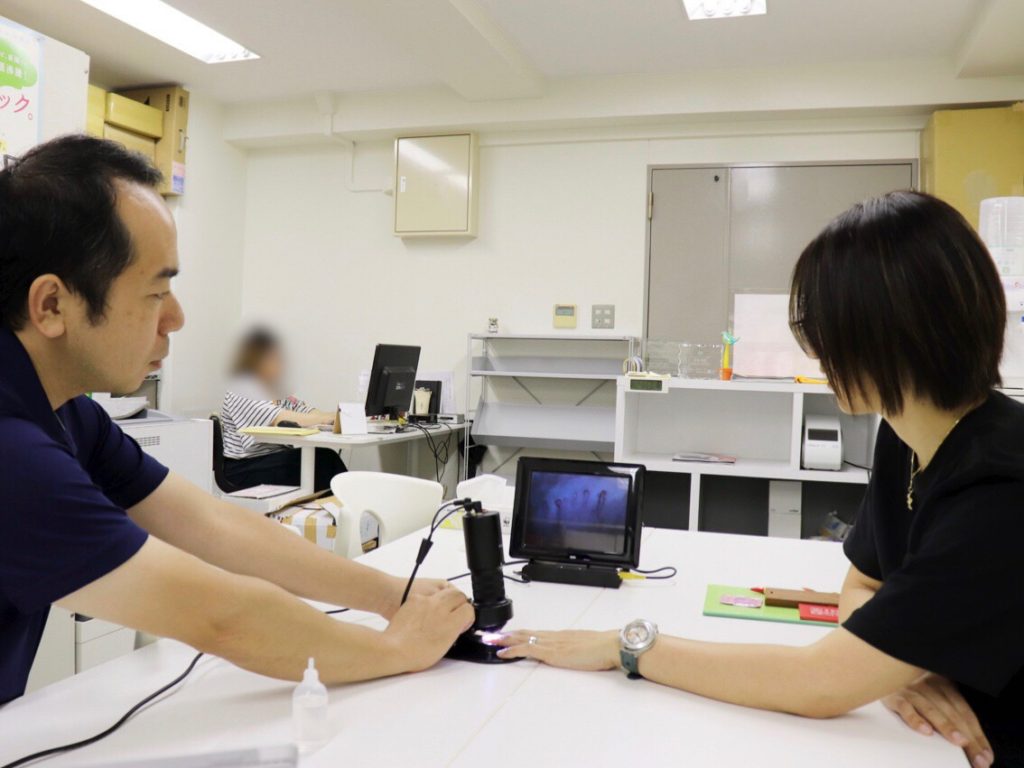
The capillary scope Kekkan Bijin is a device that easily observes blood flow in the capillaries without drawing blood. There are three points to observe: 1. whether the blood vessels are twisted, 2. whether their thickness is appropriate, and 3. whether the blood is cloudy. By seeing the tiny changes inside your own body, you can check your health and use it as an opportunity to rethink your lifestyle.
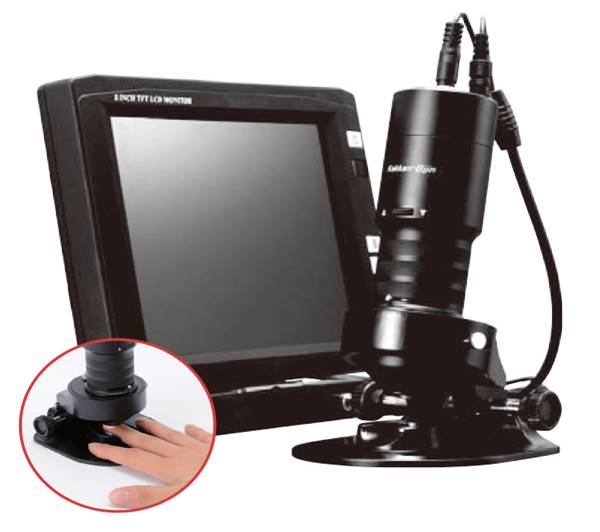
“Our devices so far have been for observing blood flow. What At is working on now is commercializing a device that can not only observe the capillaries but also quantify them. Going forward, we want to make clear at a scientific level the correlation of capillary condition with blood condition and age, and the relationship between capillaries and lifestyle habits such as stiff shoulders and diet, and diseases, so that Kekkan Bijin can help guide lifestyle improvements. For now it is still in the realm of healthcare, but someday I want to raise it to a level that can be called medicine and partner with medical institutions,” says Takeno.
Quantification means the state of capillary blood flow can be understood no matter who measures it, without depending on the individual. With adoption in research and development increasing, makers of health supplements such as tea, water, and supplements are testing how their products can change the capillaries, and in the future it may be possible to propose personalized health methods and products tailored to each person’s condition.
“I want to prevent illness by paying attention to changes in the body every day, and reduce the number of people who die of illness.” This is the wish of Takeno, who carries on the father’s will.
“First we will aim for something smaller, a tool as easy to use as a thermometer. And eventually, if machines were placed along people’s daily routes, it would be an environment where you get checked without even noticing, without having to check yourself,” Takeno said, also describing a future vision of one in every home.
If you want to start a business, get close to an entrepreneur you want to be like
Starting a business does not guarantee success, and many entrepreneurs are constantly fighting all kinds of anxieties. Takeno, who is growing the company steadily, says Takeno too always keeps an eye on their own market value.
“I’m not really the logical-thinking type, so I make a point of being close to people who can think logically. If you want to start a business, it might be good to consciously get close to people who have started businesses. Getting a job at a venture company is one way to do that. And it is important to dig deep and think through why you are starting a business,” Takeno said, sending a message to people who cannot find the courage to take the first step toward starting a business.
Interview date: August 23, 2018
(Interview and text: Nami Nagase)