

Sumashin: accurately capturing social needs and transforming telemedicine with new ideas
The sad reality is that as many as 60% of patients with lifestyle diseases stop seeing a doctor within two years, because of busy daily lives, treatment costs, and more. Stopping visits leads to their condition getting worse, greatly affecting not only patients and their families but also workplaces and companies… Next Innovation Inc. sees this everyday reality of stopping treatment as a loss to society and runs a business combining medical services with ICT.
Sumashin, a telemedicine service that lets you see a doctor “anytime, anywhere” on your smartphone, covers not only remote consultations but, for some services, delivery of medication to the patient as soon as the next day. This has created a treatment environment that patients can continue without strain.
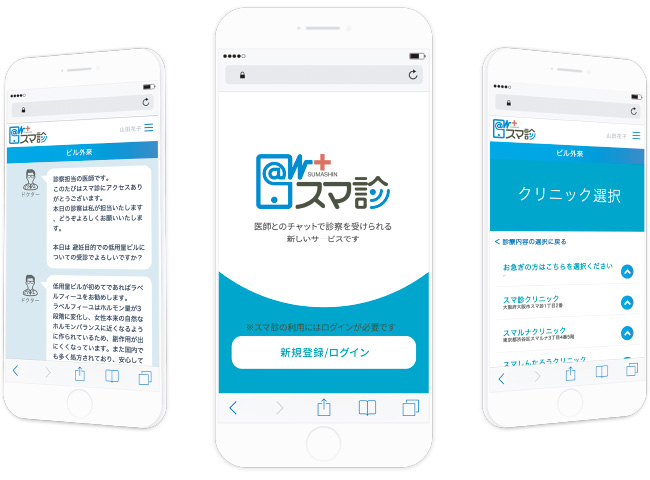
As of January 2019, the company has expanded the service into several Sumashin services specialized in areas such as AGA, ED, hay fever, and cat allergies. Among them, Smaluna, an online pill clinic that solves problems unique to women that are hard to talk about, such as dysmenorrhea, has won the support of many women and been widely featured in the media.
“Our services focus not on older people, the main target of conventional medical and healthcare services, but on working-age and younger people. In terms of conditions, too, a big feature is that we focus not on acute illnesses such as colds, but on complexes and worries, such as thinning hair and ED for men and menstrual problems for women,” says President and Representative Director Kenichi Ishii.
How were the company’s services and business model, which have the potential to change how people in Japan see doctors, born? Let us trace it through Ishii’s background and the path to launching the service.

Noticing a hidden social need through experience in medicine and pharmaceuticals, and turning it into a business!
What led Ishii to this business was largely two formative experiences while working as an MR (medical representative) at a pharmaceutical company after graduating from university.
“At the pharmaceutical company, I was involved in an organ transplant project and learned that after being discharged, patients whose transplants had succeeded could not get their medication without coming all the way to the hospital from far away for a consultation, even when they were in good health. The other was at a pharmacy where I worked on a project: while interacting with patients, I noticed that ‘many people come for a consultation not because they want to see a doctor, but because they want medication.’ I thought that in some fields, it could be done much more smartly by using ICT,” says Ishii.
Ishii goes on to say that in graduate school, research on the theme “Why are doctors so busy?” and the results of analyzing doctors’ activities gave confidence that the business would succeed.
“When we actually tracked doctors’ daily activities, only 10% of their work made use of their specialty. The rest was work that doctors outside the specialty could do, or work that did not even need a doctor.”
Having gained experience in medicine and pharmaceuticals, Ishii started a company in 2013. In the meantime, Ishii kept developing the business model that became the prototype of Sumashin and waited for the right time. Two years later came an event that could be called a turning point for the industry: the “new interpretation of telemedicine” announced by the Ministry of Health, Labour and Welfare on August 10, 2015. The range of care and types of illness that could be covered by telemedicine expanded greatly, amounting in effect to a full lifting of the ban, and Ishii says it was the moment the potential of the business in mind came into view. Seeing this as an absolute business opportunity, Ishii decided to commercialize it, forming a new team with people who could design the system and the online experience and people strong in drug wholesale and distribution, founding a new company, Next Innovation Inc., and accelerating efforts to build the business.
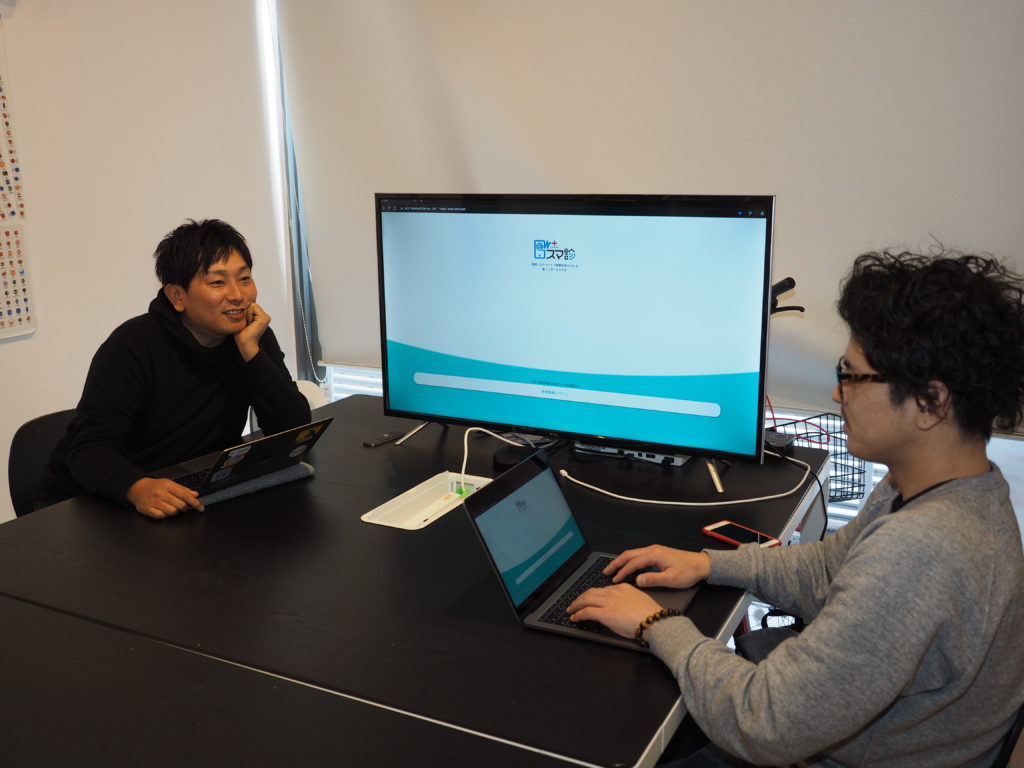
Success by building in solutions that overcome three barriers to seeing a doctor
At the time, some information predicted the online consultation market would grow to 20 billion yen by 2020, so many companies entered it. Among them, Ishii’s team set its own target and medical fields, and as the problems for the service to solve, identified three barriers standing in the way of patients seeing a doctor: first, the “distance barrier,” such as the hospital being far away or no specialized clinic nearby; next, the “knowledge barrier,” where people judge their own illness because information is easy to get online; and finally, the “time barrier,” such as crowded hospitals and long waits caused by a shortage of doctors. To solve these three, they built solutions into the business model and developed Sumashin. As a result, in January 2017 the company was recognized at the 7th business plan contest of the all-Osaka entrepreneur support project “Start UP!” and moved on to the fundraising phase.
In April 2017, Otoko no Sumashin launched as Japan’s first demand-generating telemedicine service. Since then, the company has been rolling out Sumashin services for various specialized fields while taking in society’s needs. Asked how it feels a year and a half after launch, Ishii said, “We are still building new services and improving our current ones. So I feel our Sumashin must keep evolving and keep creating new things.”
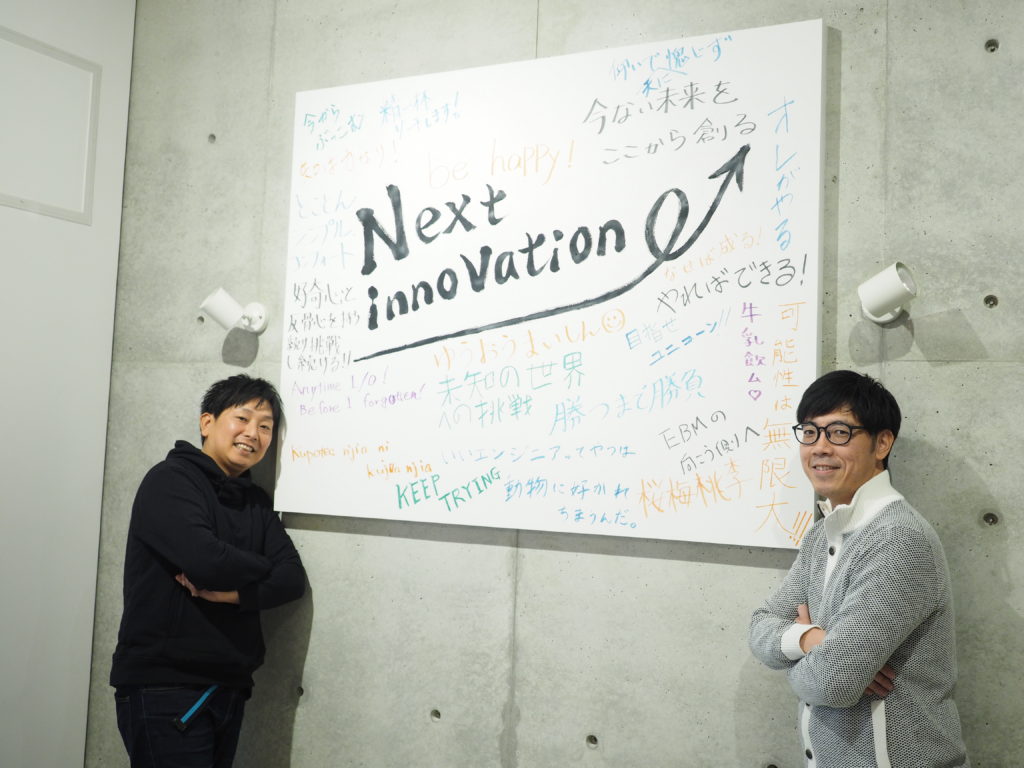
From a workplace where innovative ideas are born one after another, more new innovations!
What Ishii values in running the company is “consciously practicing contrarian management, deliberately going where other people and companies don’t go.” Many people tend to head toward the safe, risk-free path, but Ishii often steers in exactly the opposite direction. The idea is that innovative ideas for overcoming difficulties are born precisely in hard circumstances.
“At our company, I tell employees too, ‘Whoever takes the risk is the greatest.’ Maybe because of that, not only the founding members but even young people who recently joined as interns make proposals that are risky yet attractive and interesting. Of course, understanding that employees’ proposals carry risk, I also leave them to the people who proposed them,” says Ishii. As these words show, the company seems to have created an environment where members propose innovative ideas one after another. “I want us to be a company that Kansai startups want to come and see and learn something from. That is how much I want to keep creating new, innovative businesses with my colleagues and contribute to society.” Ishii seems to be looking not at the present, but further ahead, at the world to come.
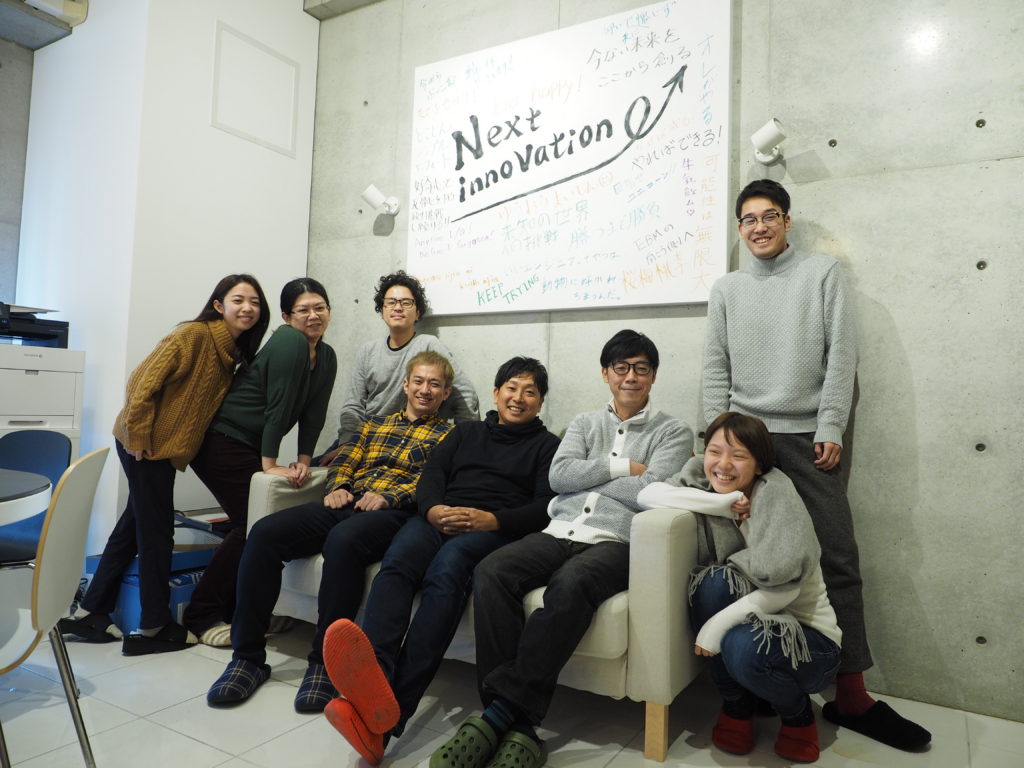
Interview date: December 2018
(Interview and text: Manabu Kitagawa)