

The “fragmented systems” troubling the understaffed lodging industry
There are about 63,000 lodging facilities in Japan, including hotels, ryokan inns, and simple lodgings, more than the number of convenience stores. Nearly 80% of them are small facilities with nine or fewer employees. The industry has had big ups and downs in recent years: the market grew in the 2010s on the tailwind of strong inbound demand, and in 2020 demand vanished in an instant because of COVID-19. The one problem it has consistently faced is a shortage of workers.
To solve this problem digitally, many services have emerged in both software and hardware, such as cloud systems for the lodging industry and smart locks that allow automatic check-in. In particular, many makers have released what are called PMS (property management systems), which manage bookings, room assignments, payments, and more in one place, and each company competes on features and UI.
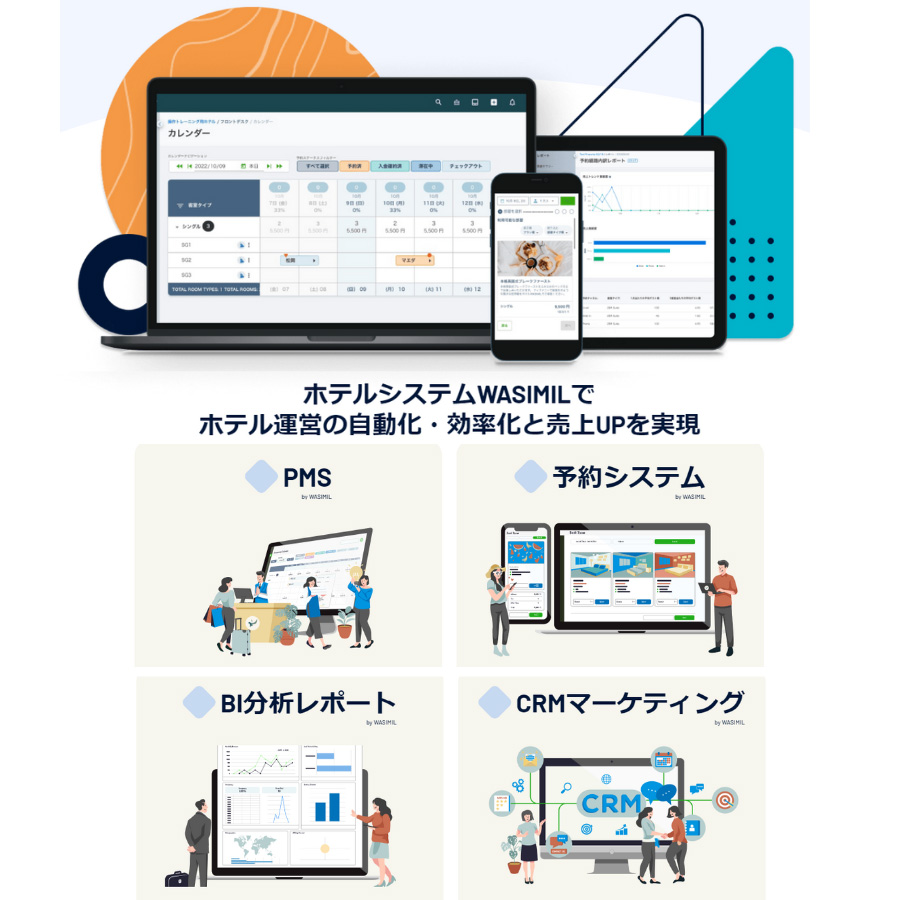
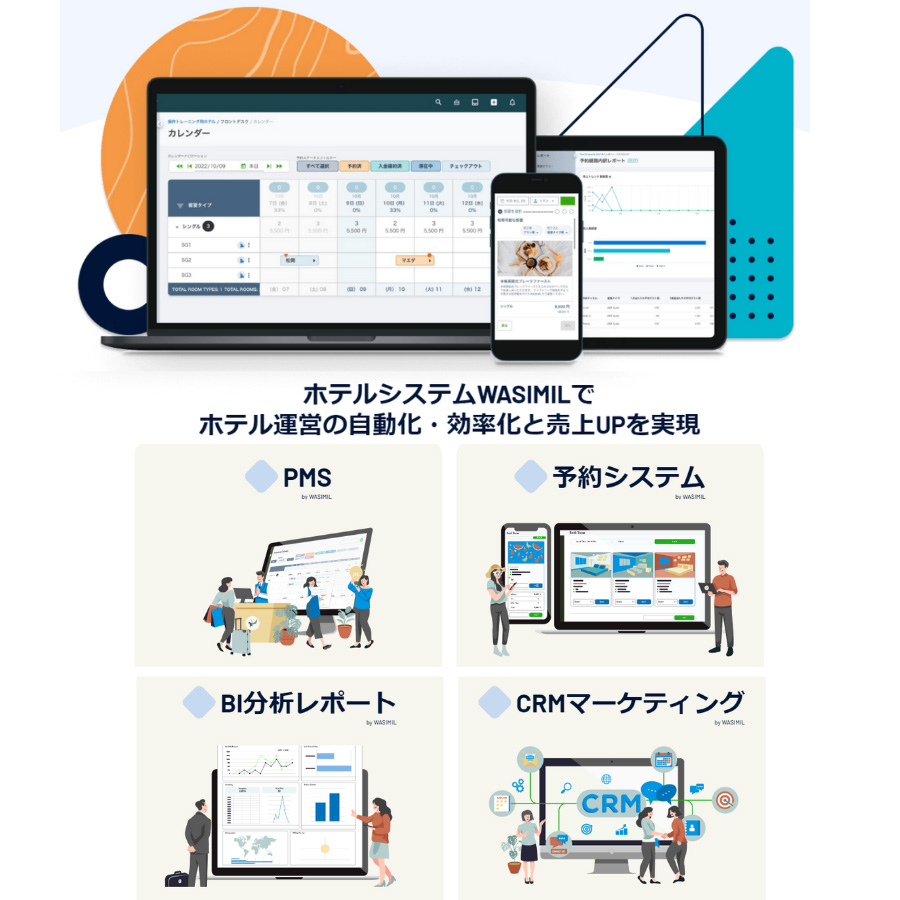
Standing apart from those services is a system that offers not only PMS functions but also marketing, BI analysis, and more, supporting even the “offensive” side of hotel management. It is WASIMIL, developed by AZOO Inc. (AZOO), a startup headquartered in Kyoto. Lodging facilities that have used separate software for booking management, CRM, business analysis, and so on can do it all in one place with WASIMIL. It is a powerful system that makes operations more efficient while also helping raise revenue.
“Many small lodging facilities have installed systems, but quite often their effort is eaten up by making the systems work together. For example, they automate booking management with a PMS, but enter data into Excel by hand when analyzing sales. The smaller the facility, the fewer the staff, and this reduces the resources they can put into attracting guests, which is what really matters.”
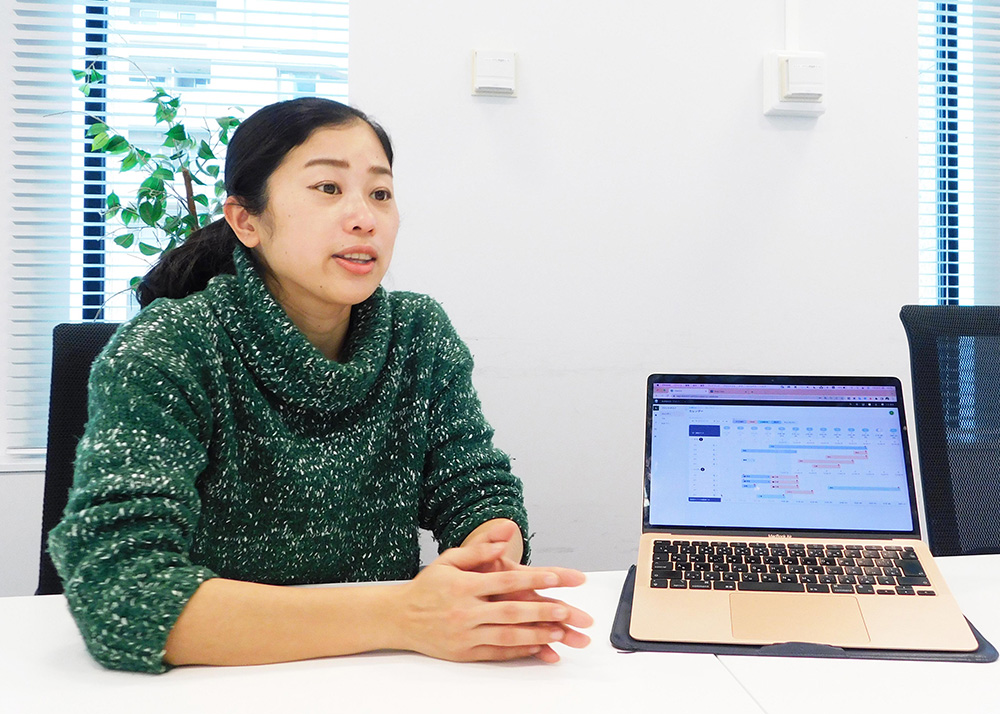
So says Representative Director Yuko Yokota. The service name WASIMIL was inspired by the English expression “eagle eye,” meaning sharp powers of observation (washi means eagle in Japanese).
“Taking in everything at once like an eagle and dealing with it all at once. We want to comprehensively solve the problems lodging facilities face with such a service. And our company’s mission is ‘to support Japan as a tourism nation in a data-driven way.’”
Searching for a career connecting the local and the global
Yokota’s path to founding AZOO had several turns. Yokota studied environmental engineering at university, and when job hunting, joined a TV station out of a wish to “do work that connects the local and the global through the act of ‘conveying,’ or that revitalizes regions,” gaining experience in TV program scheduling and video production.
“I built my career with a focus on ‘conveying,’ also making use of my areas of strength, such as making environmental programs. But gradually I began to feel that I lacked ability as a creator, especially ‘the ability to structure a story.’”
A TV station’s mission is to create content. Feeling the limits of that skill, Yokota left the station after nearly five years and began looking for a career connecting the local and the global in a context other than “conveying.” That was when Yokota came across the Indonesian Government Scholarship, a program in which the Indonesian government recruits students from around the world to study Indonesian traditional culture and language and provides scholarships.
“Indonesia had positive feelings toward Japan, many Japanese companies had entered the country, and its economy was growing. I applied because I felt that ‘acquiring a niche skill, the Indonesian language, would open a different career path.’”
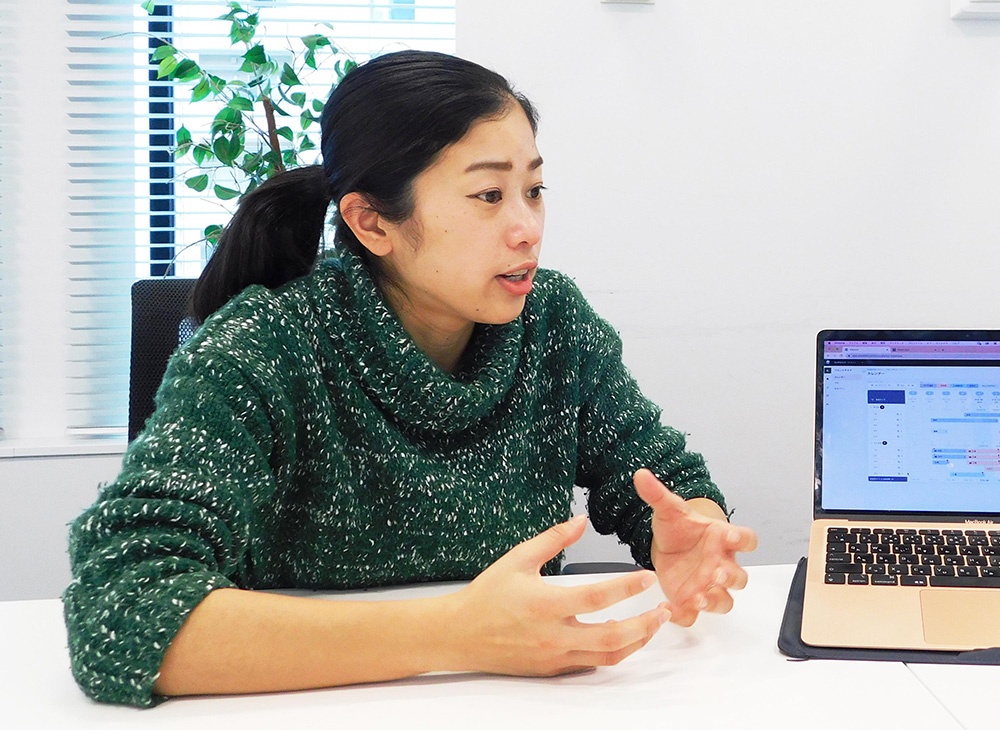
After studying culture at an Indonesian university for a year, Yokota returned to Japan and started a new career making use of the overseas experience. Working as a part-time staff member and specialist at the Ministry of the Environment, the Japan External Trade Organization (JETRO), the Japan International Cooperation Agency (JICA), and others, Yokota mainly supported the overseas promotion of Japanese products, gaining experience in liaison with governments in Southeast Asia, India, Australia, and elsewhere, and in web marketing consulting.
“Helping Japanese companies expand overseas and developing overseas demand was exactly the kind of work that connects the local and the global, and I focused on that in my work, but I also saw problems. Companies that can expand overseas need corresponding management resources, and training overseas talent or setting up bases abroad is a high hurdle for small and medium-sized companies. I struggled with that dilemma.”
Right around then, the Japanese domestic market was booming with surging inbound demand, and watching the situation, Yokota had an idea.
“It is hard for small and medium-sized companies to go overseas. But if there is demand from abroad coming to Japan, that demand can reach companies in each region. From that idea, I began to think, ‘Couldn’t I build a career in the context of tourism?’”
Developing a product that makes use of overseas strengths
What led Yokota’s wish to “energize local areas through tourism” to reality was a co-founder. The co-founder, from Canada, had built a career in real estate and the lodging industry and knew overseas hotel systems well.
“Overseas, there are more advanced systems for lodging facilities, but Japan uses legacy systems (computer systems built on older technology) and has not kept up with the times. With rural ryokan inns closing one after another, we had been talking about how ‘we’d like to build a good system.’ In building it, what we valued was going beyond simply making operations more efficient and looking ahead to promotion and marketing. My hometown is Himeji, and many tourists only see Himeji Castle and leave without staying the night, so spreading the economic benefits of tourism was a problem. Having people stay longer through lodging is necessary to revitalize regions. So we wanted a system that not only makes operations more efficient but also supports marketing to increase each lodging facility’s ability to attract guests.”
The first thing they worked on was gathering engineers to develop the system. The co-founder mainly handled this, avoiding Japan, where competition for IT talent is fierce, and reaching out to engineers overseas from the start. Yokota describes the benefits as follows.
“The talent pool overseas is bigger than in Japan, so it is easier to find people. And because they have experience developing the latest systems on contract for Western companies, they are a step ahead in skills.”

After that, development continued with subsidies from Kyoto Prefecture, and the product gradually took shape. Partly because a condition of the subsidy was “to eventually start a company in Kyoto,” AZOO Inc. was founded in 2020. The development period continued for a while after that.
“We have aimed for a system that integrates the functions of various cloud services while also fitting Japanese business practices, so we took time on development. We added staff who had worked in the lodging industry to the team and repeated research and improvements.”
Aiming to make Japan a true tourism nation, driven by data
After about three years of development, the product version of WASIMIL was finally released in 2022, and the business entered the phase of full-scale expansion. The company is now refining the UI and is in the final stage of building a structure to expand the number of adopters.
“Sales staff have now joined, and we would like to expand our sales channels quickly, but because a hotel system is used every day, we also need to build a support structure for customers. Product updates, developing sales channels, building support, hiring, fundraising… every day is hectic.”
The team has been fully remote since its founding, and uses a virtual office for meetings and company events to maintain a sense of unity and motivation. Now that the business is in full swing, there are also plans to set up a physical office and build a core team to accelerate the business. Looking further ahead, the target is Expo 2025 Osaka, Kansai, Japan.
“Our goal is to have won about one-tenth of the hotel system market by the time the Expo ends. At the same time, we want to work with local governments on tourism promotion. Through WASIMIL, data accumulates on things like which countries travelers come from, in groups of how many, for how many days, and where they stay, so we want to promote tourism based on that and also contribute to regional revitalization.”
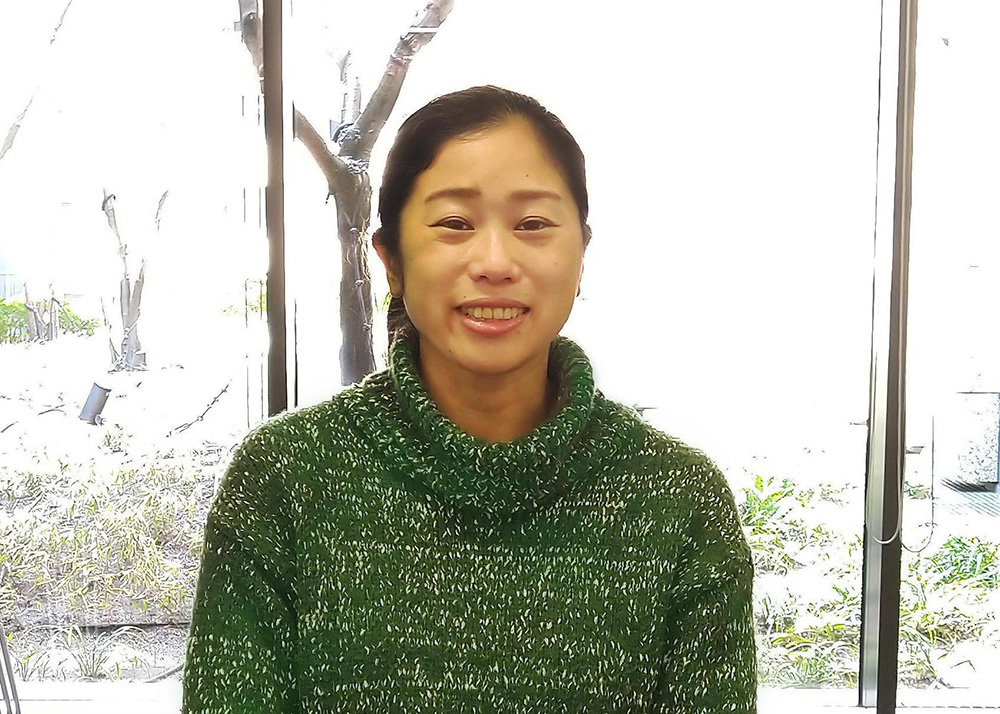
Yokota’s wish to connect the local and the global is steadily bearing fruit through the power of data. Finally, Yokota shared a vision of Japan’s future beyond that.
“I was born in 1985 and have lived with the recession after the bubble burst for as long as I can remember. Indonesia, where I once stayed, was in the middle of economic growth, and the energy was completely different from Japan. For Japan to regain its energy, revitalizing regions through the tourism industry is essential. Evolving the tourism industry with the power of data so that Japan regains its energy as a tourism nation: that is the future I envision.”
Interview date: January 20, 2023
(Interview and text: Hideaki Fukui)