Aya Tsuboi

Bringing together African and Japanese technology to deliver safe water to everyone

Aya Tsuboi

Sunda Technology Global Inc.

Position
Representative Director and CEO
Website
https://www.sundaglobal.com/ (opens an external site in a new tab)
Business
<span style="margin-left: -1em; text-indent:1em;">• Manufacturing, selling, and providing SUNDA, a pay-as-you-go automatic well water fee collection system, in Uganda, Africa</span>

The water problem troubling rural Africa

The United Nations website describes the sixth Sustainable Development Goal, “clean water and sanitation for all,” as follows.

“At least 3 billion people live with water whose quality is not managed.”
“At the current rate, 1.6 billion people will not have safe drinking water in 2030.”

It is hard to imagine in Japan, where safe water comes out when you turn the tap, but looking around the world, regions with a stable supply of sanitary water are in the minority. Uganda, in eastern Africa, spreading north of Lake Victoria, is one of the countries with water problems. Agriculture thrives in Uganda, but most rural areas have no piped water and still depend on well water for daily use. That in itself is not the problem, though. The problem lies in the pumps that draw up the well water.

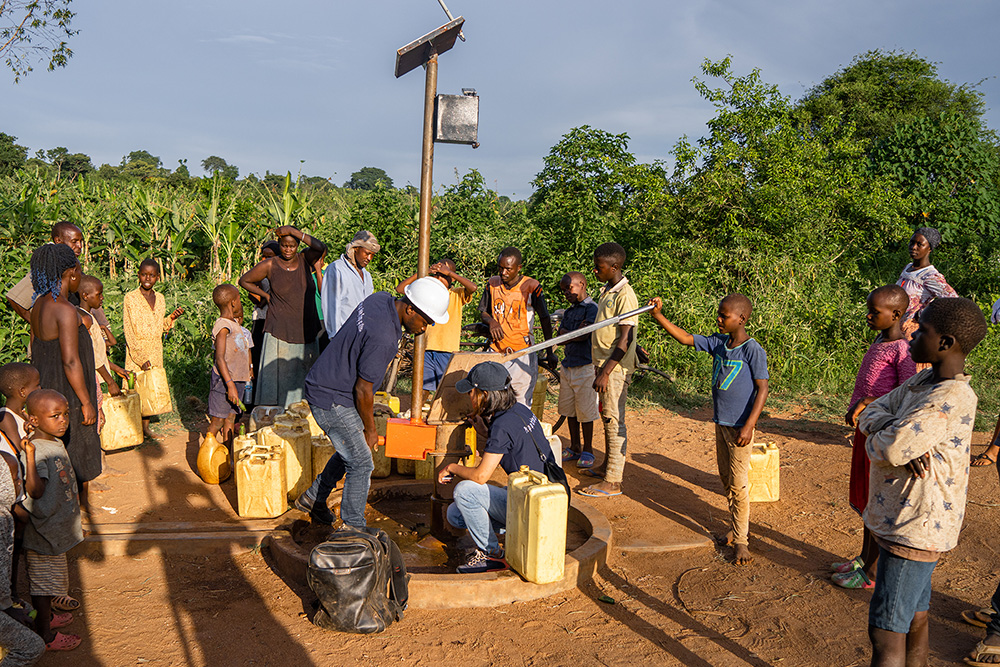
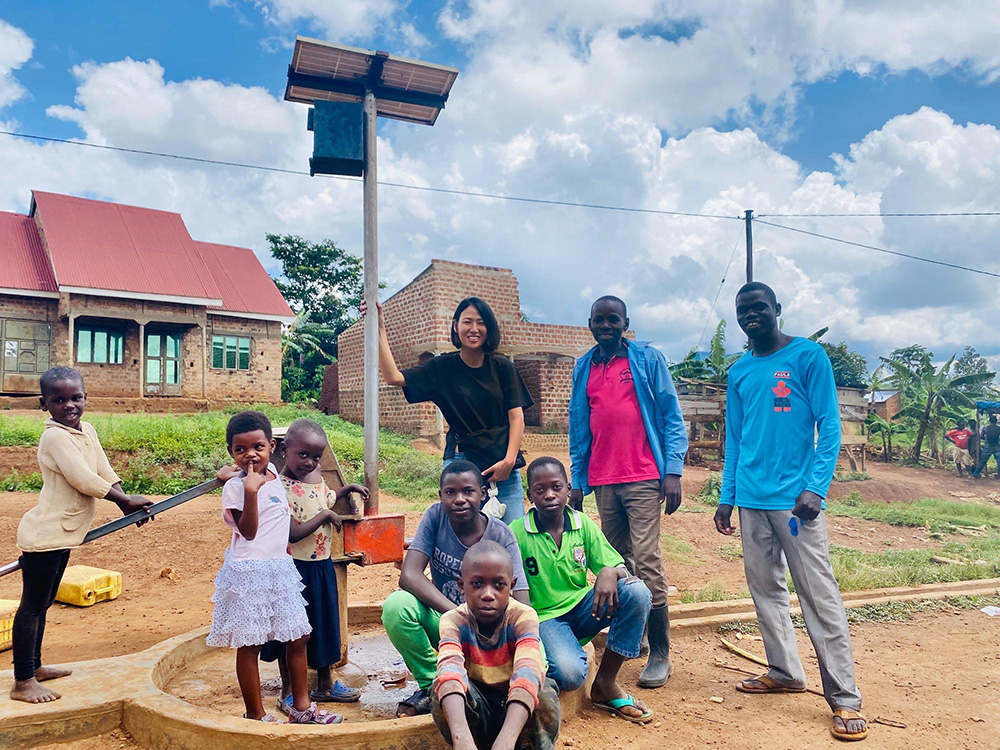
Hand pumps, which draw up well water by moving a lever by hand, break down over the years and become unusable. Local residents pool money to pay for repairs, but often not enough money is collected and the pumps are left broken. As a result, people in areas with broken wells have to walk several kilometers to another well. In rural areas, this job often falls to women, who frequently face danger on the way. They can ask someone with a motorbike to fetch water, but that means paying a high price. Using unsanitary water from reservoirs spreads diarrhea and can even put children’s lives at risk.

The root of the problem is not poverty but unfairness

Is poverty the reason repair money cannot be collected? No. Residents in rural areas own smartphones that cost far more than water. The real reason is unfairness arising from how the money is collected.

Normally, after a well is installed by the government, it is managed by a well management committee made up of representatives from each community. The committee collects the repair costs mentioned above from each household, but many residents refuse to pay because they are unhappy about paying a flat fee even though each household uses a different amount, and because they distrust how the collected money is managed. The psychological burden on the committee collecting the money is also heavy, and as a result, proper maintenance of the wells becomes difficult.

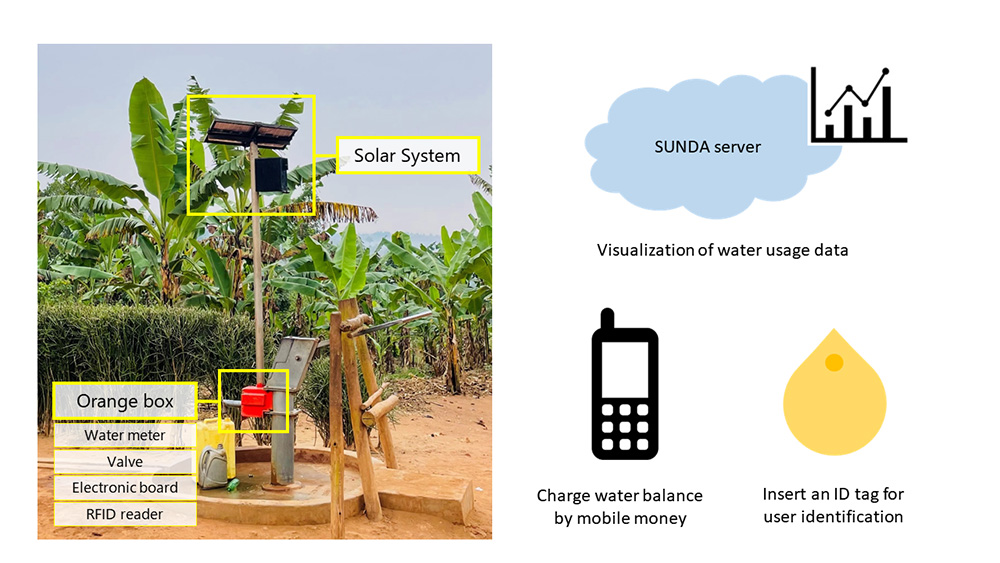
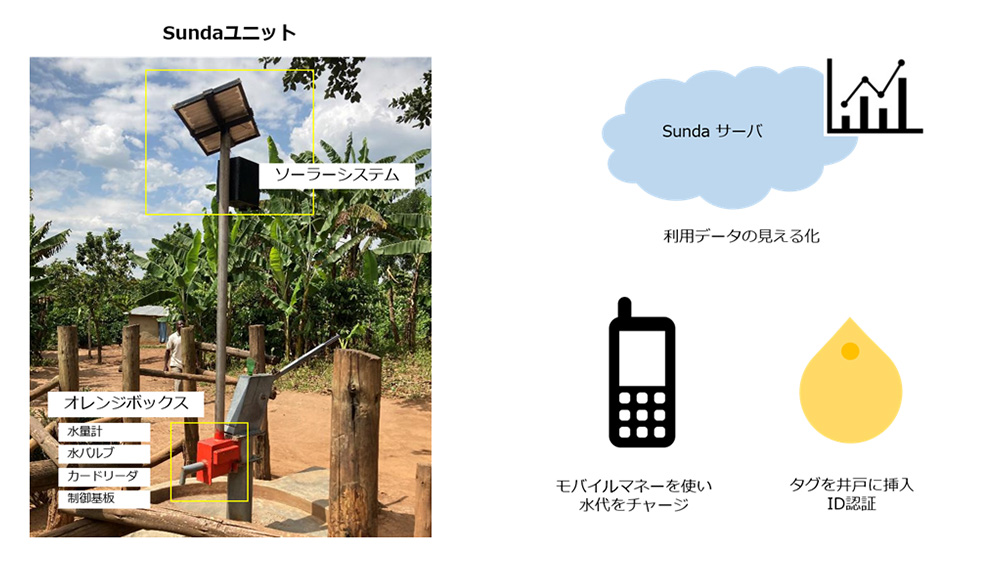
Sunda Technology Global Inc. (Sunda), a Japanese startup, is working hard to solve this problem with digital technology. The company’s approach is to “use the mobile money commonly used in Uganda and make automatic payments linked to a water meter attached to the pump.” When the ID tag distributed to each household is inserted into the pump, the amount of water drawn is deducted from the water balance charged to the user account linked to that ID.

Sunda Technology Global Inc.

“Sunda is the Ugandan word for pump. Our slogan, ‘Pump up Water, Pump up Africa,’ carries the meaning of ‘drawing up water and energizing Africa.’”

Sunda Technology Global Inc.

So says Aya Tsuboi, founder, Representative Director and CEO. Why did Tsuboi come to work on water problems in a place 11,000 km away from Japan?

To take on a problem, you need to go to the site

After graduate school at Kyoto University, Tsuboi joined Panasonic Corporation (Panasonic), a major electronics maker, in 2013. While building a career as a data analysis consultant, Tsuboi reached a turning point in 2016 by taking part in an in-house workshop that linked global social issues with business.

Once a year, participants researched global social issues by attending lectures by outside speakers and researching on the web, and came up with plans to solve them.

“The second year I took part, the target was Kenya, and that was when I first became interested in Africa. In that workshop, I came up with a plan to use telemedicine to address the situation where people die even from simple illnesses. After that, I worked toward commercializing it, but however much I refined the plan without knowing the site, I could not give a convincing presentation, and it did not take shape.”

Tsuboi, who had come to feel “if I’m going to do this, I want to go there,” got a perfect opportunity in 2018. As part of an in-house program to develop people to support developing countries, there was a call for participants in the activities of the JICA Overseas Cooperation Volunteers. Tsuboi raised a hand without hesitation, was sent to Uganda, and worked on water problems.

Sunda Technology Global Inc.

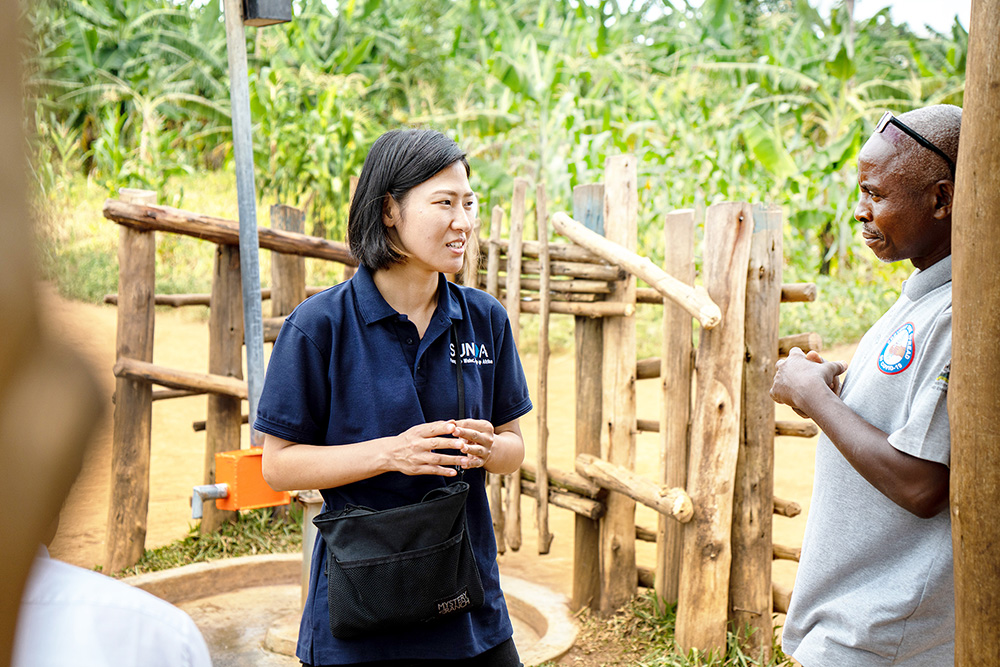
“I was assigned to a local office in charge of water and worked on well management problems and raising income in rural areas. There had been efforts to solve the well problem before, but after listening to people on site, my impression was that ‘none of them are likely to work.’ The hints came from opinions raised at meetings with residents, such as ‘a flat fee is unfair’ and ‘what to do about handling the collected cash,’ and from there the concept of ‘pay-as-you-go billing using mobile money’ was born.”

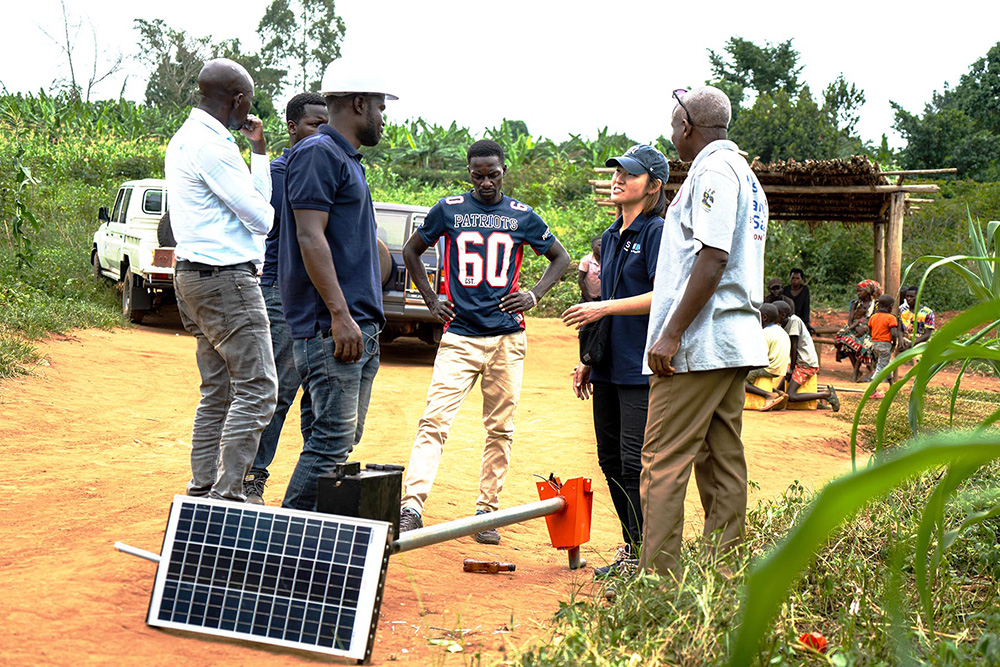
From there, Tsuboi looked for an engineer who could make the idea a reality. The search started in Japan, but it took unexpectedly long, so Tsuboi looked in Uganda instead and met an engineer skilled in metalworking and more, who still works with the team as a member today. After returning to Japan, Tsuboi went back to work at Panasonic while the engineer advanced product development on site, and the prototype of Sunda took shape.

In 2020, Tsuboi founded Sunda Technology Global Inc. But in fact, Tsuboi had not yet fully decided to go all in on starting a business.

Sunda Technology Global Inc.
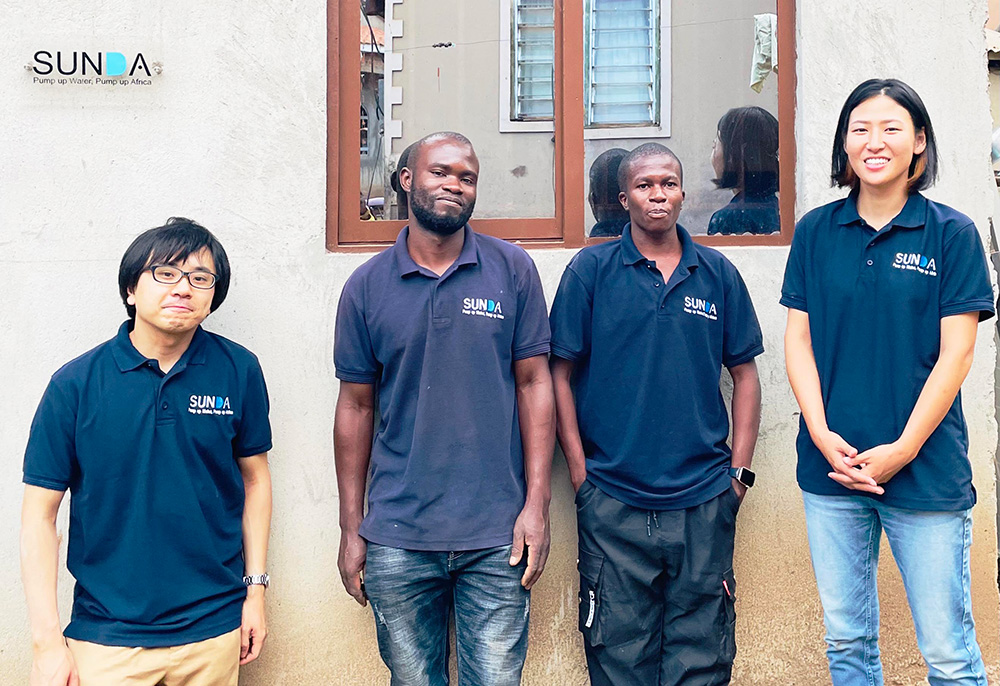
With founding members. From left: engineer Tanaka, engineer Kasozi, engineer Ssebina, and CEO Tsuboi

“Thinking about receiving grants and other support in the future, it was better to register early, so at the time I set up the company as a trial. What finally made me decide to bet my life on Sunda was receiving the 6th Japan Entrepreneur Award in 2021.”

Having left Panasonic when the time was right, Tsuboi finally moved the base to Uganda and launched the business in earnest.

Africa: many problems, but few people working on them

There was a big difference in the progress of the business between working remotely from Japan and settling in on site. Once work began in Uganda, contact with the residents who actually use the product increased, which accelerated development. Exhibiting at local trade shows and taking part in water-related forums also greatly advanced publicity.

The number of wells with Sunda units installed has now grown to about 150, expanding steadily according to plan, but for now the focus is on improving the precision of the business rather than chasing numbers.

“The current product has the problem that maintenance costs need to come down further for it to work as a business. We are at the stage of first putting in place a system for mass production and a service system for residents, and building a foundation for future expansion. This year we also want to take on larger fundraising, including crowdfunding.”

Sunda Technology Global Inc.

“This business also has the goal not only of solving water problems but also of creating jobs in Africa. Ideally, we would make everything in Uganda, but we procure what cannot be made there from Japan, China, and elsewhere, and want to increase the share of work done in Uganda as much as possible. We want to provide technical guidance for that, even if it takes time.”

As a business, Sunda has only just started running. But Tsuboi already has a clear vision in mind. Of course, water problems are not limited to Uganda. The goal is eventually to solve water problems in neighboring countries and regions and across Africa. Tsuboi also spoke about a bigger goal beyond that.

“Water is not the only problem the world faces. So we want to develop products that can solve more social issues. Now the team structure is coming together: ‘we look at the problem and show the direction of the solution, local engineers develop the product, and Japanese engineers support mass production and quality control.’ If this process works well, we can make use of engineers in both Japan and developing countries, and that leads to solving problems. We want to create a new form of business like that.”

In graduate school, Tsuboi stayed in Bangladesh for meteorology research and developed a vague longing to “work overseas.” Why choose Africa, a region with so many problems, as the base of activities?

“For better or worse, Africa is relaxed. I felt it during my stay with the JICA Overseas Cooperation Volunteers too, and it is a very comfortable place to be. But the biggest reason is that there are many problems and few people working on them. A good team is coming together, so I want to solve as many problems as possible with this team.”

Interview date: January 10, 2023
(Interview and text: Hideaki Fukui)