Rehabilitation3.0 Inc. offers technology that monitors a person’s heart rate and breathing while they sleep, then uses the data to predict their health condition for the following day.The company’s mission is to improve people’s health and performance by applying its technology in medicine, caregiving, and other industries. We talked with Hirokazu Masuda, who is passionate about “using AI to bring about a healthier future for the global population.”
Please tell us about Rehabilitation3.0.
Our service uses AI to analyze a person’s health condition every day and then applies those results to their nursing or medical care or to promote their well-being.
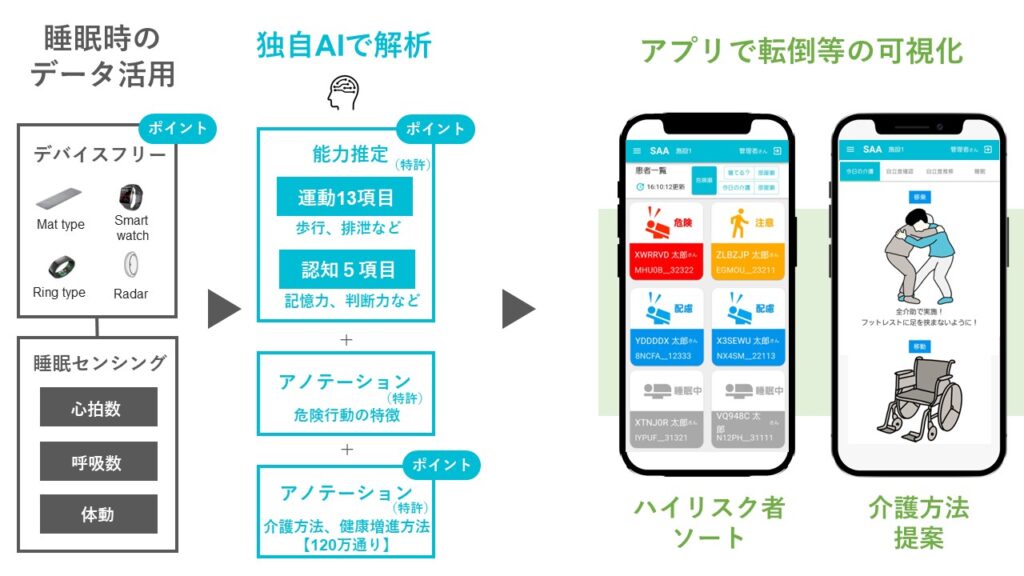
The technology tracks the vital signs (pulse rate, respiration rate, body motion) of care recipients during their sleep. It then forecasts thirteen of their motor abilities (such as walking and eating) and five cognitive abilities (memory, judgment), each in three levels.
The forecast enables personalized monitoring and care for the next day and can also reveal emerging signs of dementia.
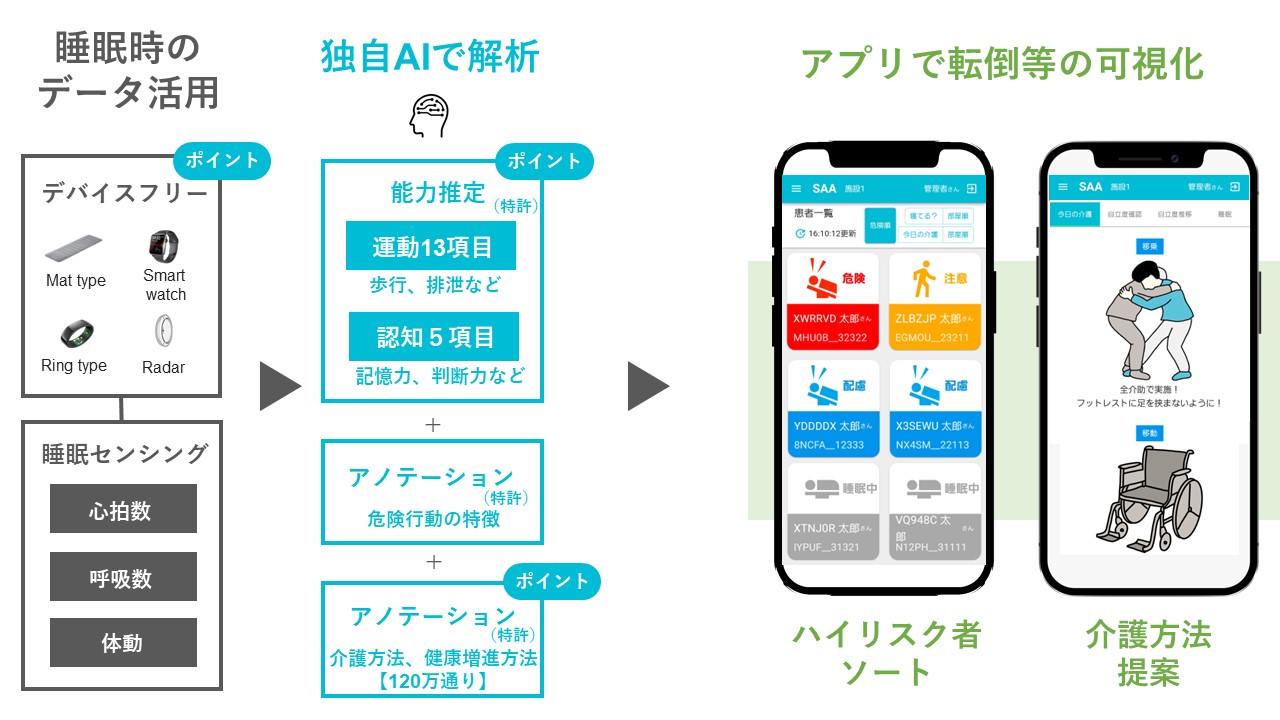
Our AI’s accuracy in forecasting motor and cognitive skills is above 85%, as good as a therapist with more than ten years of field experience. That is why we can assess up to 1.2 million health risks and suggest tailored exercise programs. We believe the potential goes beyond nursing homes to many other fields. We are currently planning to launch in April of 2024.
Where would this technology thrive?
We already know that approximately 20% of those older than 85 have health conditions that waver day-to-day. Our technology can predict the dangers that are caused by this fluctuation. For example, “Today, Mr. A. might take a tumble near his bed,” or “Ms. B. may trip while walking today.” By anticipating the risks, caregivers can prevent accidents before they happen.
Then, there’s Japan’s critical labor shortage of caregivers and therapists. Using AI to help grasp the day-to-day conditions of care recipients so caregivers can attend to them accordingly will enable more efficient staff deployment and improve the staff’s working environment. We believe our technology will effectively complement areas where existing nursing robots and monitoring sensors may fail.
Another strength is that our technology is device-agnostic. It works with existing alarm detector mats, smart watches, monitoring sensors, almost all devices in the field.
More than thirty nations and regions are forecasted to become a super-aged society in the next ten years or sooner. That is why we believe our service has potential across the world.
How do you want to broaden your business?
My first job as an occupational therapist was at a general hospital. As I worked the rounds of outpatients, inpatients, and visiting or attendant services, I saw the need for ICT across all sections. That is why I made sure the visiting rehabilitation company I started after I left the hospital was digitally integrated. The current company is an extension of that with continued digital transformation and AI implementation.
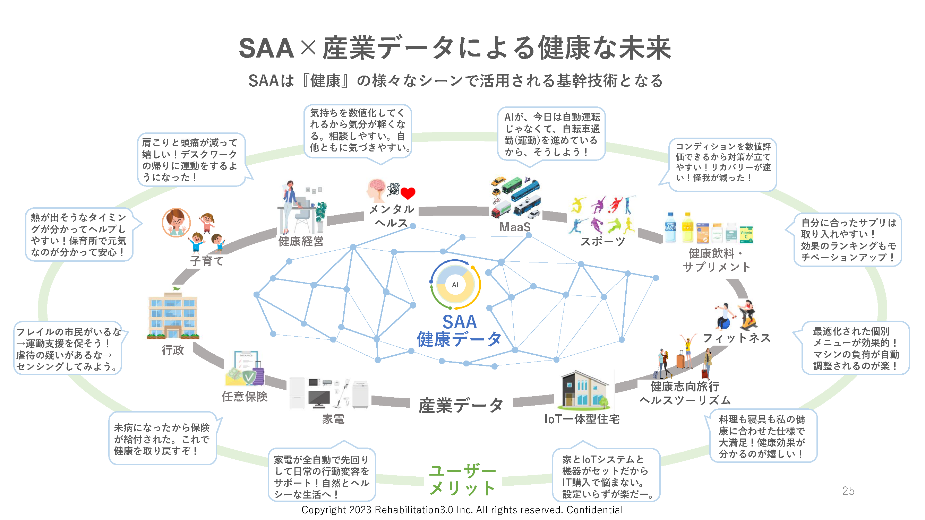
I believe our technology can go beyond the fields of medicine and caregiving and be applied in a diverse range of industries. It has unlimited potential: preventing driving accidents, predicting children’s health fluctuations, managing the fitness of athletes, maintaining the health and suggesting exercises for those in their prime, to name a few.
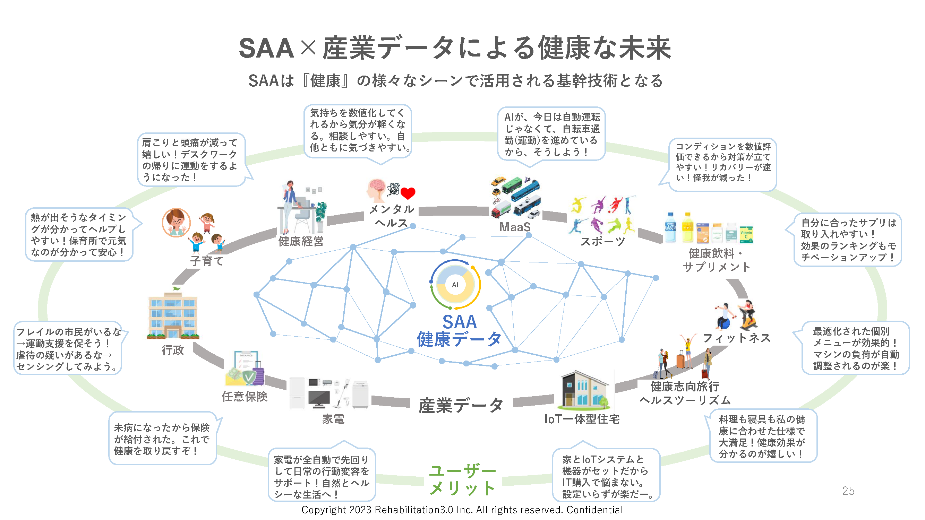
I would like to collaborate with companies across various fields to help society. I will uphold my original vision of “making everyone in the world healthy and happy” and keep striding towards my goal.