
Hydrobot, a business idea that achieved big results at two contests
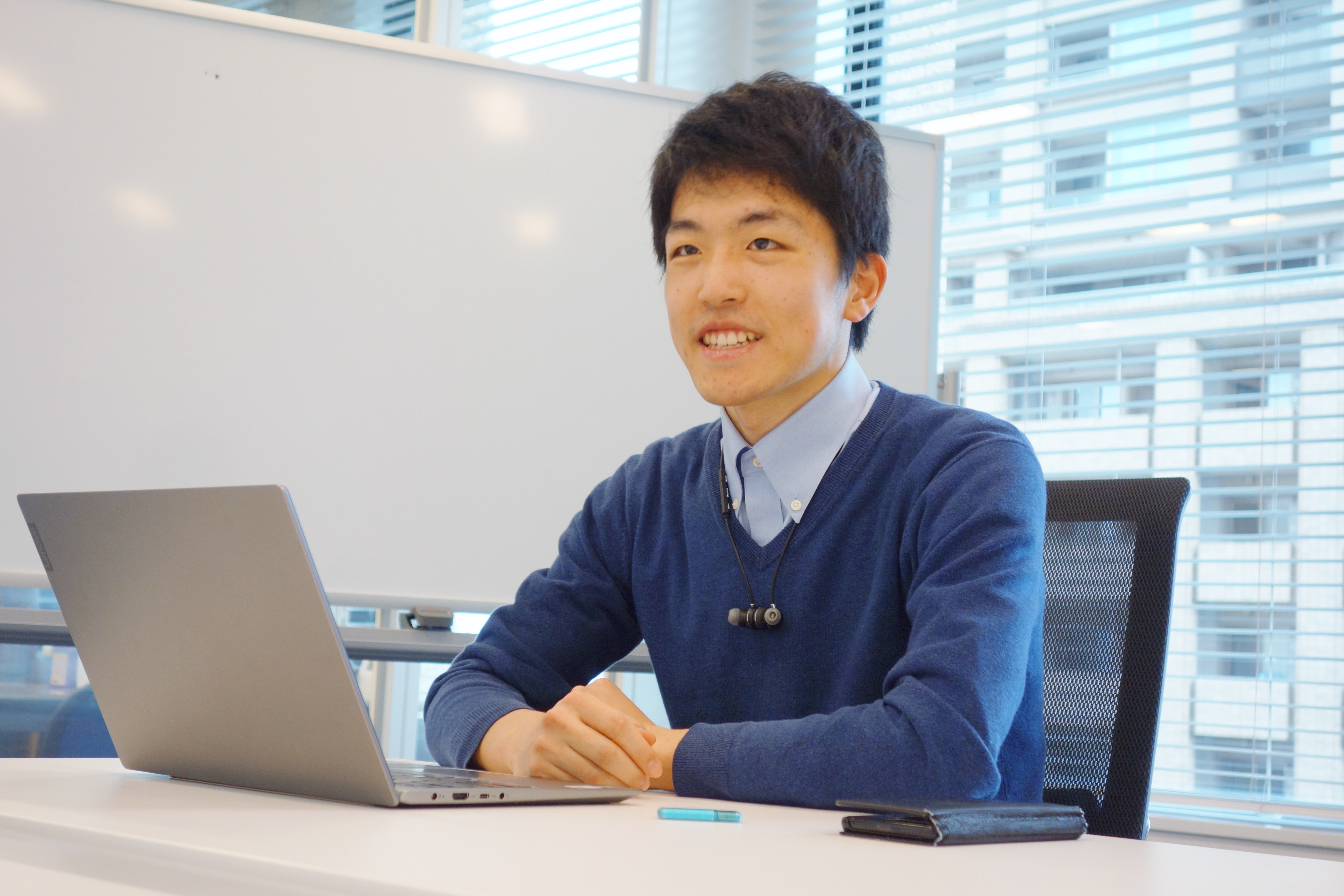
“Someday I want to solve the problems and challenges Japanese farmers face and change things for the better,” says Atsushi Fukutsuka, a first-year master’s student at the Kansai University Graduate School. Fukutsuka belongs to the Robotics and Micro Systems Laboratory in the Graduate School of Science and Engineering and researches suction-type robot hands for logistics robots.
Alongside studies, in 2019 Fukutsuka took part in the “Business Idea Contest SFinX,” held on campus to foster entrepreneurship. In it, students develop business ideas for commercializing research results from the university’s science and engineering faculties, and after strict judging based on five criteria (novelty, accuracy, marketability, competitive advantage, and presentation), Fukutsuka’s team won the top prize.
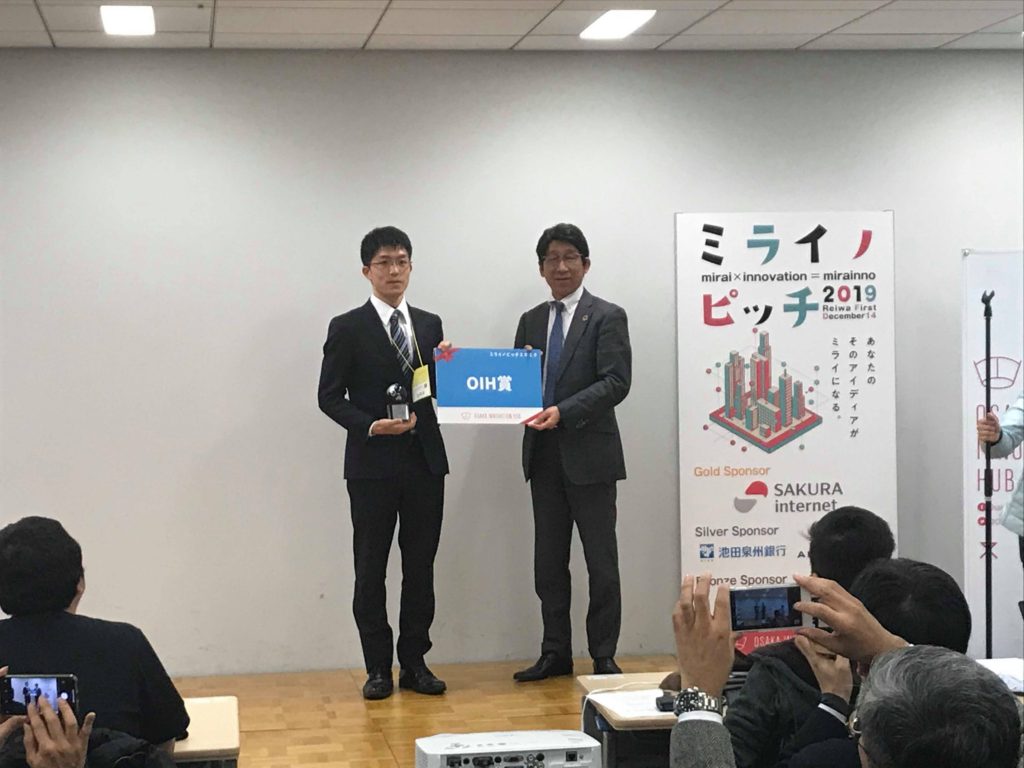
Then, in December 2019, on Kansai University’s recommendation, the team presented at the pitch event “Mirainno Pitch 2019,” organized by Osaka Innovation Hub, and achieved the remarkable feat of winning the “OIH Award,” given to business models that can succeed globally, in the student division.
The theme presented by Fukutsuka’s team, which achieved these big results, was Hydrobot, a multifunctional drone that solves the challenges facing greenhouse farmers, using a Kansai University technology seed that was one of the SFinX topics. It carries the strong feelings as an engineer mentioned at the beginning, and Fukutsuka says it became an opportunity that greatly expanded the possibilities for their own future, including a startup.
A wish to help small-scale farming in hilly and mountainous areas opens up a new path
Fukutsuka first became interested in farming in hilly and mountainous areas in junior high school. “It started when my grandfather, who had farmed for many years, passed away, and the family discussed who would take over,” Fukutsuka says. “Gojo City in Nara Prefecture, where I was born and raised, is a small town, with what is called hilly and mountainous farming. My grandfather’s death made me feel various problems such as depopulation and aging close at hand again, and thinking I wanted to somehow change things for farmers was, looking back, the first step.” That led to an interest in farm tools and agricultural machinery, and after entering university Fukutsuka decided to become an engineer involved in developing them.
Hydrobot, devised by Fukutsuka, is designed to make exactly that wish come true. In planning it, the team interviewed people on farms and focused on three main worries: not being able to detect diseases well enough because of labor shortages, feeling unwell when spraying pesticides, and vegetables not growing well because of a lack of knowledge and experience. To address these, the plan applies three functions, disease detection and pest search, pesticide spraying, and data-driven growth management, to the university’s technology seed for controlling swarms of drones, supporting human work more efficiently, reliably, and quickly.
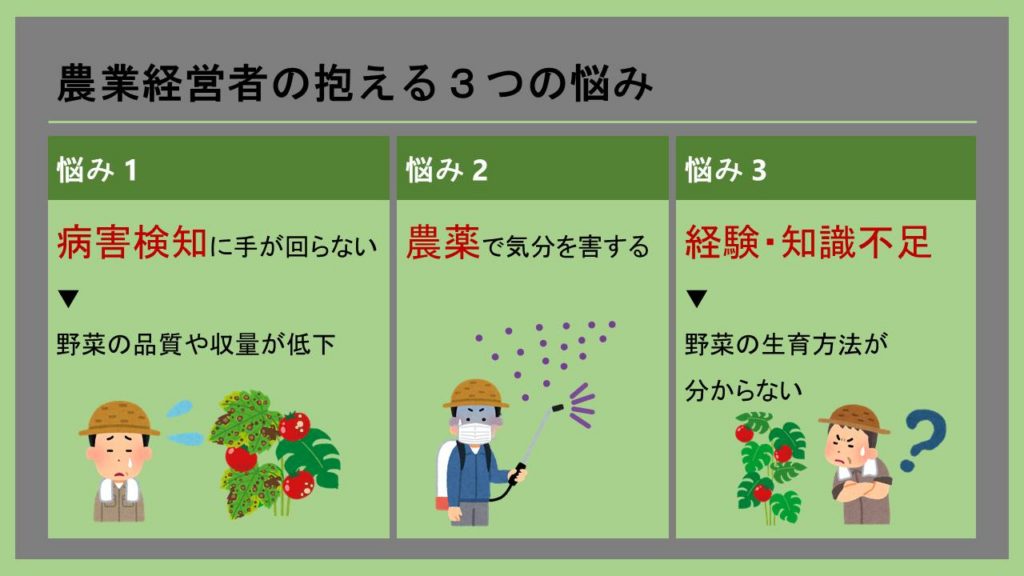
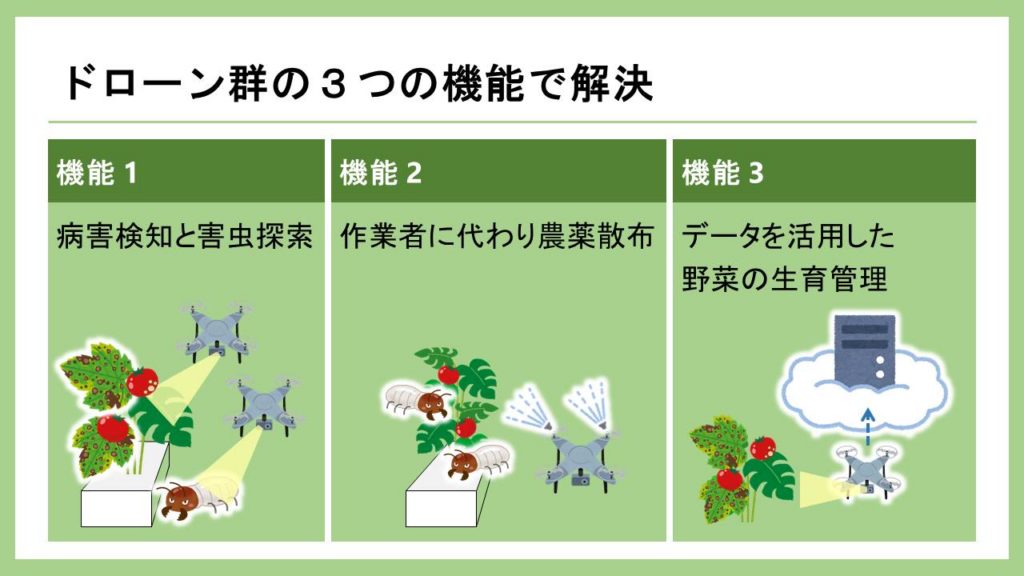
Labor shortages caused by aging and depopulation are a challenge for all of Japan and one that must be solved on a global scale. Hydrobot’s business potential was highly rated, leading to the top prize at the “Business Idea Contest 2019 SFinX” and the “OIH Award” at “Mirainno Pitch 2019.” The team worked hard with peers late into the night for the two contests. Being recognized there gave Fukutsuka confidence, and a new path, “starting a business,” came into view.
From idea to real business: the challenges and goals that come into view by facing reality
“That said, there are mountains of challenges ahead. I am still inexperienced as an engineer and have a lot to learn,” says Fukutsuka, who is currently taking part in AIDOR Acceleration, an approximately four-month business creation program specializing in IoT business organized by the Osaka Industrial Promotion Organization. It includes hands-on support from expert coordinators versed in IoT and robot services, mentoring from senior entrepreneurs, basic courses and practical workshops on IoT technology, and a demo day for presenting business ideas.
“Hydrobot was recognized at the contests, but as a real business model, there are still many challenges to clear. In mentoring sessions with senior entrepreneurs and mentors, I get sharp points and harsh opinions such as, ‘Does this idea really solve farmers’ worries?’ and ‘What will you do if a drone falls?’, and honestly there are many times I almost lose heart. But in return, the direction I should take and the things I need to solve are becoming clear, and that is leading to future goals, or rather to even more motivation,” Fukutsuka says with a smile.
Fukutsuka has also keenly felt the need to build skills as an engineer while gaining the qualities of an entrepreneur, such as the ability to communicate with people and the ability to act on one’s own initiative and bring others along. By squarely facing “reality,” Fukutsuka is moving forward one step at a time.
Aiming to grow further as an engineer and as a person to realize a dream
Fukutsuka’s immediate goal is to complete the presentation on Hydrobot at the demo day, one of the programs of AIDOR Acceleration. With advice from senior entrepreneurs and mentors, Fukutsuka is refining it further.
A clear path as a future startup seems to have opened, but what Fukutsuka is aiming for is not to start a business right away but to get a job. “This time, I was given valuable opportunities that ordinary students rarely get, such as taking part in business contests and acceleration programs, and I think I am learning a great deal. That is exactly why I can see what I lack now, and to make my dream of helping farmers as an engineer come true, I have come to want to first gain social experience within a company and grow as a person before starting a business,” says Fukutsuka.
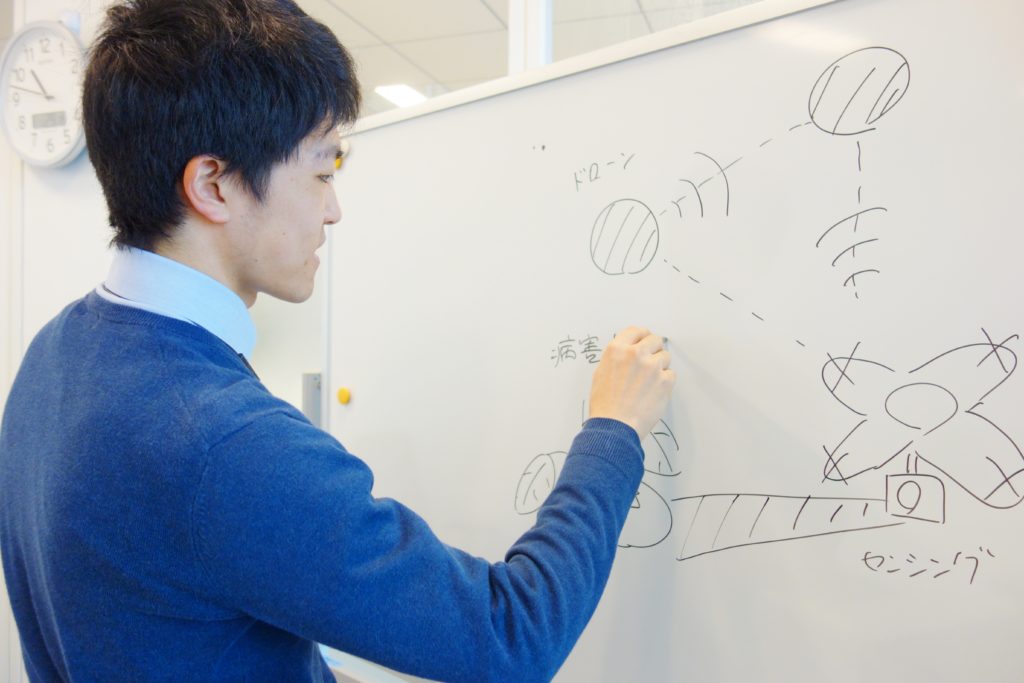
There is one year left of graduate school. While developing the leadership to build and run an organization, Fukutsuka wants to deepen expertise as an engineer, saying, “I want to gain a sharp strength of my own that I will never lose to anyone.” “Whether I get a job or start a business, what lies at the root is the wish to help farmers. That has stayed the same, without wavering, since I entered university; it is like my own core. While getting all kinds of advice, I want to keep my own core firmly and find my own answer.” Fukutsuka’s challenge toward the future has only just begun.
Interview date: January 29, 2020
(Interview and text: Mitsuko Yamashita)