
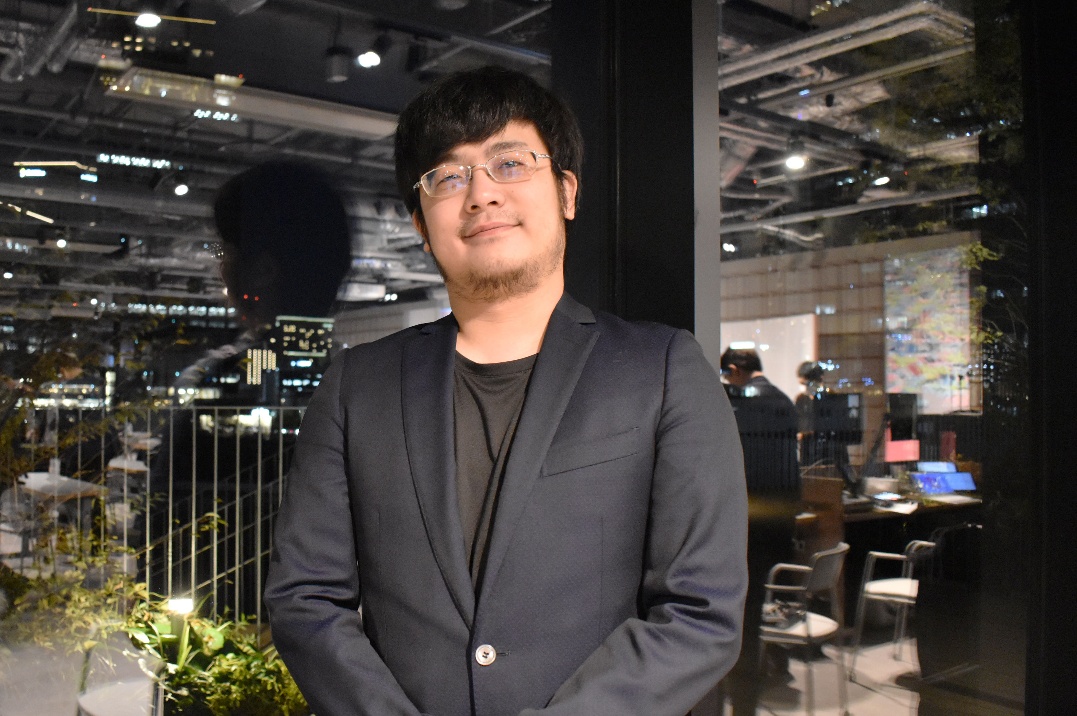
Many industries are promoting digital transformation (DX) to streamline operations and create new value. The construction industry, which faces a shrinking workforce and soaring material prices, is no exception. But results don’t appear overnight, and the industry is still going through trial and error. One service expected to make a breakthrough is Miraa AI, integrated on-site information management software from OneSite Technology Co., Ltd. (OneSite Technology), which won the OIH Award in the general division of “Mirai no Pitch 2025.” We spoke with Shin Tao, the company’s CEO.
Combining BIM and AR to support every phase of construction, from design to maintenance
Our software, Miraa AI, which we develop and sell, is designed to streamline work in the construction industry, including building and civil engineering. The construction industry uses a huge volume of paper documents, such as design drawings and schedules. Managing them and sharing them among everyone involved takes a lot of effort. It’s also common for designs to be changed or adjusted as construction progresses.
New drawings are then made and shared. This continues all the way from design through construction to maintenance after completion. The sheer volume of documents, the difficulty of managing them, and the miscommunication that arises because there are so many: the construction industry has faced many challenges.
One way to solve these challenges is BIM (Building Information Modeling). With BIM, a 3D building model is created at the design stage and linked to all the information needed for construction, such as dimensions, materials, and specifications. For example, if the design changes in one place, the data for the areas that need adjusting as a result is updated automatically. In other words, you no longer need to go through “that drawing changed, so this drawing has to change too, which means redrawing that one as well.”
Another advantage of BIM is that information is centralized from design to maintenance. Because it’s digital, it can easily be carried around on a tablet. The government is promoting BIM, for example by requiring it for projects under its direct control, but for various reasons, adoption has been slow.
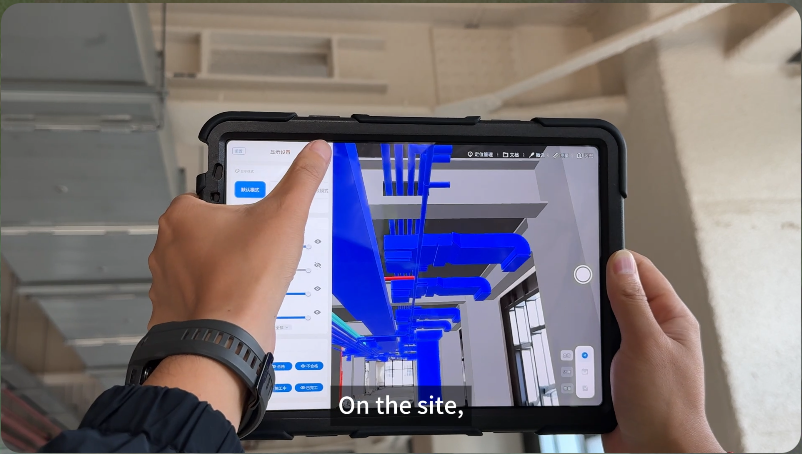
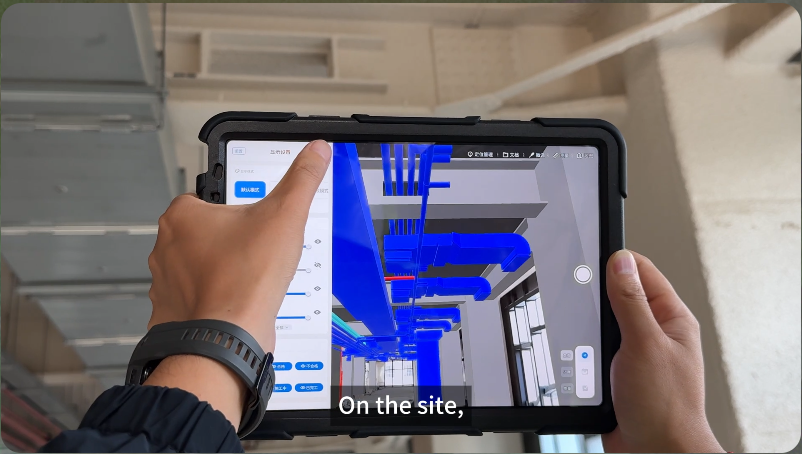
The biggest feature of Miraa AI is that it links BIM with AR. For example, design information can be created as a 3D rendering of the finished structure based on BIM and projected onto the actual site with AR. This allows design intent to be shared quickly and reliably among everyone involved.
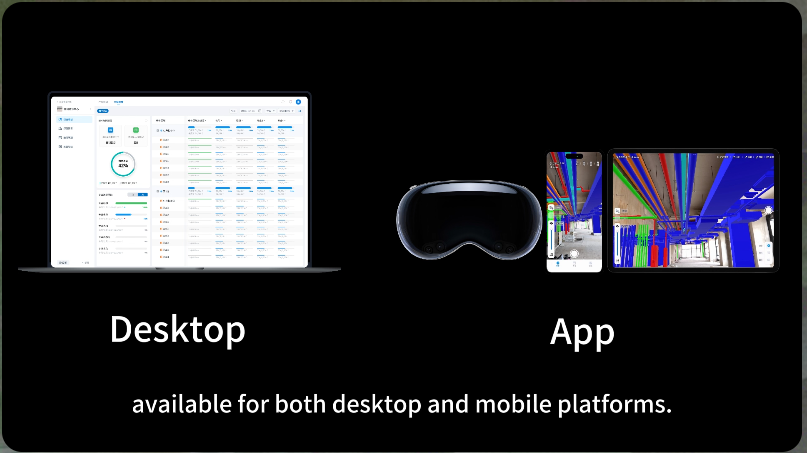
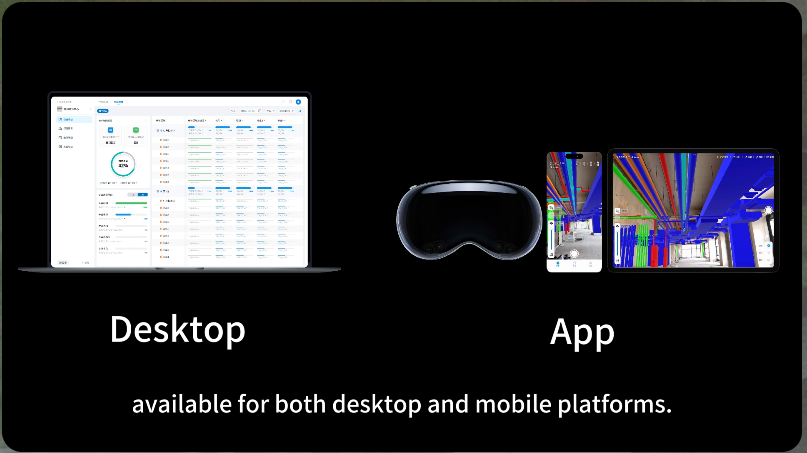
During construction, overlaying the 3D image of the planned finished structure on the site for comparison helps prevent construction errors and makes inspections more efficient. BIM models involve large amounts of data, but with our own technology we’ve made them lighter without losing any building information. This makes AR overlays possible on a wide range of devices, including smartphones, tablets, and VR goggles.
Lagging digitalization and advanced construction know-how: that’s where the opportunity lies
The United States and China lead the world in BIM. In the United States, there are examples such as a redevelopment project around a station in New York that used technology combining BIM with AR and MR. It’s a technology that can be used for construction projects of that scale.
In Japan, on the other hand, although its use is promoted as national policy, there are still many cases where “the design was done in BIM, but it isn’t used in later processes.” I see this gap between Japan and other countries as a business opportunity.
Japan’s construction industry does work of a precision unmatched anywhere in the world, and a huge amount of data is hidden in it. If AI could learn from it, work efficiency and quality would improve dramatically. This is another reason I saw potential in technology combining BIM with AR and MR.
I’m from China and studied in Australia. To pay for my studies, I worked part-time at construction sites. Carrying heavy building materials all day was really tough. Thinking “Isn’t there a more efficient way?” is the origin of my current business.
After coming to Japan and studying business administration at Kobe University, I wanted to “not only learn theory but also experience management firsthand,” so I joined the university’s entrepreneurship club and built a business plan with my team members. The shared housing business for international students that we worked on was recognized for helping deal with vacant houses, securing housing for international students, and promoting mutual understanding through exchange with Japanese students, and at “Mirai no Pitch 2022” we won the OIH Award in the student division.
As we actually worked to commercialize the business, I saw renovation sites firsthand. Watching designers and contractors spread out paper drawings on site and talk things through, I felt, “It would be so convenient if design information could be made 3D. Isn’t there demand for that?”
Unfortunately, the shared housing business struggled with fundraising, among other things, and didn’t achieve the results I’d hoped for. But I thought, “Then let’s start a business that can be launched with little funding,” and shifted my focus to IT. That’s how I arrived at Miraa AI.
Researching and practicing management at the same time, with an IPO as the first goal
Miraa AI is currently being trialed by companies, and we’re improving and promoting it based on their feedback. The construction industry is extremely diverse: there are big differences between building and civil engineering, differences in the types and scale of buildings and structures, and companies that specialize in just one part of the process. Each has different needs, and responding to them is an important theme for us.
Moreover, labor shortages are an even more serious problem for small and medium-sized companies in the regions than for large companies. SMEs are the ones that most need to pursue DX, but cost stands in the way. The national and local governments understand this situation and have set up programs such as subsidies for local SMEs working on DX. We also want to work with local governments to help promote DX among regional construction companies. If you’re interested in using AR, please feel free to contact us. We’d like to start by thinking together about what’s possible.
I’m also currently a researcher at the Graduate School of Business Administration at Kobe University, studying management from the perspectives of the SDGs, purpose-driven management, and investment in people. Wanting to understand management not only through theory but also through practice was another reason I started a business. My goal is to take the company public.
I feel that Japanese society today is the perfect environment for starting a business. It’s easier to access advanced technologies, and funding from venture capital firms and others has become easier to obtain. There are also plenty of opportunities for anyone to try starting a business. But I don’t know how long this will last. It could end in a few years. So I hope people interested in starting a business will seize this opportunity and take action.
How I Used OIH
OneSite Technology was selected for the 19th cohort of “OSAP (OIH Startup Acceleration Program)” and received a wide range of support. People from the investment industry mentored us, which deepened my understanding of what investors expect from startups. At the same time, I was able to think deeply about the kind of company and business I myself want, and learned how to balance the two.
Through its other programs as well, OIH introduced us to partners and funding sources and gave us opportunities to promote our business. I see OIH as a place that offers startups many shortcuts to growth.
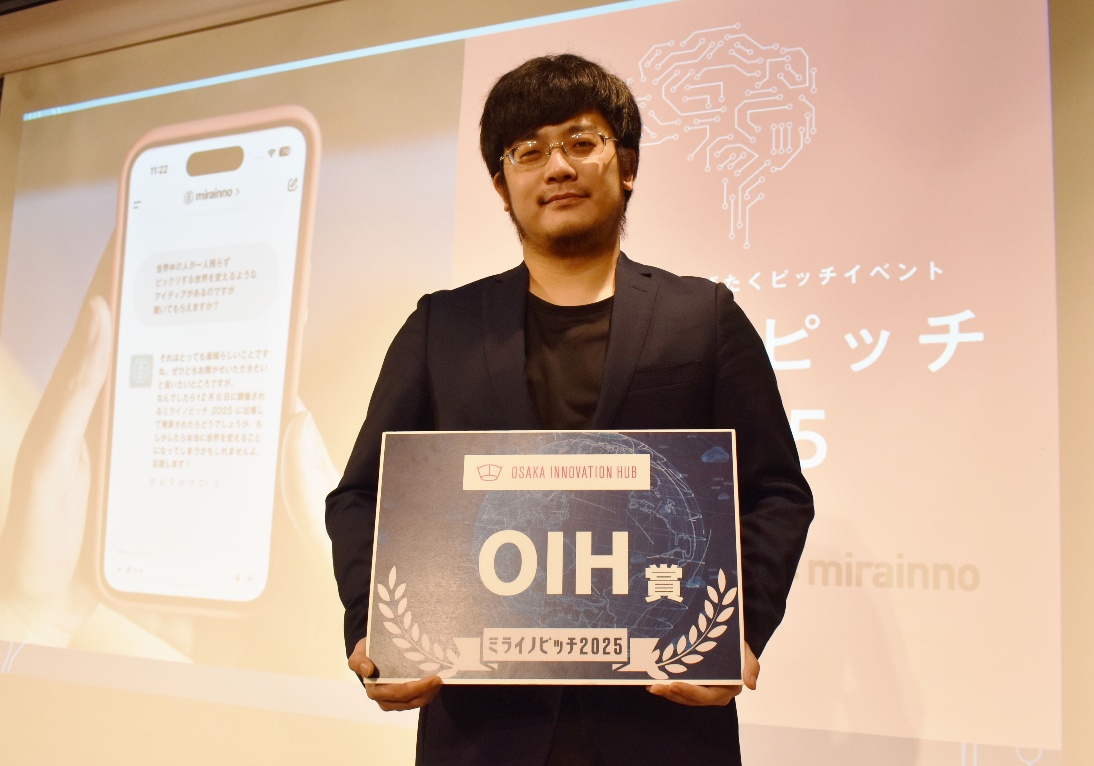
Interview date: January 7, 2026
(Interview and text: Morinaga Matsumoto)