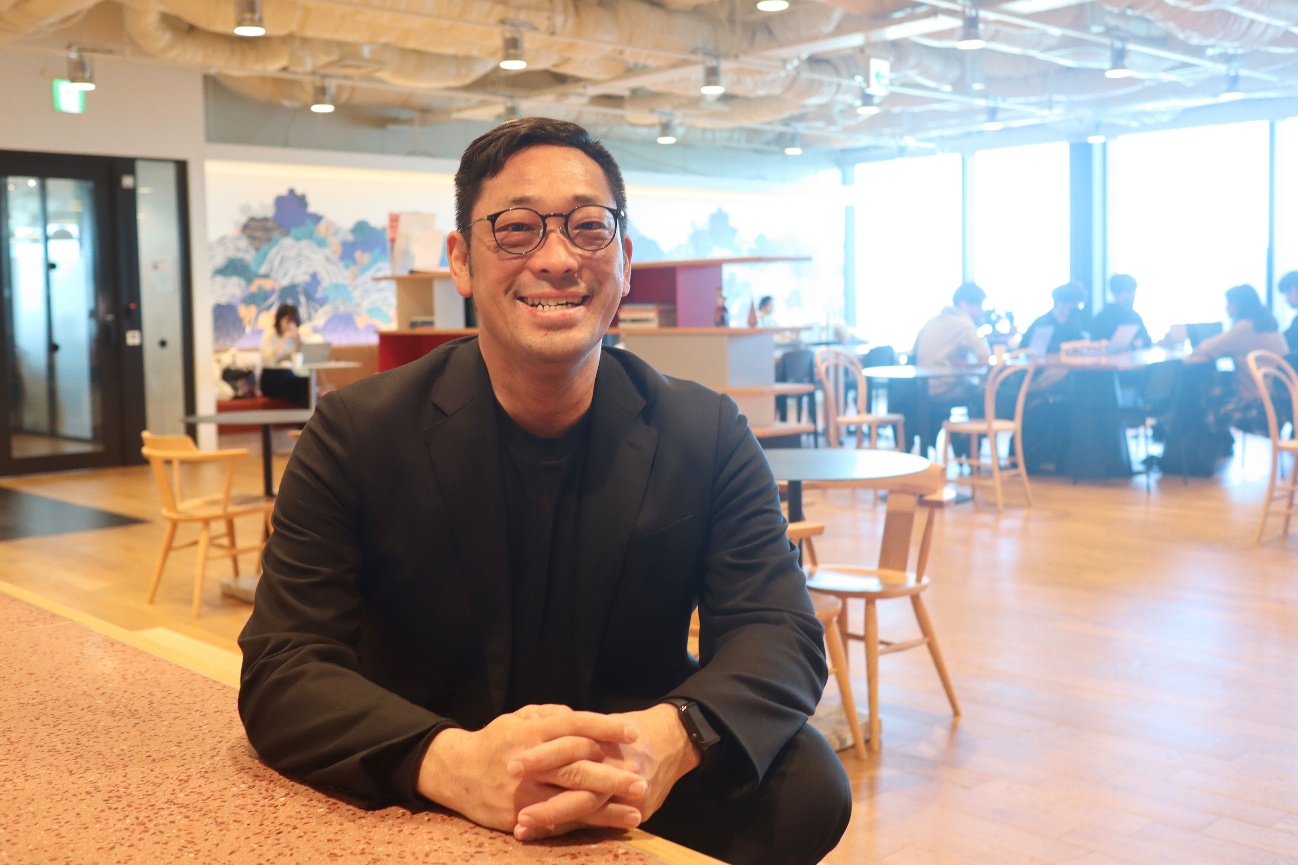
Digireha Inc. (Digireha) develops and provides digital tools for use in rehabilitation, developmental support, and education. It has developed about 35 apps so far. We spoke with CEO Yuuki Oka, who says the company’s strength is a versatility that lets its tools be used across facility types, including hospitals and other medical institutions, special needs schools, and day services for children with disabilities, about its current activities and future plans.
Freely usable to suit each person’s characteristics
Digireha is a rehabilitation tool that uses digital art and sensors. Each app has approachable artistry and pleasant interactions, and is designed to naturally draw out users’ motivation: the feeling of “I want to try this.”
Our development concept is “Look at the one person in front of you, and keep the world’s 2.4 billion people in view (*1).” While many apps are divided by target facility, such as schools or hospitals, or by target users, such as specific disabilities or conditions, our strength is that our tools don’t limit the users or facility types.
*1 Reference: WHO (World Health Organization) Rehabilitation (Fact sheets) “Globally, an estimated 2.4 billion people are currently living with a health condition that may benefit from rehabilitation.”
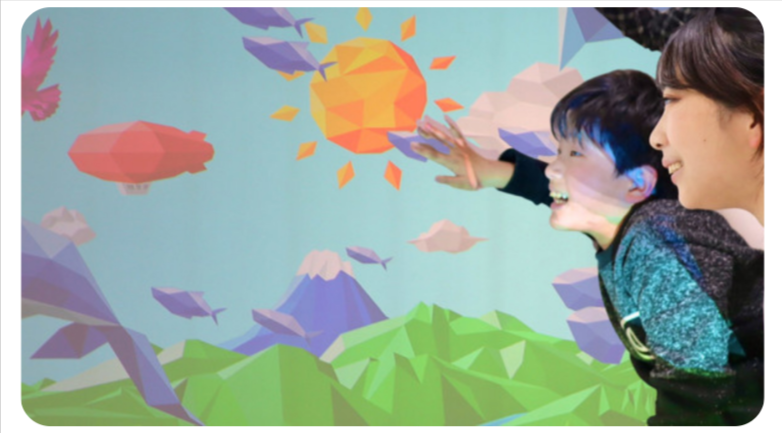
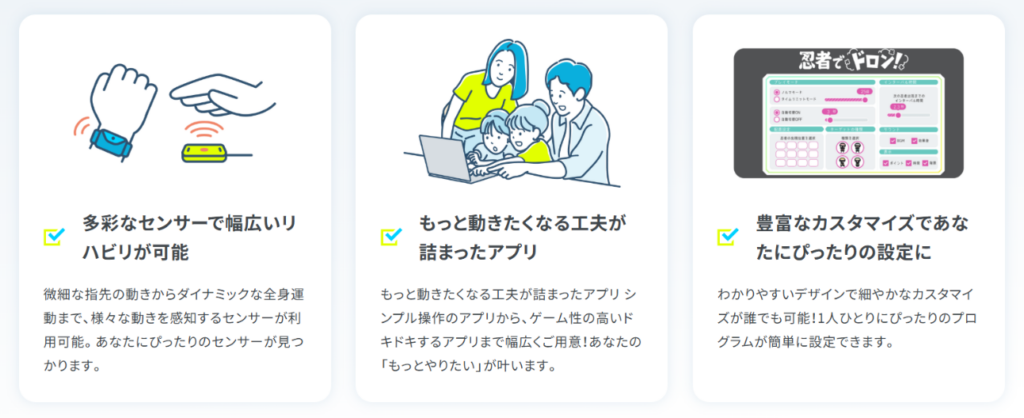
Body movements are detected by five types of sensors: web cameras, eye-tracking sensors, microphones, wearable sensors, and LiDAR sensors (which measure distance using reflected infrared light). The tools can serve a wide range of people regardless of the degree of disability, from people with severe disabilities to highly active children with developmental disabilities and older adults who use wheelchairs.
The apps have customization features anyone can easily set up. For example, in an app where users enjoy touching and moving objects, the timing of movement can be set in seconds to suit the degree and nature of the disability. Moving objects at just the right timing for each person gives them a stronger sense that “I made it move.” We believe true value lies in such small details, and we research every day how to raise users’ motivation.
*Click an image to view it larger.
A major strength of Digireha’s tools is that combining various sensors with app customization allows free use tailored to individual needs. There are currently 35 apps, used at about 270 facilities, schools, and medical institutions across Japan.
Proactive motivation, “I want to try this,” is what creates change
In my twenties, I became interested in welfare through experiences such as illness in my family, and in 2008 I founded a nonprofit organization with the theme of “entertainment × healthcare and welfare.” By bringing music, art, games, and more into healthcare and welfare, fields with a rather rigid image, I aimed to let everyone take part in society while having fun, whether or not they have disabilities or illnesses. Having spent my early childhood and school years in the United States, surrounded by diverse entertainment, may have influenced this.
Then one day, I saw a friend’s child, who has a disability, crying while receiving rehabilitation. “Couldn’t I make an app that lets this child enjoy rehabilitation?” That strong feeling was what led me to start the Digireha business.
In 2018, when the app was completed, I launched the business in earnest. After that, while increasing the number of products, I built out the platform, and in 2021 we made a fresh start as a corporation.
No matter how beneficial something is, people don’t willingly do things that are boring or painful. That’s true not only for children but also for adults and older people. Rehabilitation received in such a state rarely produces results.
It is proactive motivation, “This is fun” and “I want to try this,” that draws out a person’s true potential. Digital art has that power.
With that conviction, we’ve gone out into the field as much as possible, seen users with our own eyes, listened to people on site saying things like “We want an app like this” or “It would be great if we could customize it this way,” and used their input in development together with our team, including physical therapists and occupational therapists. Our progress is the accumulation of responding to those users and those voices, one by one.
Toward “whole-person rehabilitation” in the truest sense
Besides developing apps, we now also hold follow-up courses on using the tools effectively and run a business introducing therapists skilled with the apps to facilities.
Going forward, we want to focus on fully entering the elderly care industry. Our subsidiary in Silicon Valley, set up as a base for overseas expansion, also plans to begin full-scale sales to local facilities and medical institutions.
The word “rehabilitation” comes from the idea of “becoming fit again.” In Japanese, it is expressed as “whole-person rehabilitation,” in other words, regaining the right to live as a human being.
As the number of facilities, schools, and medical institutions using Digireha grows further, to a thousand or ten thousand times today’s scale, what we can achieve will expand even more. We may be able to change the systems themselves, such as institutions and communities and the employment and working styles of people with disabilities. That is the “whole-person rehabilitation” in the truest sense that we aim for. To make it a reality, we’ll keep expanding our business while carefully responding to voices from the field.
How We Used OIH
At “Tech Osaka Summit 2025”, we won the Grand Prix in its English pitch contest, “Tech Osaka Award 2025”. In Japan, there aren’t many contests where everything from the pitch to the Q&A can be done in English, and I got the impression that the Tech Osaka Award will become a gateway for people who are serious about expanding overseas. As a way of giving back to Osaka Prefecture, we used part of the prize money to provide Digireha equipment free of charge to three facilities in the prefecture, including child development support centers.
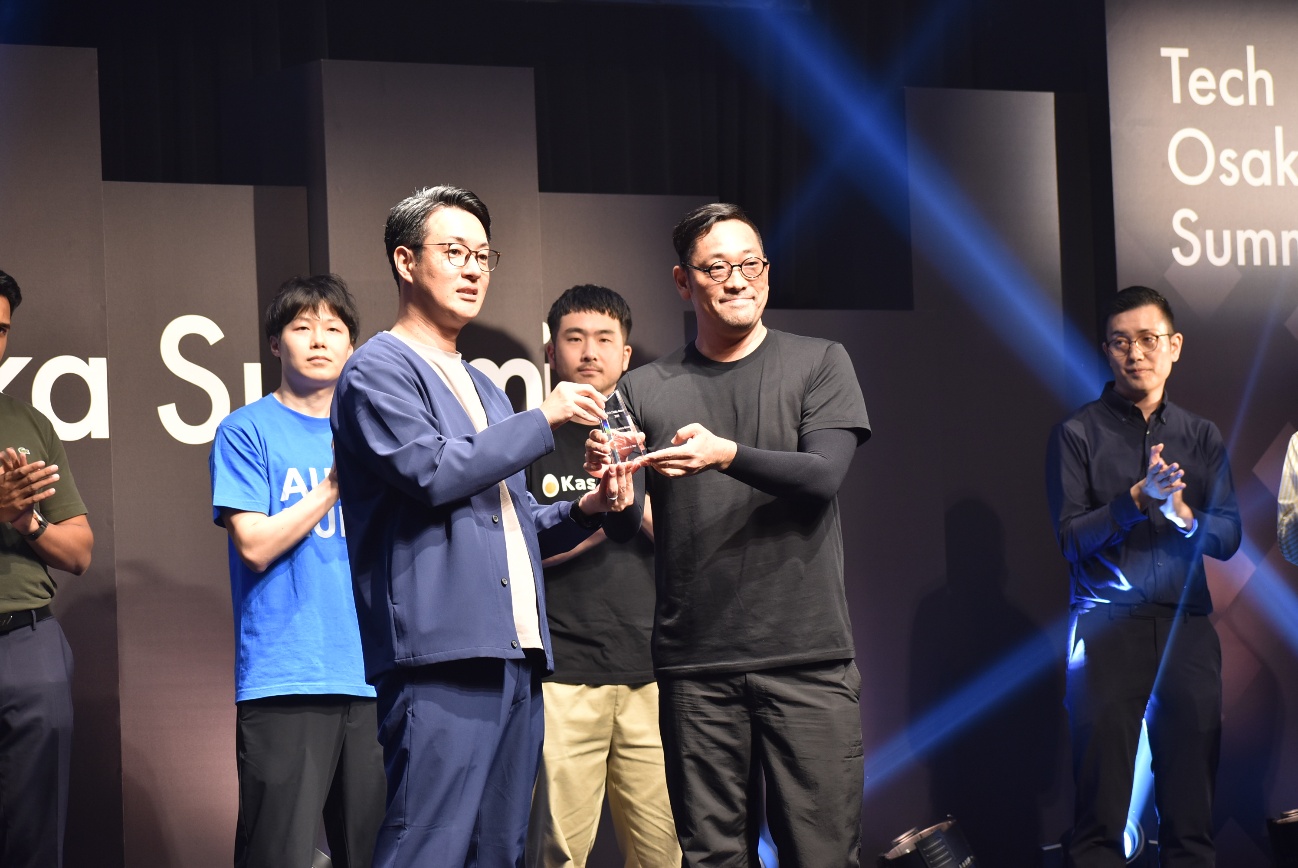
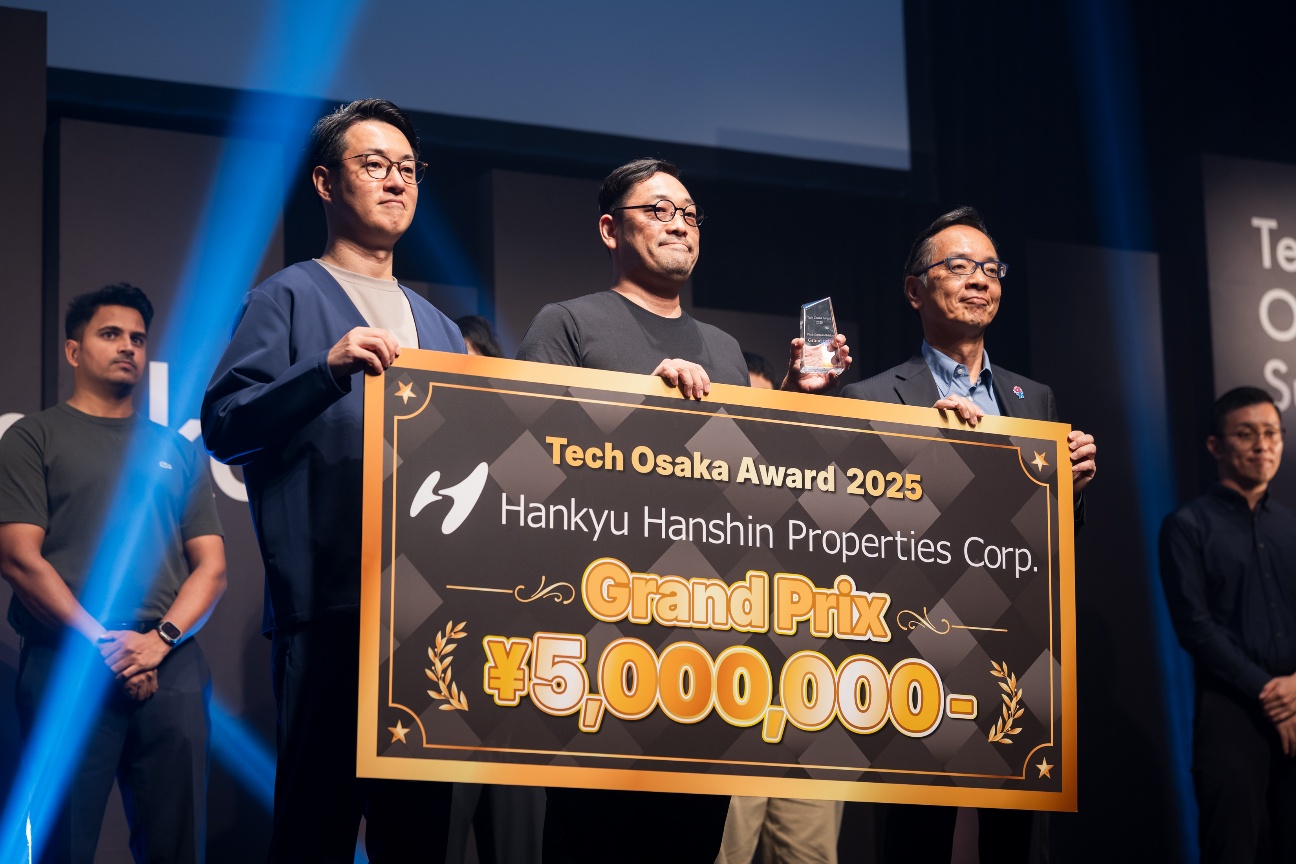
and received prize money.
Interview date: February 4, 2026
(Interview and text: Aya Iwamura)