
Removing the barriers around the “explanation of important matters” by licensed real estate brokers
When land or homes are bought, sold, or rented, various contracts are exchanged between sellers and buyers, landlords and tenants, and the brokers in between. Under the Real Estate Brokerage Act, only licensed real estate brokers (takken-shi; “licensed brokers” below) may give the face-to-face “explanation of important matters” and sign and seal the explanation documents and contracts in real estate transactions.
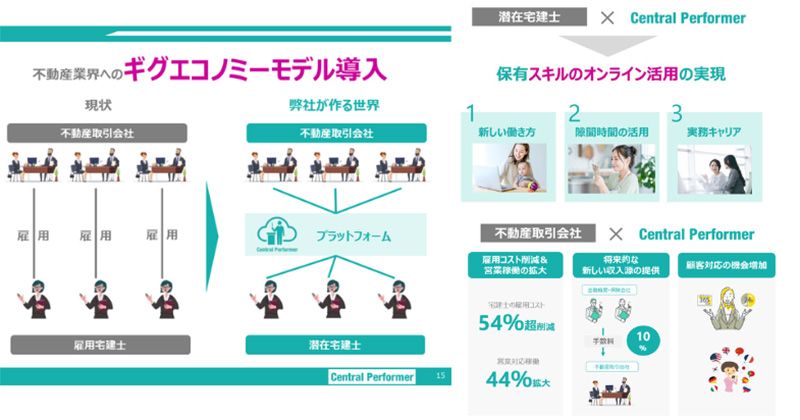
Real estate brokerage companies are required to have one licensed broker for every five employees. But social conditions that make hiring difficult, and the management problem of rising fixed costs from employment, are putting the brakes on these companies’ growth. Meanwhile, only about 30% of licensed brokers actually work in the real estate industry. The reasons vary: some work in other industries such as finance or construction, and some cannot work full time in person because of childcare or other circumstances. The problem was that there is plenty of latent talent that is not being fully used.
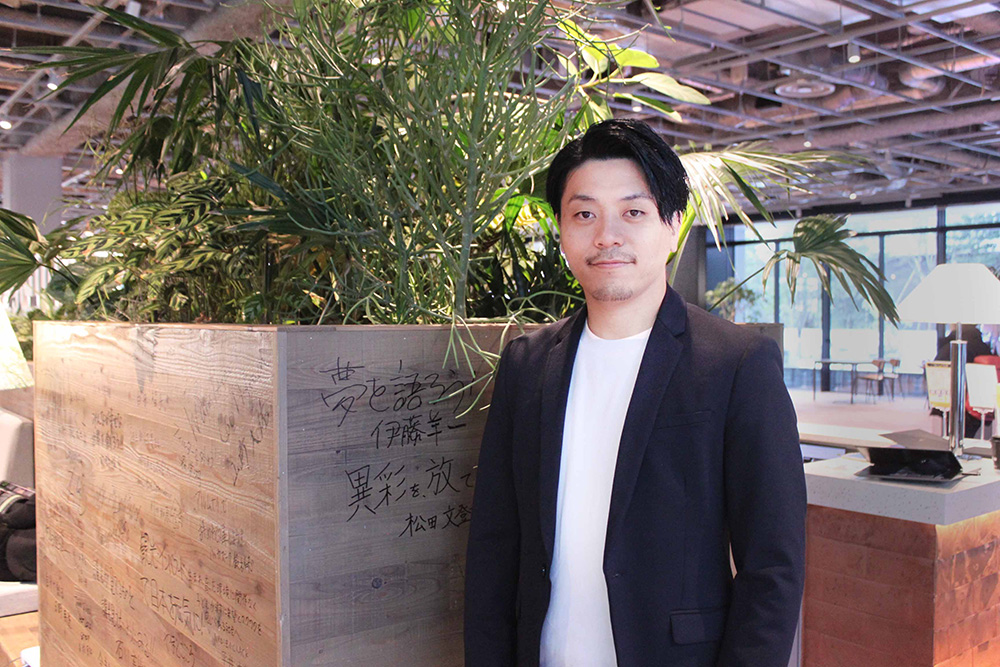
The team that focused on this was led by Goki Kayahara of NTT Media Supply Co., Ltd. (NTT Media Supply). Kayahara became interested in the real estate industry after buying a home, and joined the industry as a real estate IT consultant. While working on the operations of real estate brokerage companies as part of the industry, Kayahara saw problems and came to think, “I want to solve the inconvenience of this analog industry by drawing on the digital know-how I built up in my main job at NTT.”
“Our Central Performer business is a service that connects real estate brokerage companies with latent licensed brokers. The key point is that ‘rather than bridging a traditional direct employment relationship between companies and licensed people, latent licensed brokers become gig workers who can work when they want, as much as they want.’ Companies, too, can draw on licensed brokers only when they need them. It is a service that solves the problems that come with employing licensed brokers, and the shortage of people working in the real estate industry, by offering latent licensed brokers a new way of working online that does not depend on distance or location.”
What rapidly accelerated this idea, which Kayahara had been nurturing for several years, was a legal amendment in 2022. It abolished the requirement for licensed brokers to seal explanation documents and contracts in real estate transactions, and allowed electronic contracts. As a result, licensed brokers can now explain real estate contracts anywhere in Japan online. With this amendment, which promises to make use of latent licensed brokers, Kayahara moved ahead with writing a business plan.
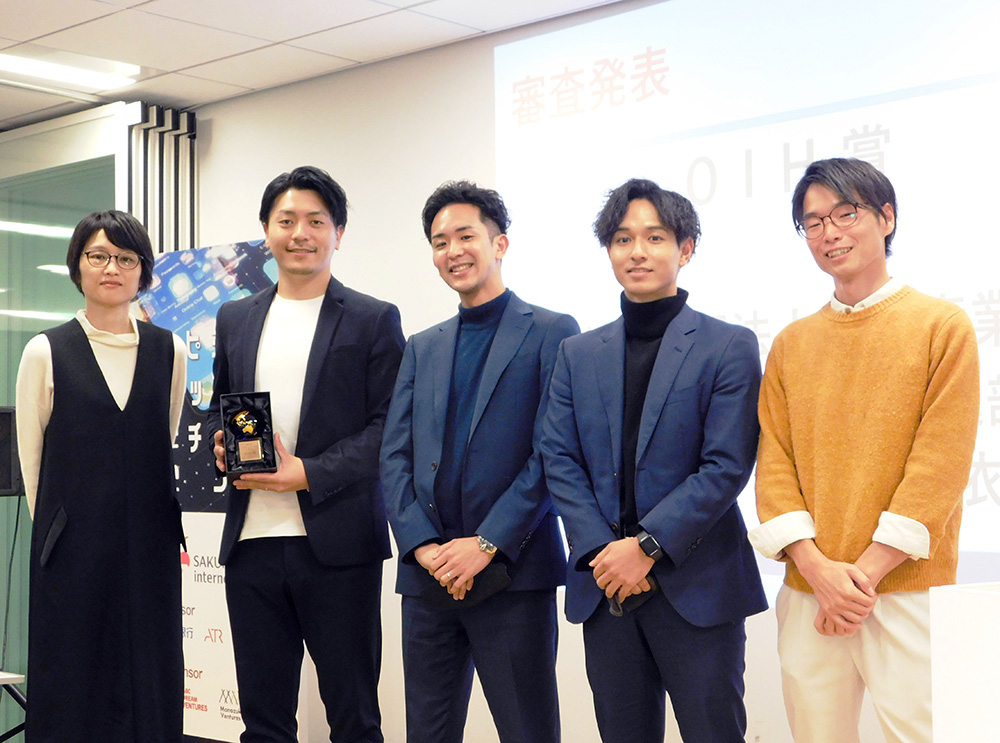
The reason for entering Mirainno Pitch, organized by Osaka Innovation Hub, was that, “while thinking about starting a business in Osaka, I looked for a pitch event held in Osaka that I could take on while also spreading the word about the business.” At “Mirainno Pitch 2022,” held in December 2022, the team won the OIH Award in the general division, and Kayahara says, “I felt a real response to the business.”
Launching a business while still employed
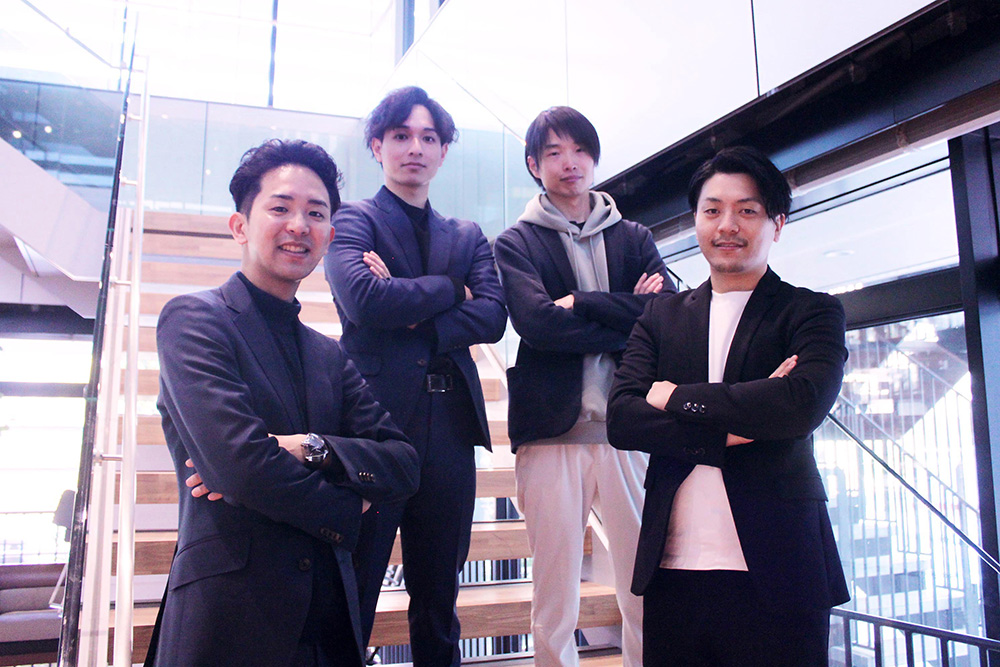
The business is driven by a team of four, including Kayahara. The first to join was Kohei Yokota, who had worked on new business development and business profit analysis within the Nippon Telegraph and Telephone West Corporation (NTT West) group. After Yokota joined in March 2022, Kyosuke Akita, who had worked on platform development within the group, and Masaya Hiramoto, who works in sales for public organizations, joined, forming the current team in October of that year.
What is unique is that all four are employees at NTT West group companies. Kayahara says the following about this.
“NTT West has a system that allows side jobs with an application, and using it, we have an environment that makes it easy to take on challenges. When I reported our award at Mirainno Pitch to the president, we received even more support than before. The president told us, ‘You can either grow it as a new business of NTT West or go independent and start a company. Either path is fine.’”
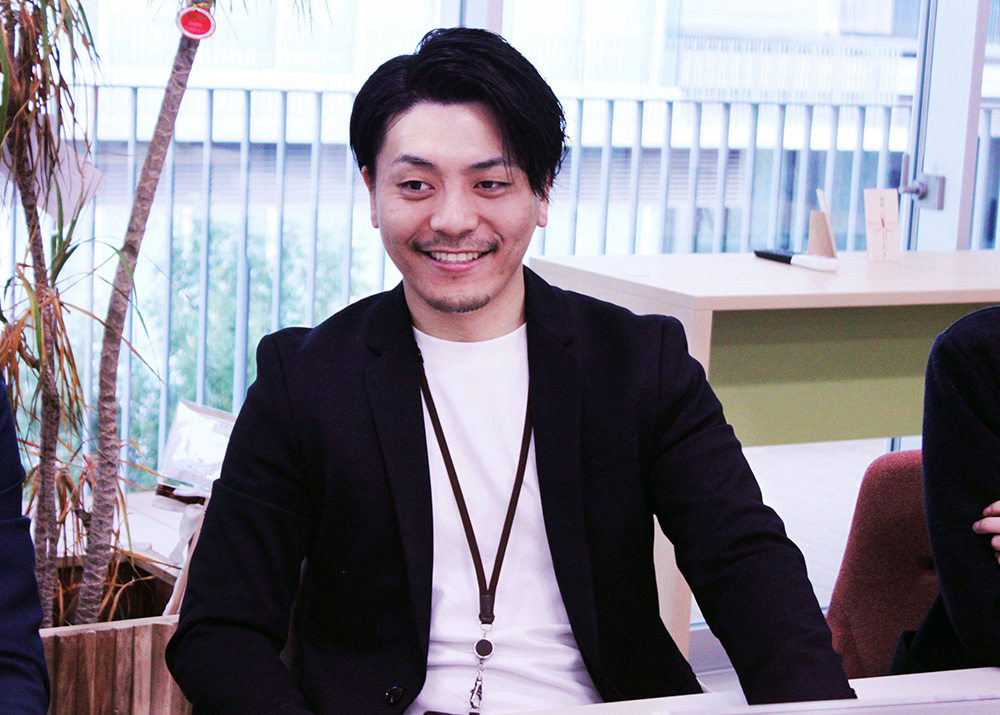
The whole team meets once a week to share progress and discuss problems. Beyond that, the members communicate as needed and move forward with the work each is responsible for.
Each member has the support of the president, as well as family and close friends, and can move the business forward with peace of mind. The members say this has been a tailwind that has broadened their horizons beyond their usual work, and that the experience is also paying off in their main jobs.
Aiming to grow into an Osaka-born unicorn
The business is in the phase of demonstration trials in partnership with real estate brokerage companies. Refining the service itself is of course important, but Kayahara says, “establishing a way to quantitatively measure how effective it is for sales and cost reduction is also an important task.”
Real estate brokerage companies differ in their business characteristics, such as those focused on detached houses and those focused on rental housing. Narrowing down which of them are most compatible with the service is also one of the important themes ahead.
The team members spend each day clearing one problem pointed out by venture capitalists and others, only for a new one to appear. The path they currently envision is a launch in April 2023 and incorporation in July of that year. Beyond that:
“Our big goal is to grow into a unicorn as an Osaka-born startup.”
Strengthening the team and becoming a role model for ways of working and living
The four members currently divide their roles as follows: Kayahara is the leader, Yokota handles team building to make the business concept a reality, Akita handles the technical side and gives the service its shape, and Hiramoto handles marketing research on the market and competitors.
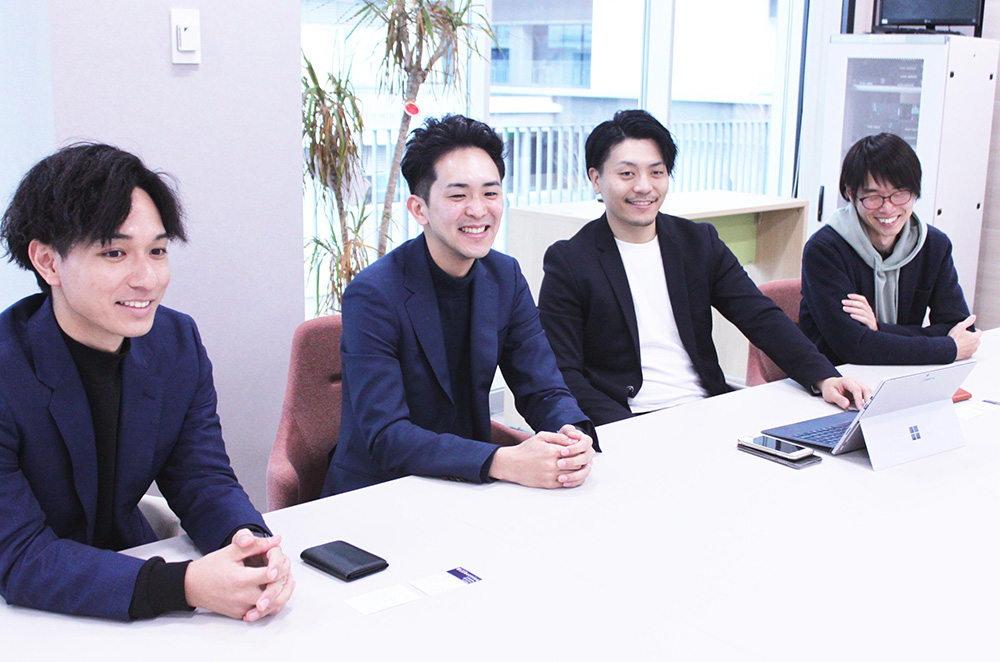
Yokota explains, “Kayahara is the one who cuts down the trees in the forest and pushes forward. I clear away the felled trees and prepare a path everyone can walk. Akita suggests different paths. Hiramoto suggests different ways of getting through. That is our relationship.”
Kayahara also says, “I am proud that we are a very well-balanced team that brings together different strengths. That is why, when venture capitalists and others express doubts about our team, I feel, ‘I want us to grow even more as a team.’”
“Actually, each of us has experienced feeling uneasy about our future as working people and being plagued by a sense of rut. But since we started working on this business, every day has been full of excitement. I think there are many people in the world who are ‘struggling,’ just as we once were. By making our business a success, we should be able to offer them hope, goals, and new options. That is exactly why we want to make this business succeed with the four of us. We want to be a role model that shows ‘there are ways of working and living like this.’”
A business that began with an inconvenience Kayahara personally felt is now moving forward step by step as a big challenge that shows a path of hope to many company employees with unfulfilled feelings.
Interview date: January 28, 2023
(Interview and text: Morinaga Matsumoto)