


ShareMate, a share-house-based new graduate recruitment platform for international students
As part of a “global strategy” to make Japan a country open to the world, in 2008 the Ministry of Education announced the “300,000 International Students Plan” to increase international students to 300,000 by 2020. International students, who numbered about 120,000 at the time, passed 200,000 in 2015 and reached a record high of about 310,000 in 2019 (*1).
However, from 2020 their number fell sharply because of the spread of COVID-19, so the Japanese government decided to aim to restore it to pre-pandemic levels by around 2027. It stated that it would draw up a “new plan for receiving and sending students” that adds sending Japanese students abroad to receiving international students.
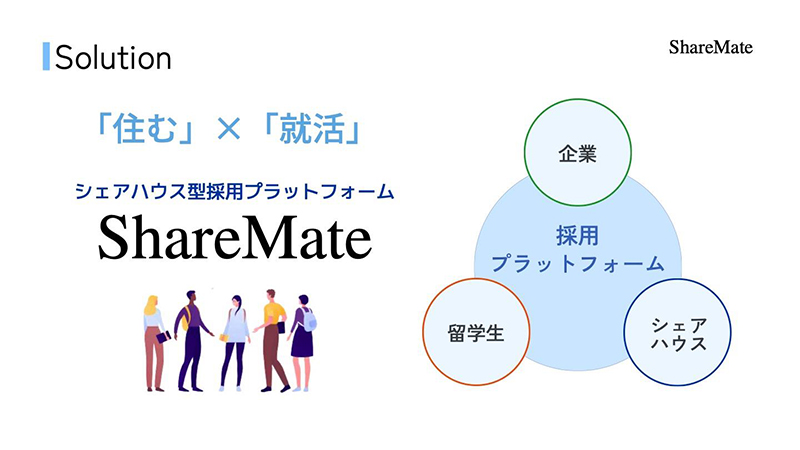
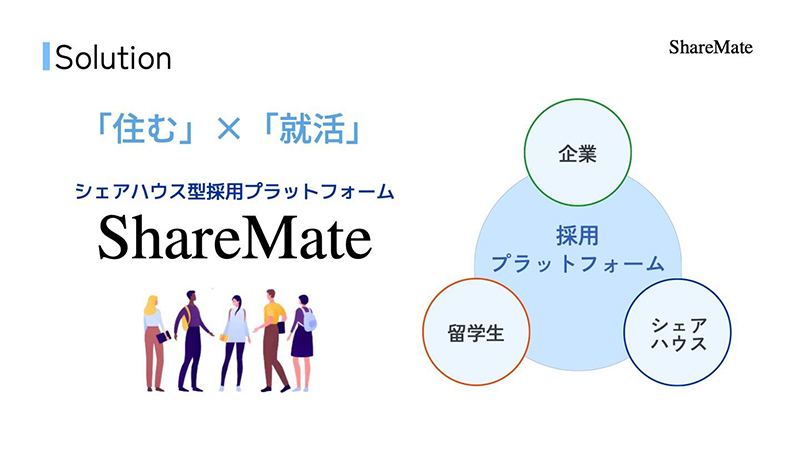
Against this background, a new business is about to get moving at Kobe University. It is ShareMate, whose CEO is Tao Shin, a doctoral student at the Graduate School of Business Administration at Kobe University. It plans to offer a range of support services to help international students become independent in Japan, starting with running share houses as bases for their daily lives and building a platform that shares information on living, job hunting, and more.
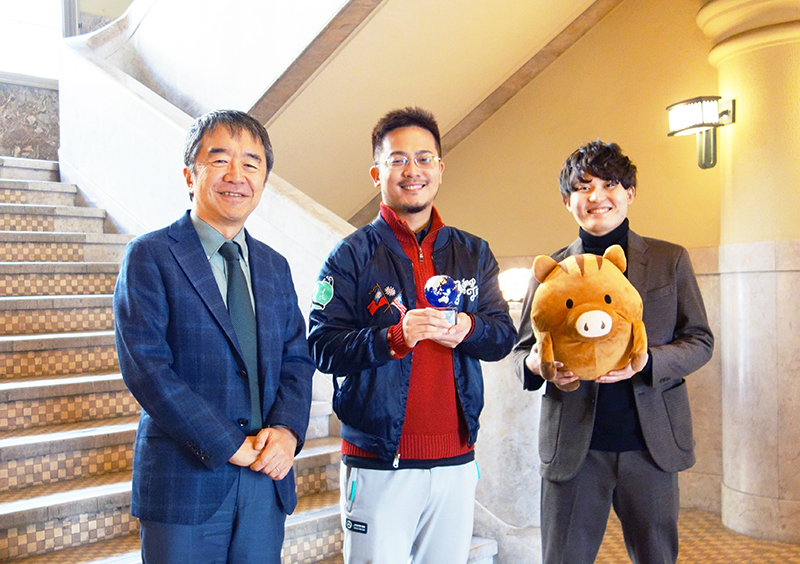
At the pitch event “Mirainno Pitch 2022,” organized by Osaka Innovation Hub, where Tao presented to spread the word about this “share-house-based new graduate recruitment platform for international students,” the team won the OIH Award and the Gaiax Award. It is attracting great expectations and attention as a new business for drawing a better future.
Sources:
(*1) Japan Student Services Organization, “Result of an Annual Survey of International Students in Japan 2019” (in Japanese)
Taking on the many problems facing international students and Japanese society
Tao studied international finance and trade in Australia as an international student from China and experienced life abroad. Tao came to Japan when put in charge of opening the Japan branch of the foreign company Tao had joined. Later, to study business administration in more depth, Tao entered the Kokubu Lab at Kobe University’s Graduate School of Business Administration and is now in the third year. What Tao felt after coming to live in Kobe was a kind of “difficulty living here” unique to Japan, different from Europe and North America.
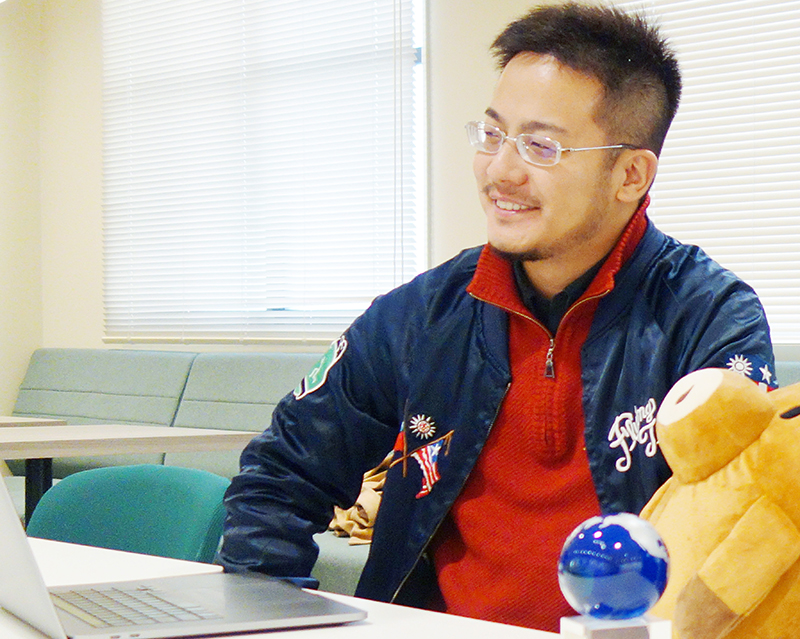
“The first thing foreigners struggle with when they come to Japan is securing a place to live. Blocked by language and cultural barriers, without enough information, and with complicated procedures such as contracts, even finding a room is a struggle. Even once you finally have a room, there are few places to interact, it is hard to get the information you need for daily life, and you tend to become isolated.”
Meanwhile, Japan’s population is aging and its birthrate falling, and the problem of vacant houses is growing serious. That sparked an idea: “Then why not renovate vacant houses and use them as housing for international students?” And not simply as living space, but as a community space where people interact.
The image Tao had in mind was the world of an overseas TV drama: in other words, a Western-style share house.
“Students with different cultures and values live in the same place and do things like studying and events together. There, even people from countries in political conflict can communicate with excitement as fellow students, help each other, and learn from each other. That is a truly diverse and inclusive environment, and I thought it was the most ideal.”
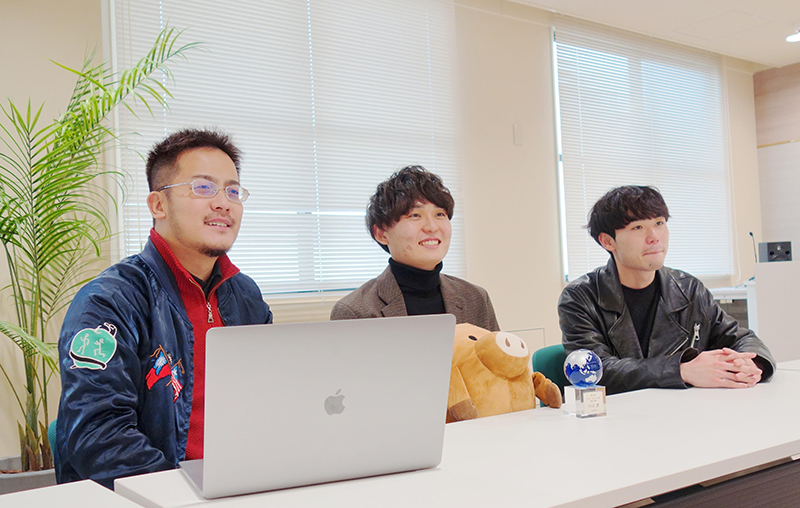
Tao keenly felt that, unfortunately, Japan still has few share houses that serve as such advanced places for interaction, and that this was one reason international students struggle to adjust. So Tao launched a business planning, building, and running a new kind of share house that serves as housing for international students and as a place where international students, Japanese students, and local people interact and form a rich community.
What Tao aims for goes beyond providing space in vacant houses. Focusing on job hunting, the most serious problem for international students after housing, Tao became convinced of the need for information and support. The idea, which began with one wish, “I want to help international students in need,” expanded to Japanese society and the whole life cycle, and its potential as a business grew too.
“With the declining birthrate, securing excellent global talent has become an urgent task, yet the reality is that international students who studied in Japan struggle to find jobs. One finding shows that while about 65% of international students want to work in Japan, only about 37% actually found jobs (*2). Talented people come from many countries precisely because their dream of working in Japan in the future can come true, so the problems international students face could be called problems Japan should solve.”
Sources:
(*2) Ministry of Education, Culture, Sports, Science and Technology, FY2021, “Promoting Employment of International Students” (in Japanese)” (in Japanese)
Forming a team with members of various specialties, using the strengths of a university-born venture
Tao’s wishes and ideas, which started from solving problems, were refined into a solid business plan in the entrepreneurship club newly established at Kobe University. The entrepreneurship club is, as the name suggests, a club for students aiming to start businesses, a place where highly motivated students with their own dreams and goals gather across faculties and departments to learn from one another. In June 2022, peers who shared Tao’s ideas and vision formed a team there, and ShareMate got started in earnest.
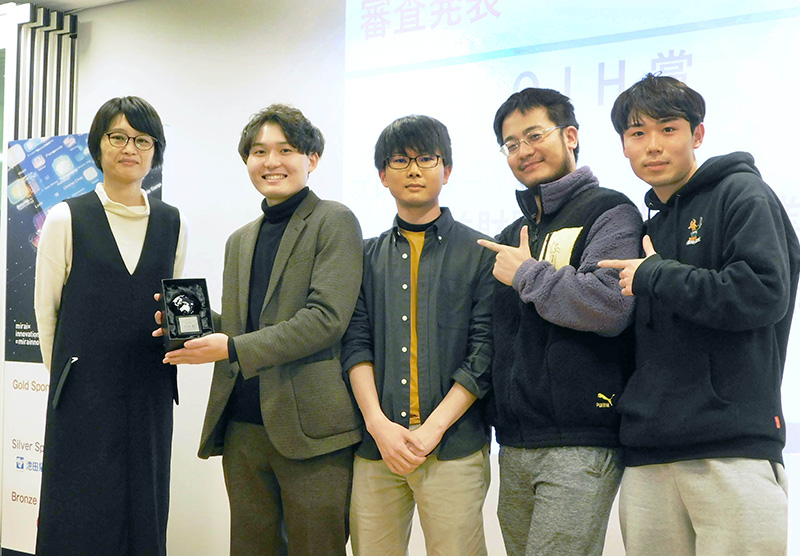
The team has four members: one in charge of architectural design and design for vacant houses, one in charge of building the website, one in charge of external relations and planning and running the community, and Tao, the leader who brings everything together and drives the project. Each makes use of their own expertise as they work toward building one thing together.
“Collaborating with architecture students on actual vacant house renovations and with students in a programming club on building the website is a strength unique to a university-born business, and another big feature of ShareMate.”
On negotiations with companies and fundraising, Professor Kokubu of the lab Tao belongs to gives reassuring advice and support, and the project is going smoothly.
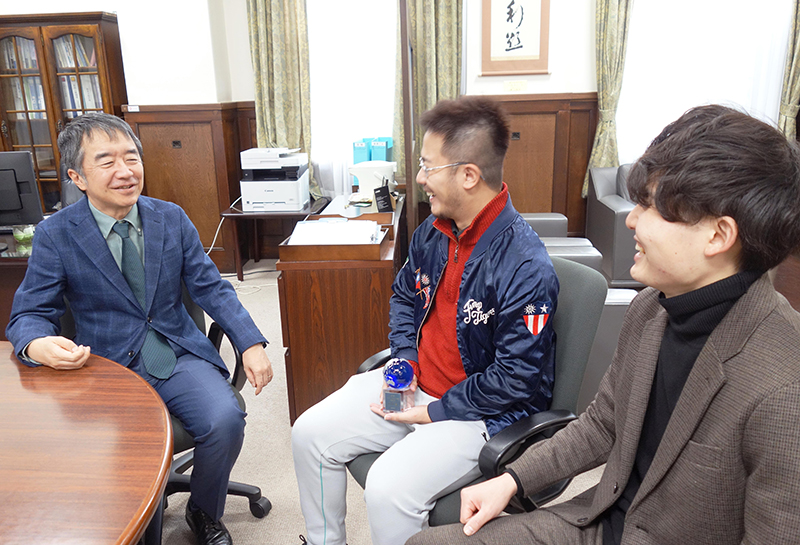
“Taking part in many business contests, starting with Mirainno Pitch, is one of our stepping stones to fundraising. Being highly rated at Mirainno Pitch this time was a big achievement for raising awareness, and it also gave us real confidence,” Tao says with a smile.
From ShareMate to shining global talent! The vision spreads from Kobe to all of Japan and the world
To build the share house, the team first walked around vacant houses near Kobe University on foot and patiently negotiated with owners. They finally met an owner who supports the business, and construction will start in spring 2023. The first share house is scheduled to be completed and open in the fall of that year.

In parallel, the team is developing a website and an app while also actively running cross-cultural exchange activities. It holds events from many angles, such as ones themed on food culture and sports, like making gyoza and sharing hot pot with local people, and business-themed ones with organizations such as the Kobe International Center for Cooperation and Communication.
Tao, who keeps moving steadily toward commercialization, has a vision. It is captured in the slogan “From ShareMate to shining global talent!”
“We intend not only to support international students but also to create value as a place where people get all kinds of information through the platform we provide and learn about the world’s cultures: in other words, a place for developing people. If we can achieve that, it should become a place of learning where not only international students but also Japanese students encounter various cultures and values and prepare to go abroad.”
“To that end, we first want to solve various problems with the goal of ‘One university, One ShareMate,’ working with universities and communities across Japan,” Tao said with enthusiasm.
The team is currently preparing to incorporate in spring 2023. Japanese society is changing rapidly as the wave of globalization gathers pace. With an eye to that future, the team led by Tao is starting to move forward, step by step.
Interview date: December 27, 2022
(Interview and text: Mitsuko Yamashita)