
Innovative products that make developing new drugs and vaccines against COVID-19 more efficient
In 2021, the spread of COVID-19 was an urgent issue for humanity. Over these two years, countries around the world have worked on developing vaccines and treatments with various approaches to bring it under control, and have seen some results, such as some countries succeeding in curbing its spread or preventing patients from becoming seriously ill. But the virus has changed beyond humanity’s expectations, and the situation remains unpredictable…
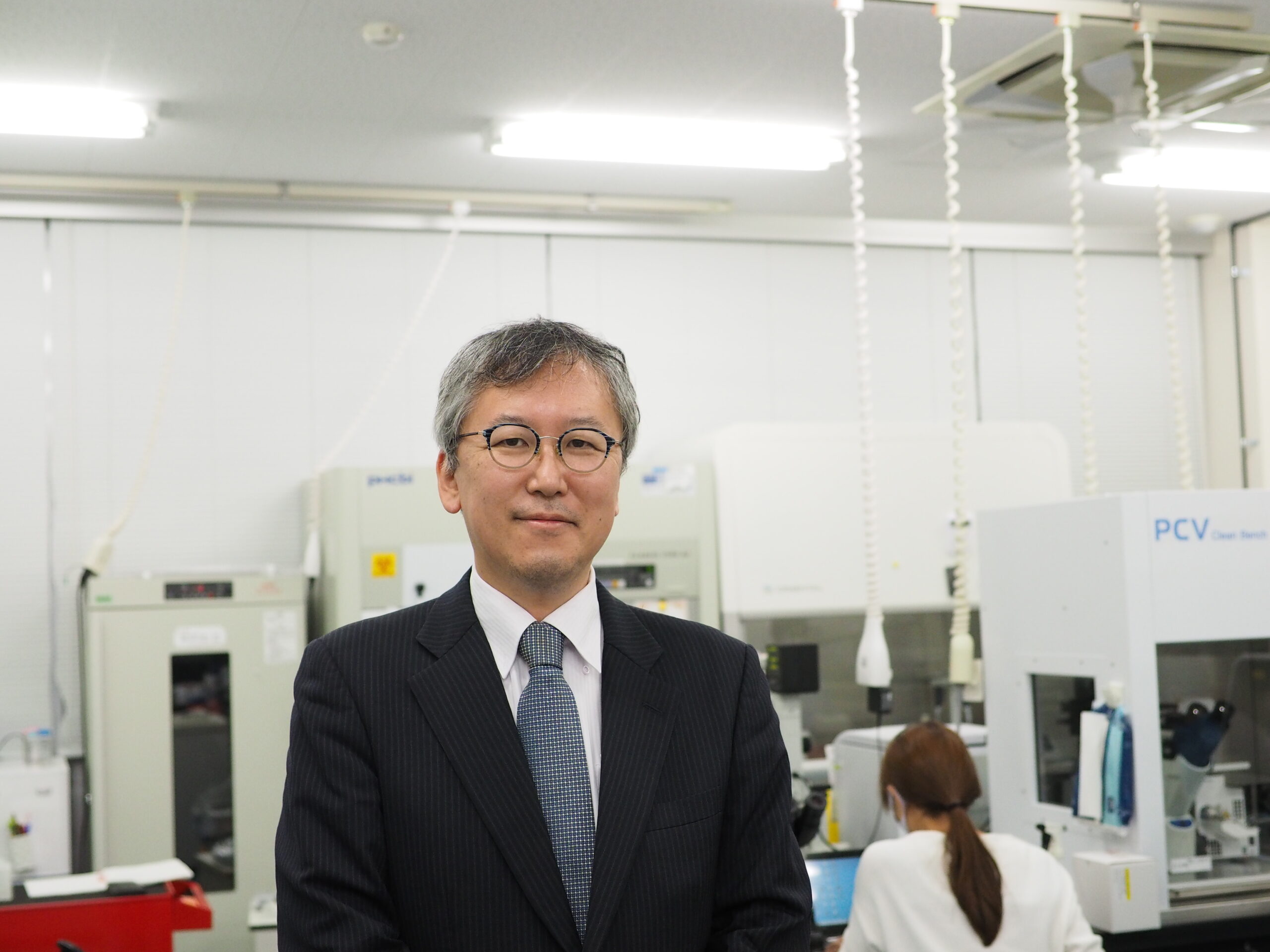
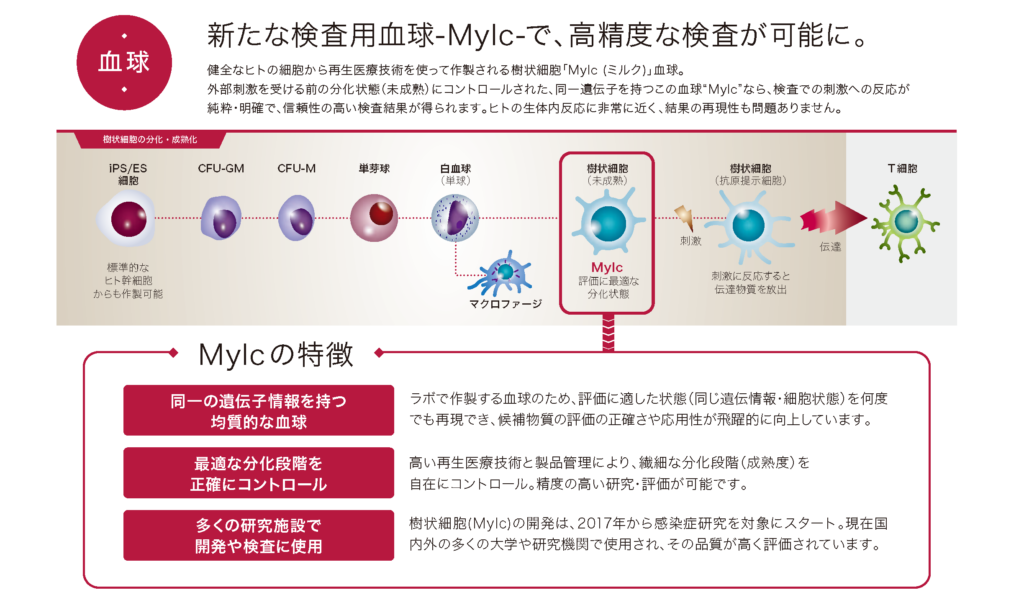
Amid this, MiCAN Technologies Inc., whose Representative Director and CEO is Miyazaki, is attracting attention for developing Mylc, human white blood cells that dramatically streamline infectious disease research and the evaluation of the efficacy and safety of drugs and functional materials. The company’s Mylc was developed using its own know-how, with regenerative medicine technology such as iPS cells at its core, and has begun to be used in vaccine research for the dengue virus, which causes dengue fever, and for COVID-19, which is still spreading around the world.
“Our Mylc series is far more sensitive than existing research reagents and is especially suited to infectious disease and immunology research. Another big feature and strength is that, thanks to our own know-how, it can be produced and supplied in large quantities, stably, and at low cost. This makes research and development more efficient, faster, and cheaper, so at a time when the emergence of COVID-19 variants calls for highly accurate vaccines and treatments, it may be a very useful research reagent,” says Miyazaki. As these words show, the company offers exactly the kind of product that is expected to be used now.
Since pilot products began to be offered in 2019, adoption is still on its way, but attention is rising: in 2020 the company began joint research on COVID-19 with Osaka University, and in September 2021 it raised 189 million yen to develop a kit for predicting the severity of viral infectious diseases. In October 2021, it was also selected for the research and development startup program of NEDO (the New Energy and Industrial Technology Development Organization), and its future activities and growth are highly anticipated.
Knowledge as a drug development researcher and learning at business school led to starting a company
Before founding MiCAN Technologies, Miyazaki was a researcher at a pharmaceutical company, developing materials used in various drugs. At first, Miyazaki had no thought at all of starting a business. But while devoted solely to research, Miyazaki experienced research on a self-chosen theme falling apart for lack of a management perspective and knowledge of managing an organization.
“I felt that to take my own research theme all the way to commercialization, I needed knowledge of management and finance and the management skills to move people, so I started attending business school to build my skills. There, I was inspired by interacting with people of all ages who were active in all kinds of companies and positions.”
While working on various research topics as a researcher and learning management, finance, marketing, and more at business school in off-hours, the experience and knowledge from both came together into one idea…
“Partly because I had developed a business mindset at school, even after graduating I kept looking for interesting ideas. So when I was posted to India for work, I thought about starting a mango farm targeting the nearly 200,000 Japanese who visit as tourists every year. But strategically, I judged that this idea was unrealistic, since I had no experience and no funds. (laughs)”
As Miyazaki pushed further, asking, “What business has a theme closer to me?”, what came to mind was the sight of colleagues in India suffering from malaria and dengue fever. At the time, and not much has changed now, there were two antimalarial drugs, both developed in the 1950s, and they were used locally despite problems such as side effects and the malaria parasite developing drug resistance. From there, the idea developed rapidly into doing something related to malaria drugs in drug discovery, Miyazaki’s own area of strength. After interviews with various people, it finally took concrete shape as “making reagents used in malaria drug discovery research.”
“The idea was set, and so was the direction, but I did not immediately go independent and start a company. Naturally, that was because of the funding problem. So it took quite a long time before I actually set up the company,” Miyazaki recalls.
Staying true to beliefs and ambitions amid difficulties, and founding a bio venture
Facing the reality of having a business idea but no funds, the first thing Miyazaki did was try to commercialize it at the company where Miyazaki then worked. Miyazaki actively approached management and kept proposing it for nearly a year without giving up, but the answer was: “Reagents are outside our core business, so we can’t do it. We can’t invest funds or human resources either.”
But the desire to commercialize it did not die there. “I had thought from the start that it would realistically be tough, so I was looking for the next move. Around 2014, there were many fundraising programs for entrepreneurs, and I applied to one of them, a Ministry of Economy, Trade and Industry program, and was finally accepted and got funding.”
Having succeeded in raising funds and won outside recognition, Miyazaki told the company and started the business, in a sense, as a side job, under strict conditions: not using the company’s lab, and doing research only outside working hours. Never giving up under several tough conditions, Miyazaki set out to commercialize and succeed with the theme of cell culture used in developing malaria treatments, running around as long as time and money allowed, from searching for a rental lab for development to negotiating joint research with labs at Kyoto University and Nagasaki University.
Then in 2016, events forced the choice to devote everything to the business. One was that the company Miyazaki worked for was absorbed in a merger and its research lab was to be closed. The other was that the first funding period ended, and the universities and other institutions with which research contracts had been signed said it was hard to contract with an individual.
“The research division at my company disappearing and the funding period ending were big triggers, and honestly, I also felt that continuing the business as a side job was unrealistic. So I made up my mind and decided to take on a business plan contest.” Having incorporated in 2016 to start the business in earnest, Miyazaki applied, with fresh determination, to the GLOBIS Venture Challenge and won the grand prize, getting off to a start in both name and substance as a bio venture that will lead the future of the bio and drug discovery fields.
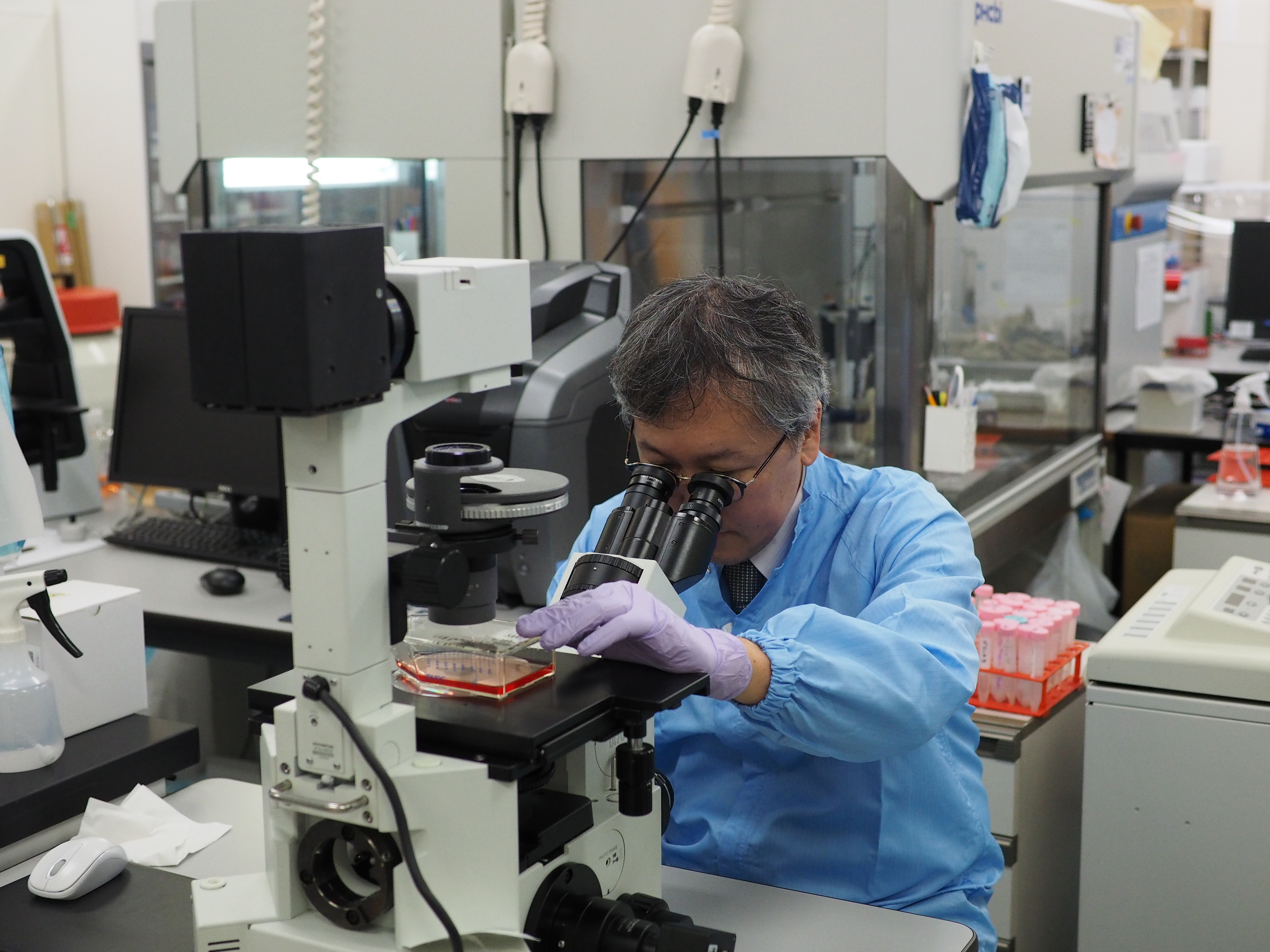
Accelerating growth by developing new products for many viruses and expanding globally
“What I keenly felt while negotiating with venture capital for funding during my side-job days was that, as a side job, you cannot convey your commitment to angel investors and others. I learned that however passionate you are, if your commitment cannot be seen, you are not trusted, either as a person or as a company,” Miyazaki told us.
After starting the company, while still running around to raise funds, Miyazaki concentrated on development and building the company, and began shipping Mylc cells for virus research in 2019. In April 2020, when COVID-19 was spreading and a lockdown began in Japan, the company began joint coronavirus research with Osaka University using Mylc cells, and six months later, in October, managed to start providing cMylc, cells for COVID-19 research.
About the company’s next moves, Miyazaki told us, “In reality, when we first started selling Mylc cells in 2019, we could not earn the revenue we had hoped for. Right after that, COVID-19 spread worldwide and threw society into turmoil, and things stayed tough for us too. But recently we have been getting good reviews of Mylc cells from researchers and academic societies in the virus field, and we can expect future growth. We were also selected for NEDO’s research and development startup support program, and we succeeded in raising funds and put in place a system that lets us focus on developing the kit for predicting the severity of viral infectious diseases, so I feel this may be the timing of a big turning point.” The company is also developing universal Mylc cells for many different viruses, which may go on sale in the near future. At the same time, a business strategy with an eye on the world, starting with Asia, is reportedly entering the planning stage.
Miyazaki keeps taking on new challenges to realize the words in the company’s philosophy, “contributing to the health of all people in the world.” With a powerful weapon, original products related to infectious diseases, a hot topic and a social issue shared worldwide, the company’s future is truly full of possibilities.
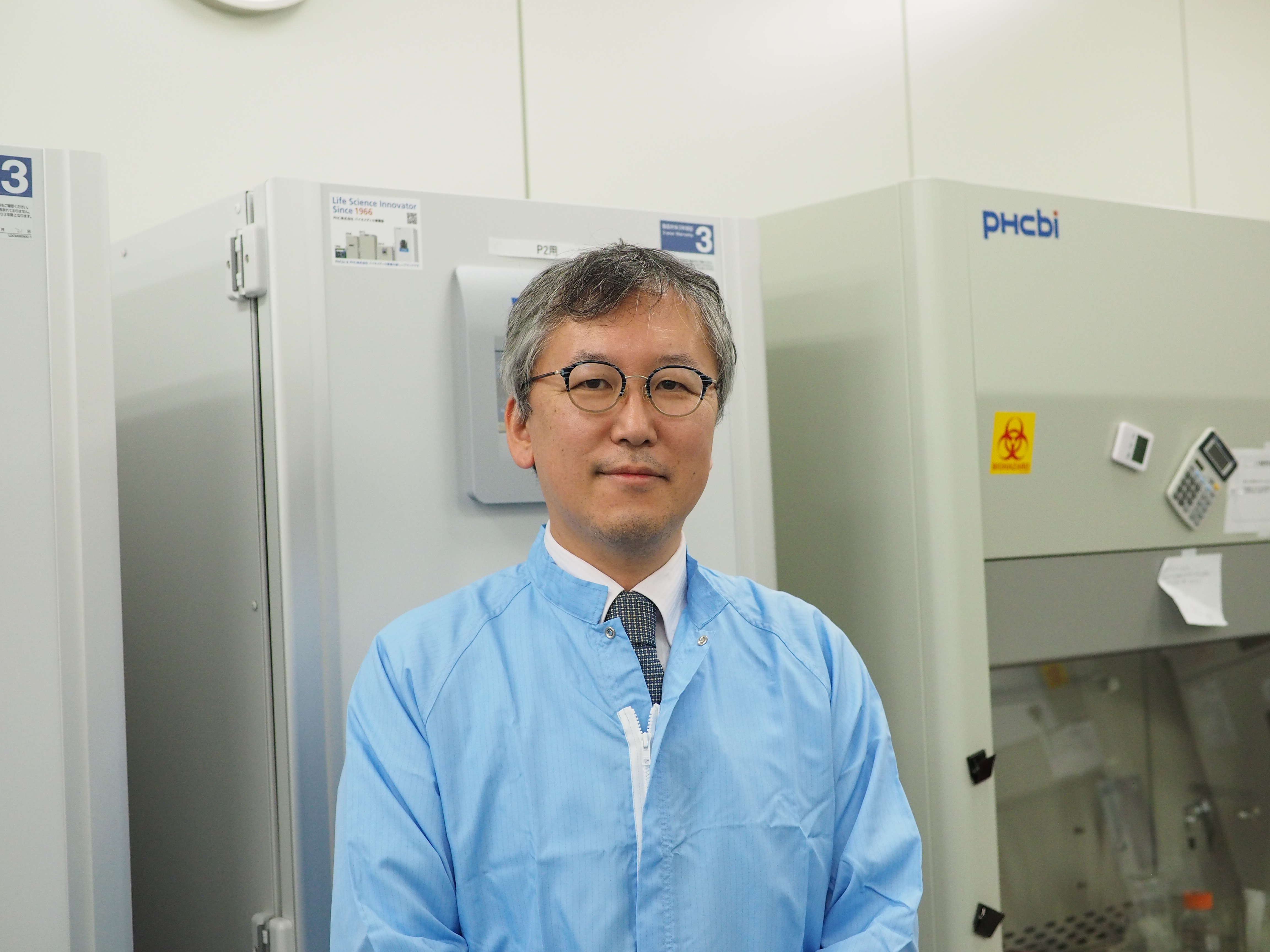
Interview date: November 22, 2021
(Interview and text: Manabu Kitagawa)