
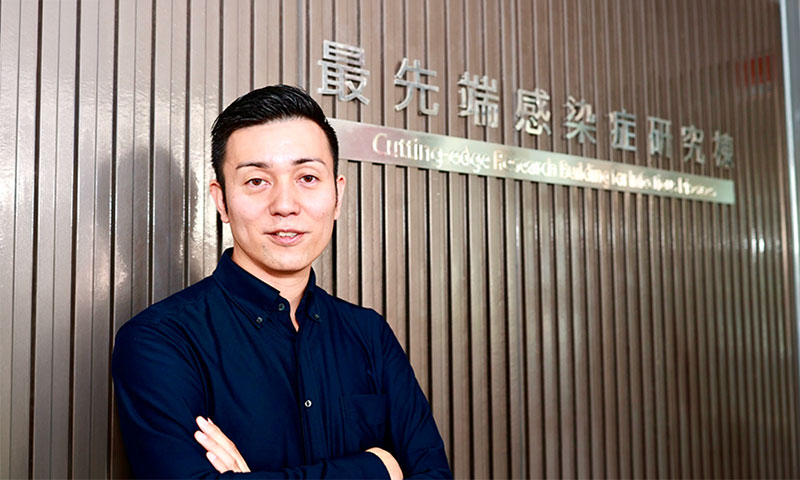
Vascular endothelial stem cells play an essential role in forming blood vessels.Revascular Bio is developing cell therapy drugs that utilize these stem cells. This startup from Osaka University has a vision to help treat various diseases caused by microvascular disorders. We asked Kazuo Omori, Representative Director, President, and CEO, about the journey so far and what lies ahead.
Please tell us about the cell therapy drug your company is developing.
Our technology harnesses vascular endothelial stem cells. These cells help regenerate damaged blood vessels, acting like “seeds” of blood vessels. The stem cells were discovered by Professor Nobuyuki Takakura of the Research Institute for Microbial Diseases at The University of Osaka.
Blood vessels form a network that runs throughout our bodies. The vessels vary in size, from wide pipes to delicate, hair-like tubes. When all of these, from the pipes to the hair-like, are connected end to end, they extend to approximately 100,000 km, long enough to circle the Earth two and a half times*1. Of these blood vessels, up to 95% are the tiny, microscopic blood vessels*2.
In a healthy body, vascular endothelial stem cells generate or remodel these microscopic blood vessels. However, when these stem cells decrease due to aging or diseases, new vessel formation declines, leading to various illnesses or longer recovery times after injuries.
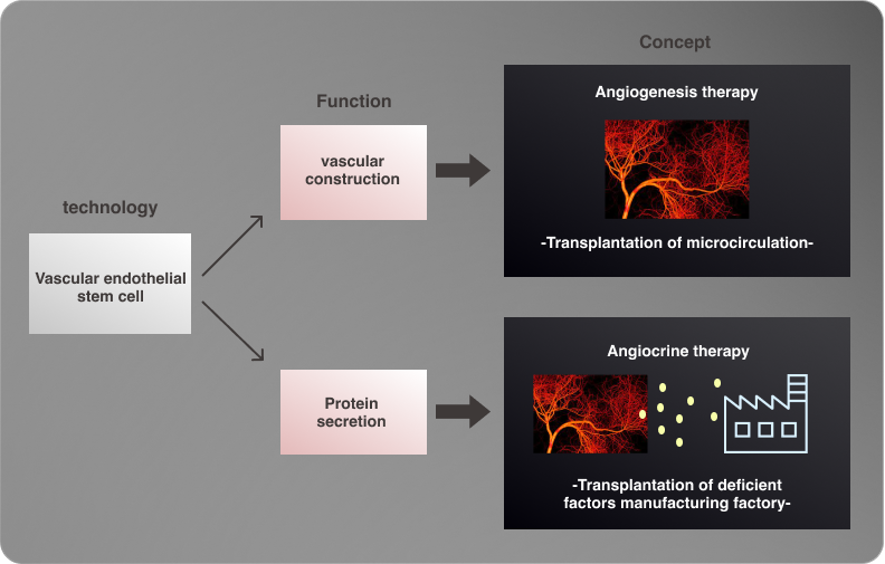
“Angiocrine therapy” permanently supplies proteins damaged by gene-deficient diseases and utilizes gene editing technology.
The “Protein Production/Secretion Platform” will enable the realization of various groundbreaking treatments
Source: Revascular Bio Official English Website
Our cell therapy drug transplants and nurtures vascular endothelial stem cells in areas where microscopic blood vessels fail to grow robustly. Disorders of microscopic blood vessels may ultimately lead to post-myocardial infarction heart failure, dementia, and diabetic gangrene of the legs. We are currently developing a drug for intractable skin ulcers.
*1 Source: Toho University, “Ketsueki no shinpi.” Toho University, Faculty of Science website, July 2006
*2 Source: Takakura, Nobuyuki (composition by Takakazu Kawasaki). “Ghost vessel formation in capillaries is closely associated with lifestyle-related diseases.” In Special Feature 1, “Understanding Blood Vessels.” HEALTHIST No. 276, November 10, 2022.
Please tell us about the current development status and your outlook.
Unlike medicinal pills, cell therapy drugs, by their nature, cannot be mass-produced in factories nor stored as inventory. A major developmental challenge was establishing a stable manufacturing process and a quality control system. We’ve made progress here, and we are now in the non-clinical trials phase.
Our technology is positioned as a treatment for intractable skin ulcers. Safety trials, which take place before human trials, are planned for 2027, followed by clinical trials starting in 2028. Beyond that, we would like to expand our technology to battle other illnesses such as heart failure and dementia.
How did you start Revascular Bio, and where is it headed?
I was a physician and a diabetes specialist in my 20s. In my 30s, I began to think that I wanted to help more patients through newly discovered technologies, so I went to the Graduate School of The University of Osaka. There, I worked on vascular diseases and arteriosclerosis.
I then proceeded to business school to get an MBA, where I learned about drug discovery startups. Then, I was introduced to Professor Takakura at an executive development seminar and learned about vascular endothelial stem cell technology.
When I was a clinician, I saw so many cases where a patient’s leg had to be amputated because the only way to treat microvascular disorders was to wait for our natural regenerative abilities to work, and sometimes that was insufficient. However, after speaking with Professor Takakura, I was convinced that cell therapy drugs with vascular endothelial stem cells can save patients suffering from unyielding ailments. I wanted to make this technology accessible to more people, so I founded Revascular Bio in September of 2022 with Fumio Nishikaku (Current COO).
Doctors cannot make mistakes. However, at startups, we must learn from mistakes and keep improving.
In the long term, we are eyeing the global market, licensing out to pharmaceutical companies with global sales networks, including foreign companies. My wish is to use part of that revenue to give back to The University of Osaka to fund the next technological development project, completing a positive cycle between academia and business.
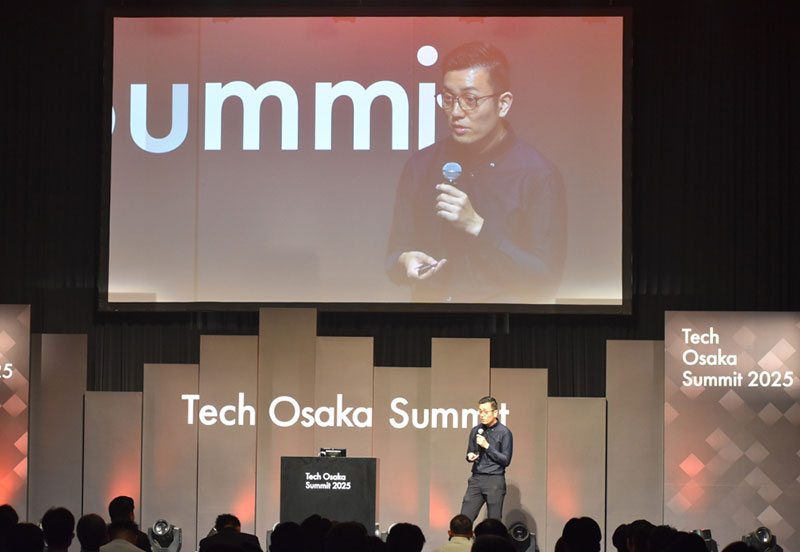
At Tech Osaka Summit 2025, held on September 17, 2025, K. Omori took part in the Tech Osaka Award 2025 pitch contest, delivering his pitch in English.
Watch his pitch in English here.