Takeo Tanaka

Developing a nanodevice that “starves” cancer cells, aiming to establish a new treatment

Takeo Tanaka

Medi-Gear International Co., Ltd.

Position
Representative Director
Website
https://www.medigear.co.jp/ (opens an external site in a new tab)
Business
Development, manufacturing, and sale of medical equipment and systems, mainly for IVR (interventional radiology)

Saving the world’s “cancer refugees” with minimally invasive, “patient-first” treatment

Cancer is the leading cause of death in Japan. While more lives are being saved as treatments evolve, the reality is that 2.6% of cancer patients receive no treatment, because of the heavy physical and financial burden and the difficulty of treatment. Worldwide, they number about 500,000.

A nanodevice for cancer treatment developed by Medi-Gear International Co., Ltd. brings a ray of hope to these people, known as “cancer refugees.”

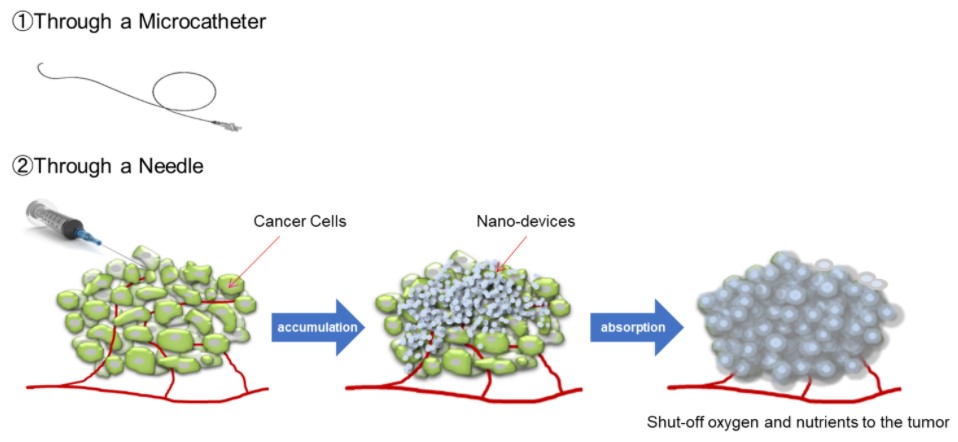
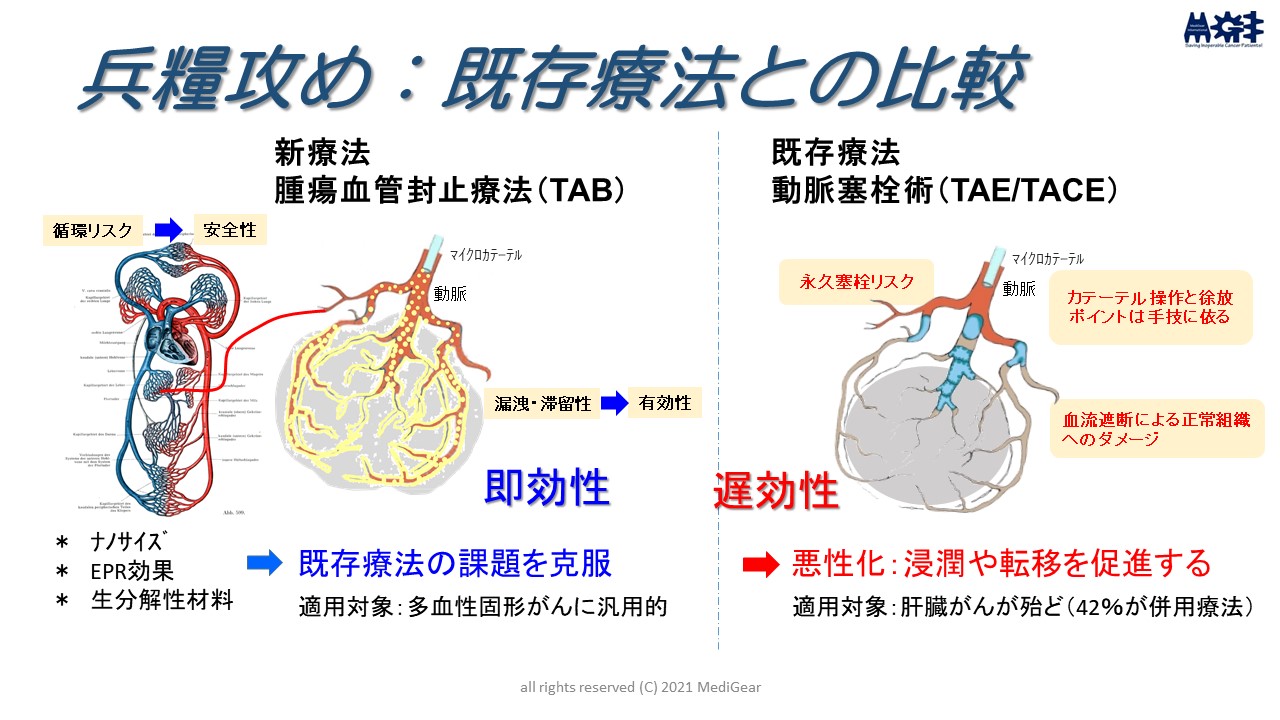
As cancer cells multiply, they also build blood vessels that deliver nutrients and oxygen to themselves. Cancer cells multiply at a furious pace, so gaps form in these “rush-built” blood vessels, and substances of a certain size leak out. The company’s system makes use of this property.

The company first adjusts the nanodevice to a size that reaches the targeted cancer cells specifically, in other words, that leaks out of blood vessels only at the targeted spot. It also designed the leaked nanodevice to absorb water, turn into a gel, and stay in place.

Medi-Gear
Medi-Gear

As a result, the blood vessels around the cancer cells are wrapped in the nanodevice. This cuts off the cancer cells’ supply route for nutrients and oxygen, and they eventually die.

The nanodevice is delivered close to the cancer cells by catheter, so it is minimally invasive and places very little burden on the patient’s body. And because it is not a drug-based treatment, there is no worry about side effects. The device is made of plant-based material that biodegrades and is excreted from the body. A major feature is that it is a “patient-first” treatment that reduces the burden on patients in many ways.

Launching new businesses, leading a company to listing, and starting a company in Silicon Valley

Takeo Tanaka, founder and Representative Director of Medi-Gear International, joined Kobe Steel, Ltd. after finishing graduate school. Unusually for the time, Tanaka was an engineer who was also interested in management. Not satisfied with just the work in the assigned laboratory, Tanaka was thinking, “Maybe I should study for an MBA.”

The turning point was being seconded to JETRO and experiencing a large-scale project in Sydney, Australia. Having discovered the fun of launching new businesses using the company’s technology, Tanaka was assigned to the corporate planning office after returning to Japan and put in charge of launching new businesses. What Tanaka focused on there was semiconductors, expected to become the “rice of industry” in the next era.

“Even in a promising field, doing the same thing as other companies has no future. So what I focused on was the ‘problems’ of the semiconductor field.

If you provide solutions to problems, you can make your presence clearly felt. That is how I arrived at establishing inspection technology, which is indispensable for semiconductors, where precision is required.”

This business won wide support and grew into a new company, which went on to list on the Second Section of the Tokyo Stock Exchange. Tanaka led this growth from the front, gaining business and management experience. After that, Tanaka was posted to the United States, again in charge of launching a new business, and took the lead in developing magnetic media later used in hard disk drives and elsewhere.

Then, in 1994, Tanaka went independent, founding a company in Silicon Valley with data compression technology as its core business.

“I encountered the medical field while working on developing technology for an ultra-high-speed search system. This technology, which processes petabyte-scale data at high speed, was mainly used in the military field.

However, the military field has very high hurdles. While considering other uses for the technology, I learned that the need for diagnostic imaging was growing in the medical field and saw potential.”

Picturing the next era concretely makes clear what to do now

Tanaka has taken on challenge after challenge since the company employee days, and names a strong sense of curiosity as one driving force.

Quickly gathering information on the medical field and seeking the opinions of experts, Tanaka noticed a gap between image-based diagnosis and treatment.

“Today, diagnosis is made based on images taken with MRI, CT, and so on, and treatment such as surgery is carried out based on the diagnosis. In contrast, there is also a technique called IVR, which diagnoses while looking at images and treats at the same time.

IVR, which has the advantage of placing less burden on patients, is expected to spread for certain.”

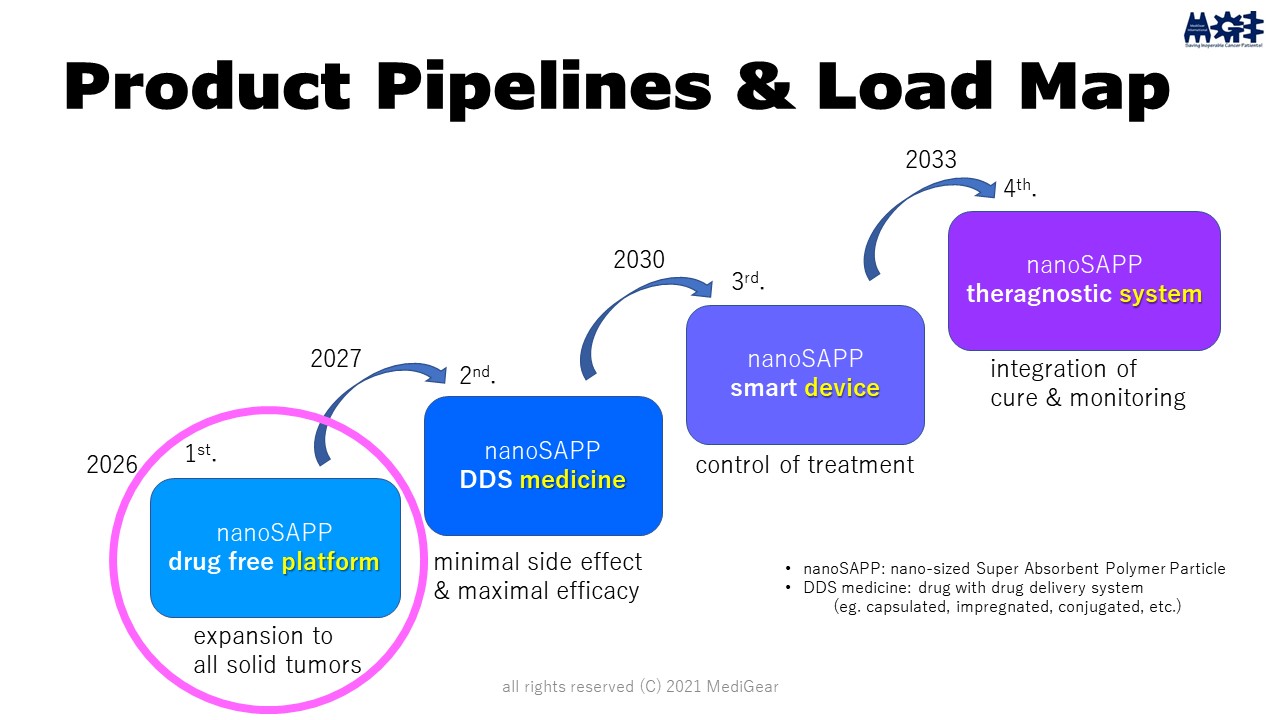
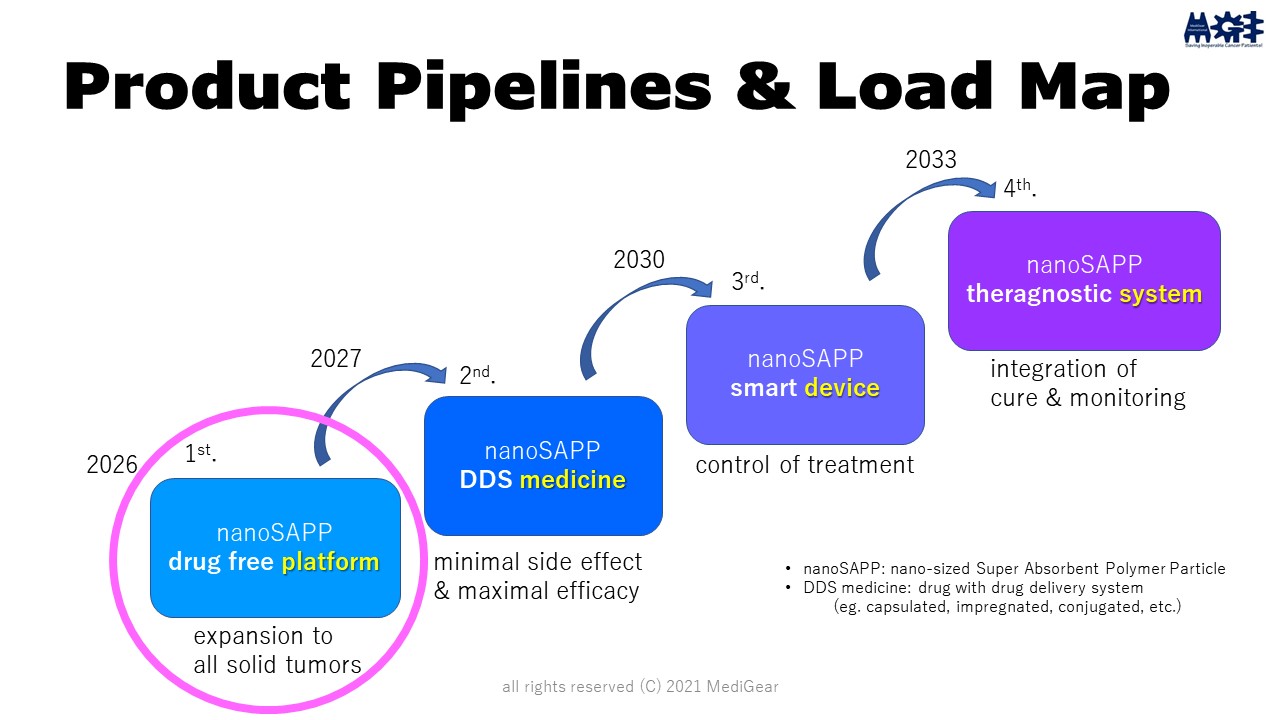
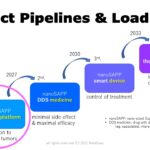
Tanaka now pictures a future in which “IVR becomes established worldwide in 2033,” and has divided the technological progress and social changes toward it into several steps.

“When you are launching a business or developing technology, you hear about all kinds of information, such as technologies and services that might be related.

If you picture the future and divide it into steps, you can imagine ‘at which step that technology or service can be used’ and ‘what they should improve to make it effective, and what we should do.’”

Medi-Gear

Looking at the future over the medium to long term and working backward to find what to do now is a way of thinking that became a habit in the company employee days, Tanaka says. The nanodevice now being developed is only the first stage toward the goal of establishing a new diagnostic system integrating treatment and monitoring in 2033.

Another example of Tanaka’s drive is going back to graduate school to develop the nanodevice.

“I had business experience and the idea of starving cancer cells with a nanodevice, but I did not have the medical and materials knowledge needed to make it concrete.

Thinking, “What you don’t know, you have to study, and if you study, you should use a suitable method,” I decided to study at graduate school.”

In Japan, it is still not at all common for people with work experience to go back to study at a university or similar. Starting a business also tends to be seen as a challenge for young people.

But Tanaka brushes aside worries and preconceptions about age: “In the United States, making someone write their age on a résumé would be harassment.” If anything, having rich experience and connections built over the years is a great strength.

Tanaka’s success may become a message of support for many “veteran working people.”

The challenge is fundraising: wanting to get the technology into society as soon as possible

The cancer treatment using the nanodevice developed by Medi-Gear International has been confirmed to be effective in the lab and is moving into the phase toward practical use. The company is aiming for approval as a medical device, but because its use is close to that of a drug, the Pharmaceuticals and Medical Devices Agency (PMDA) is also asking for safety as a pharmaceutical.

The main points for approval are whether the nanodevice does any harm in places other than the targeted cancer cells, and whether the nanodevice, once its job is done, biodegrades and is excreted from the body as expected.

“These safety tests cost money. In other words, they are the biggest hurdle for startups like us. Right now, our biggest challenge is fundraising.”

Securing at mass-production level the effectiveness and safety achieved at lab level is also a big challenge for practical use. On this point, Tanaka says a partner company has been found and discussions have begun on setting up a production line.

Takeo Tanaka

“My wife had a rare cancer and died just one month after being admitted to the hospital. By the time the cancer was found, it was already too late to do anything. That is why I want to help as many people like that as possible.

The PMDA also has high expectations and is cheering us on, saying, “Bring it into practical use as soon as possible.”

It is also thought that combining it with conventional treatments can produce even greater effects, so pharmaceutical companies are supporting our activities too.”

If all processes go smoothly, human clinical trials will start in 2022, with market launch planned for 2026. For cancer refugees around the world, and to improve the quality of life of patients suffering through cancer treatment, Tanaka is traveling around Japan and the world again today.

Interview date: January 14, 2021
(Interview and text: Morinaga Matsumoto)