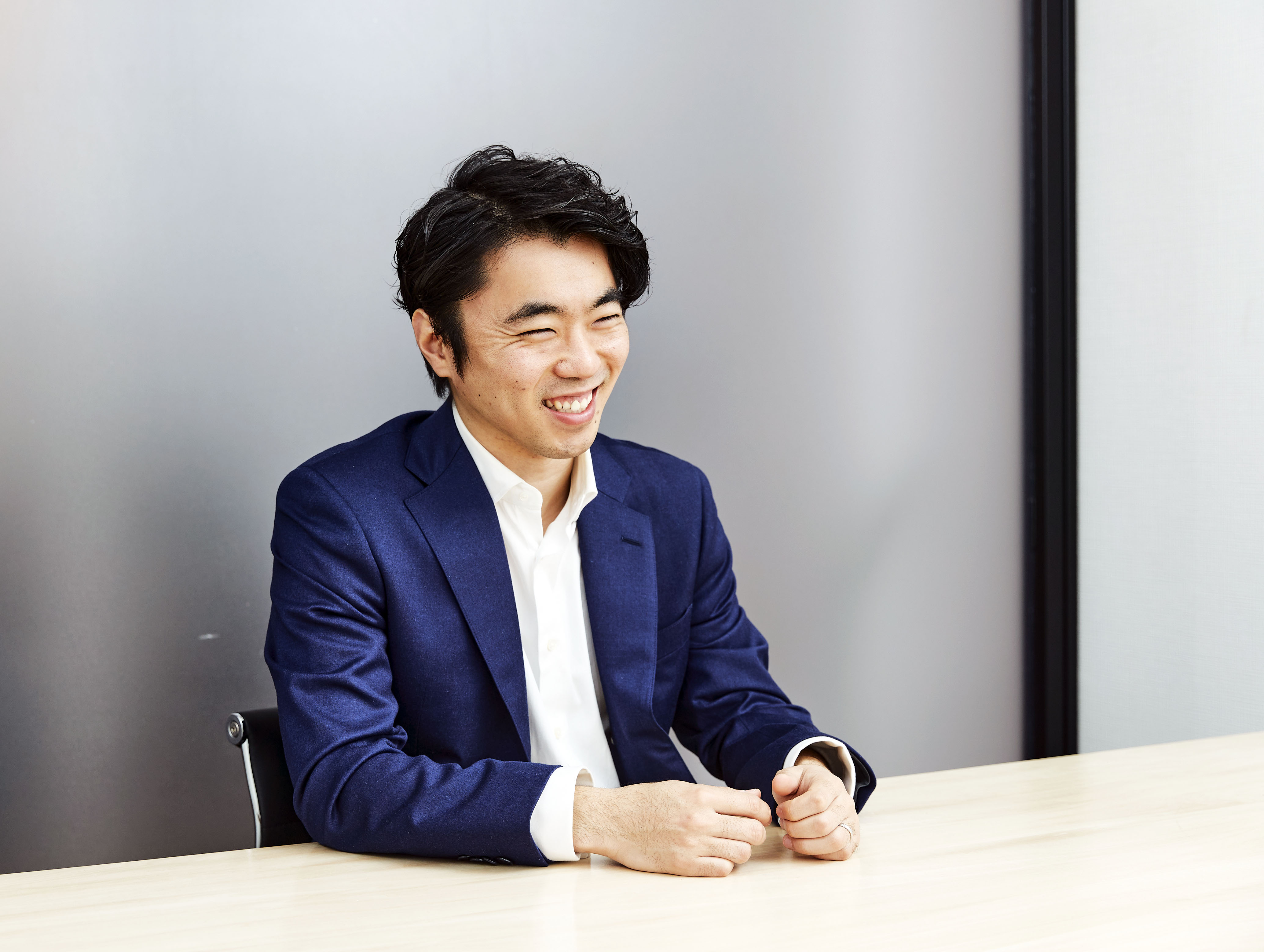
Hiroki Imabayashi

Enabling companies to use data safely with AI analysis and secure computation

Hiroki Imabayashi

EAGLYS Inc.

Position
Founder and CEO
Website
https://eaglys.co.jp/ (opens an external site in a new tab)
Business
Research and development of a secure computing platform using secure computation technology, and of data analysis and AI technologies for private data and confidential information

Providing technology that solves the “security” problem blocking the use of data

The term “DX (digital transformation)” is now heard in every industry, and many companies are trying to actively use data. Moves toward data sharing between companies are also emerging, to create new innovation and raise the business value and competitiveness of each company.

However, when companies try to use data, the wall of “security” has always stood in the way. With risks such as information leaks, it is natural for companies to be cautious, but if the use of data stalls because of security, “DX” will not be achieved. EAGLYS Inc. provides a solution that breaks through this stagnation.

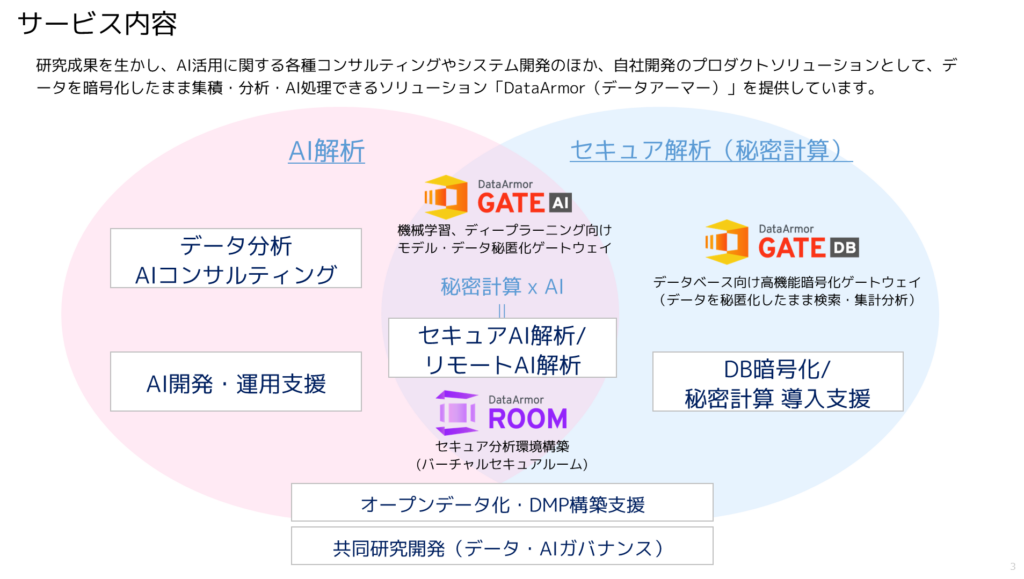
“We support companies so they can use data to transform their operations and create new businesses. Our feature is that we offer not only consulting but technology for both ‘shield and spear.’ The shield is data security built on ‘secure computation’ technology, and the spear is AI.

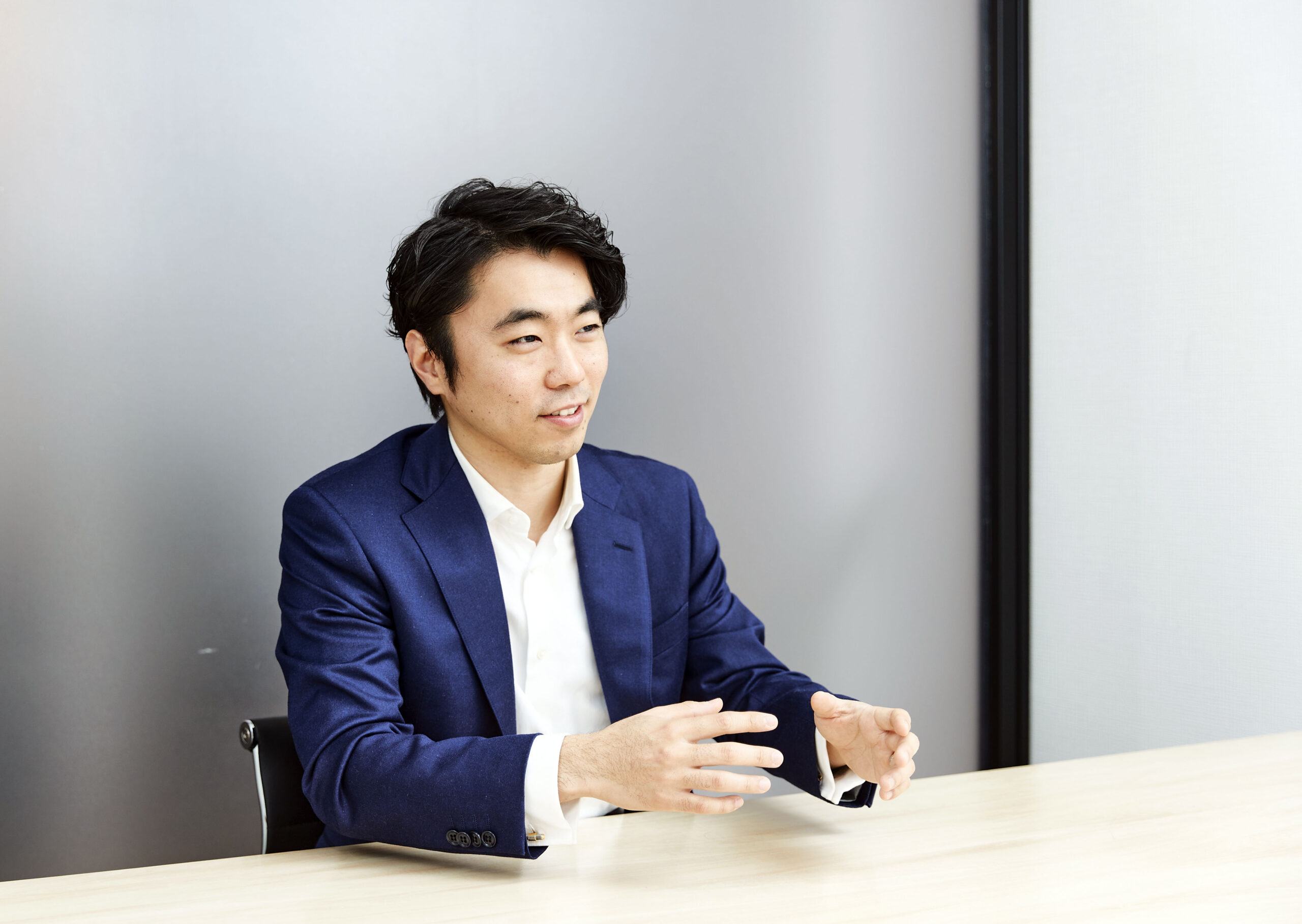
By providing both, companies can move forward with using data with peace of mind while their data is protected,” says CEO Imabayashi.

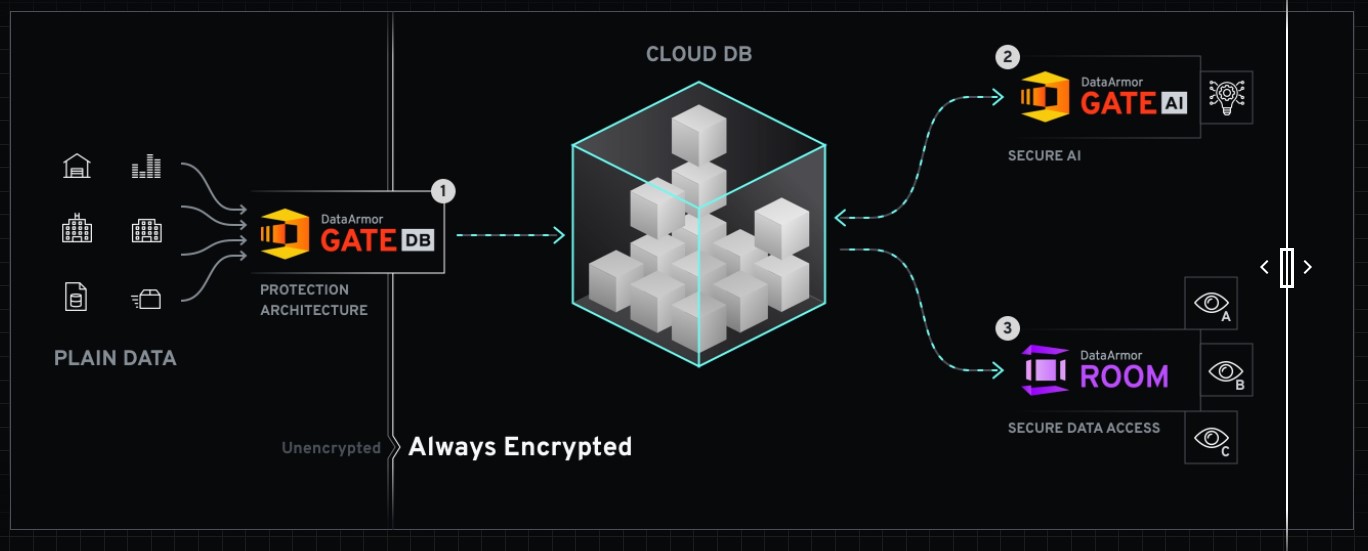
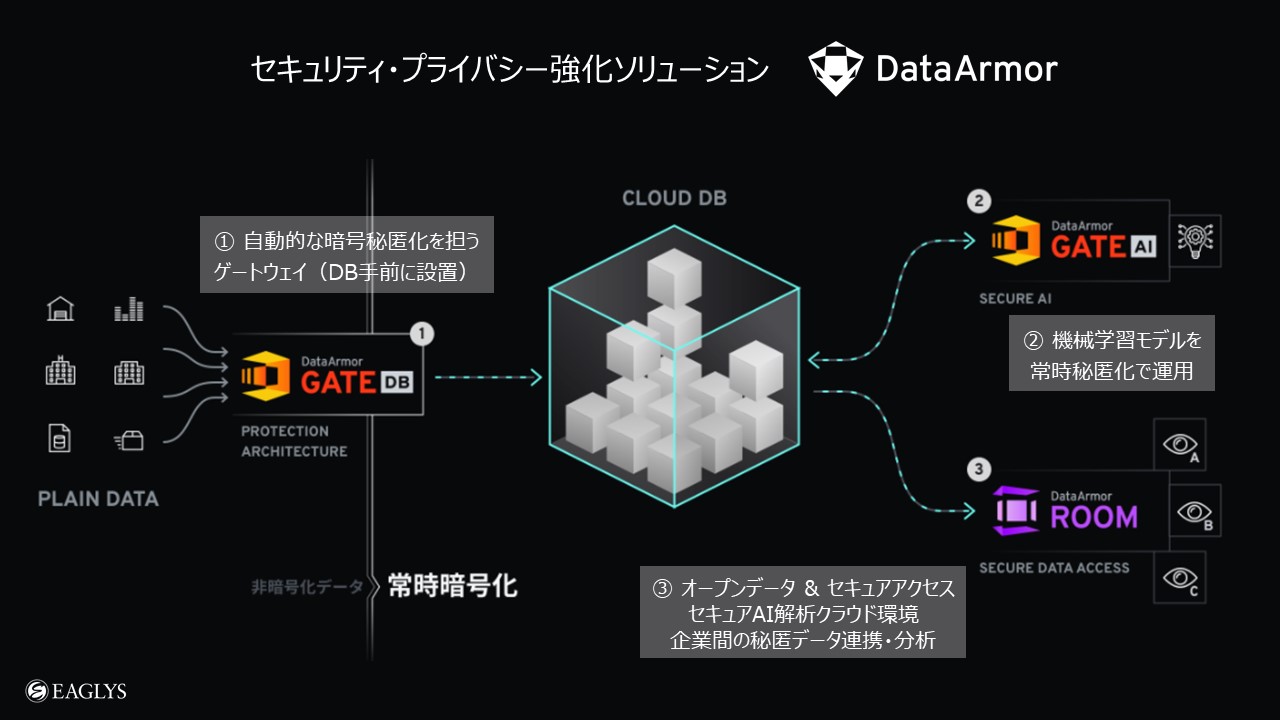
Of the key terms, “secure computation” stands out. It is technology for calculating and processing data while keeping the data confidential. Because data is always protected in an encrypted capsule, the necessary confidential data can be brought together and safely calculated, analyzed, and processed with AI without exposing all the information.

eaglys
eaglys

Of course, when sharing data between companies, any data can be shared while kept confidential in an encrypted capsule, so it is reassuring in terms of security.

“One effect of secure computation is this: until now, there were many cases where, because personal and confidential information could not be taken outside, only stripped-down data was allowed to be used.

That is very frustrating for data scientists, who believe that ‘the value of using data comes precisely from handling important data.’ Secure computation can break through this situation.”

Companies wanting to use secure computation are steadily increasing, and EAGLYS is currently working with the MaaS and Suica Promotion Headquarters of JR East (East Japan Railway Company) on creating new businesses by using personal data while ensuring security and privacy.

In AI as well, having developed “AI image recognition technology” with some of the world’s highest speed and accuracy, the company is collaborating with Tsubakimoto Chain Co., a long-established maker of chains and automotive parts, on making logistics centers unmanned.

The frustration felt as a data scientist is the origin of the business

Accompanying a grandfather who ran a business, Imabayashi had the chance to meet all kinds of business owners from about the age of three. “Maybe I naturally picked up the feel of relationships and how business owners talk with each other,” Imabayashi recalls.

Interested in brain science, Imabayashi entered the Department of Life Science and Medical Bioscience in the School of Advanced Science and Engineering at Waseda University. The turning point came at the end of the second year: meeting peers at a corporate internship.

eaglys

“Everyone was my age and doing all kinds of things, like starting a company in Singapore. I wondered what I was doing. After that, a friend told me about machine learning. It interested me more than my university studies, so I decided to work hard in this field and started using a computer seriously for the first time.”

Then, in the first year of graduate school, Imabayashi joined an entrepreneur development program, went to Silicon Valley through it, and worked at a company as a data scientist. There, Imabayashi had an experience that led to the current business.

At the time, learning of cases using AI to detect fraudulent transactions, Imabayashi proposed trying it within the company. But when Imabayashi asked internally for the data needed for the project, the answer was that getting the data would require an endless “internal stamp rally” of approvals and take several months.

In the end, even though research and other preparations were already under way, the project fell apart because the data could not be analyzed and used right away.

“That was when I felt that even if you have the technology, if you cannot use data, the resource, quickly and freely, the age of AI will not begin and DX cannot be achieved. From that sense of crisis, I decided, ‘I will make solving the security problem my life’s theme, to promote the use of data.’”

Incidentally, two shocks from the Silicon Valley days also connect to Imabayashi today. One was meeting inspiring people. Many colleagues had their own themes to pursue, and Imabayashi was impressed by their attitude of respecting others as professionals precisely because they had their own core.

The other was a sunset seen on the West Coast. Facing that grand, beautiful scene, Imabayashi wondered, “What can I bring to this world?” and resolved, “Someday I will create something that reaches the West Coast too.”

Choosing entrepreneurship over research to solve today’s pain

After returning to Japan, Imabayashi got serious about researching “secure computation.” What remained as future options were two: “researcher or entrepreneur.” That led to founding EAGLYS, but why choose the path of the entrepreneur?

“Because I noticed the fundamental difference between research and business. Research is a world where you are allowed to predict future trends and set research themes to solve problems that might arise 10 years from now.

Business, on the other hand, is rooted in financial thinking, such as “how to raise funds, how to increase sales, and by when to recover the investment,” so the stance is to solve problems that exist now.

Given that difference, I wanted to solve today’s pain and tackle real problems, so I chose to start a business.”

After founding the company, things did not always go smoothly. For the first year, Imabayashi ran alone.

Imabayashi handled both sales and PM (project management) alone, moving forward by clearing the problems at hand without really knowing how to exchange contracts or settle intellectual property. But it was impossible to do everything alone, and Imabayashi experienced setbacks.

“Even when we won orders, it was hard for me, with no PM experience or aptitude, to run things well. In the first place, with not only AI implementation but also system implementation, there was no way to do it alone. I could not balance sales and PM work, implementation fell behind, and customers even got angry with me.”

What changed the tough situation was the arrival of peers, led by co-founder Maruyama and AI consultant and PM Asano.

Maruyama is an excellent data scientist, and Asano has experience as PM and PMO on large projects, from the very upstream phases, at NEC. With these specialists on board, Imabayashi could focus on sales, a strength, and the business accelerated greatly.

eaglys
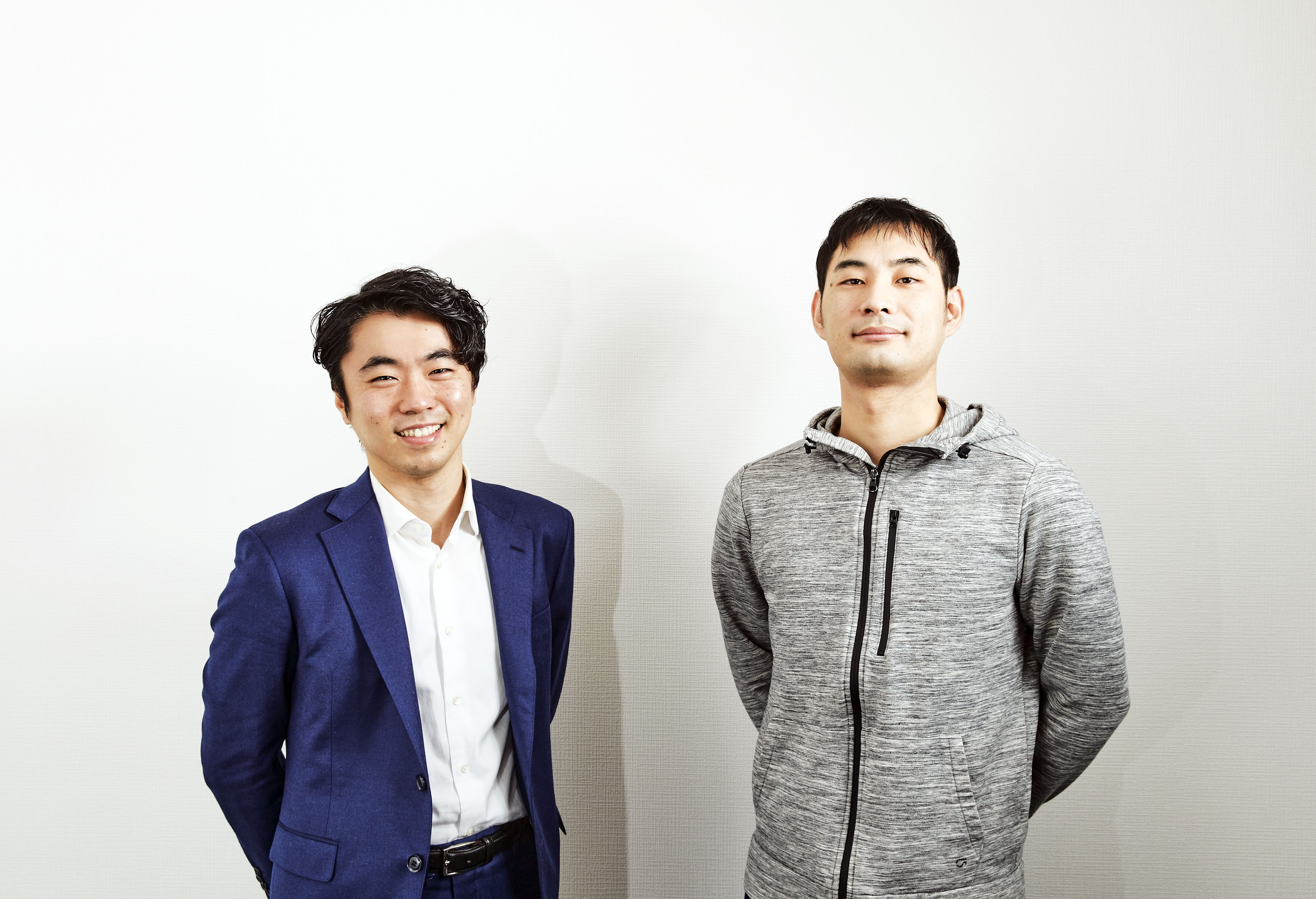
With Maruyama, co-founder and Chief Science Officer

Building a “Google for private data” to support the use of data

“Only some companies actively pursuing DX need our technology, so the number is still small, and the business is just getting started. But compared with seven years ago, when I started the research, and five years ago, when I founded the company, I feel awareness of secure computation and of our company has risen,” says Imabayashi. To get people to know the company’s technology, Imabayashi has taken part in many events since the founding.

The company also competed two years in a row in “GET IN THE RING OSAKA,” organized by Osaka Innovation Hub. In 2020 it reached the finals, and at “GET IN THE RING OSAKA 2020-AI edition-,” held that winter, its second try, it won.

eaglys
The Middleweight final of GET IN THE RING OSAKA 2020 -AI edition- (online), held on December 3, 2020.
The pitch was given by Michal Kiezik, Director of Global Business Development.

“Winning a well-known competition makes you feel recognized, as if people are saying ‘this service is needed now,’ and a track record raises trust in the company.

Also, many people in the audience at pitch events like these are there looking for new and interesting things. By taking part and getting your company known, I think encounters happen and business accelerates,” Imabayashi says, explaining why startups should actively take part in events.

It is clear that EAGLYS’s technology, which lubricates data sharing between companies, is needed in the coming era, and it will surely spread through society more and more.

Imabayashi’s dream is to build a “Google for private data”: a world where companies can reach and use all kinds of data, just as Google built a foundation where anyone can access information by gathering open data.

Finally, we asked Imabayashi, who has pursued a single theme in a straight line since the early twenties, for a message to younger people aiming to start businesses.

“I hope more deep-tech startups appear. They may tend to be avoided because they are not businesses that generate sales right away, but as long as you can gather people who share your vision, such as university professors and investors, you can grow the business over time, and I think it is a field where you can have a big impact on society.

And this applies to everyone: I don’t think you need to pivot just because your idea was rejected once. There are things you can take on precisely because you are a startup, so be confident and keep pursuing ideas others don’t think of.”

When advanced technologies and services that society has never had are born, they are never 100% accepted from the start. But if you believe in the future you envision and push forward, society will surely need you. It was an encouraging message that only Imabayashi, who has experienced exactly that, could give.

Interview date: February 5, 2021
(Interview and text: Yumika Kuramoto)