
Supporting work style reform at dental clinics
One of the challenges troubling many managers is labor shortages. Complaints like “we post job openings but no one applies” and “even when we hire someone, they quit right away” are problems across Japan, regardless of industry or company size. The dental industry is no exception. In particular, hiring dental hygienists, specialists indispensable to dental clinics, is extremely difficult.
There are more than 280,000 people with the national dental hygienist qualification, but only about 130,000 of them are actually working. With as many as 150,000 people away from the workplace, there are calls about a “labor shortage.”
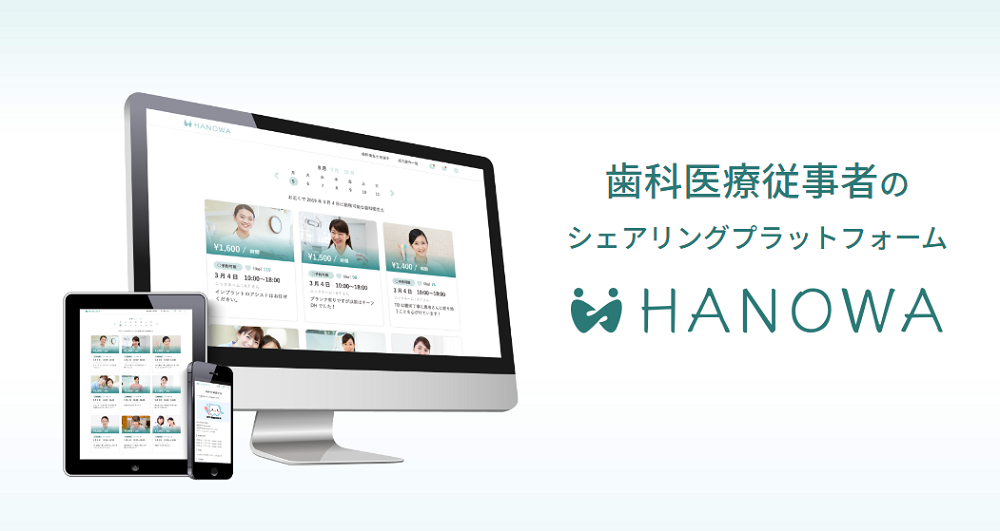
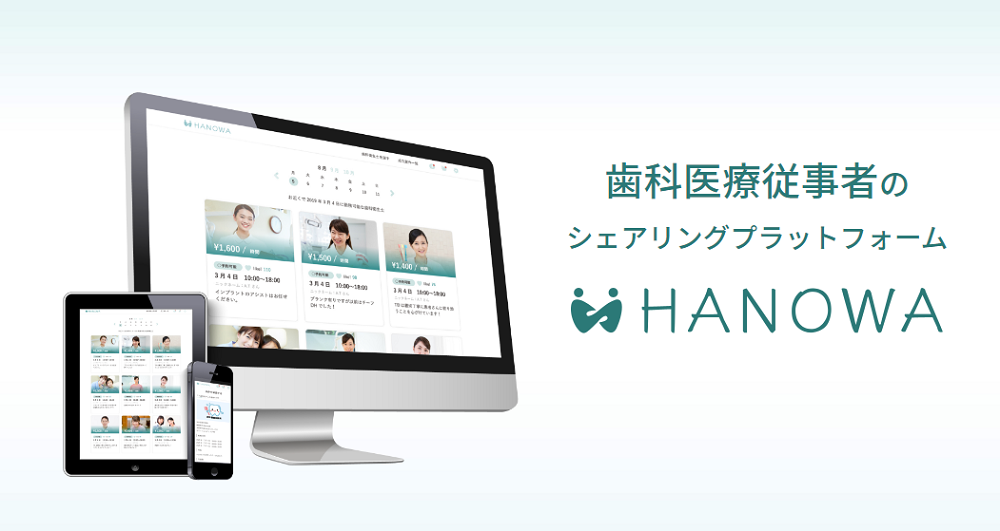
HANOWA, a sharing platform for dental professionals run by HANOWA Inc., resolves this mismatch and supports dental clinics in hiring and dental hygienists in job hunting. As of May 2021, about 300 dental clinics and about 500 dental hygienists, mainly in Osaka City and Tokyo’s 23 wards, use the service.
Job ads, staffing agencies, and recruitment agencies already exist as matching services. But with these services, both employers and job seekers have always felt something lacking: “the workplace’s appeal and working environment don’t come across,” “you can’t tell the director’s personality or approach to work,” and “you can’t really tell the job seeker’s skills, experience, or personality.” This led to dissatisfaction: “we can’t hire the kind of people we want” and “there are no workplaces like the one I want.” Covering up that dissatisfaction and forcing a hire or a job also caused people to “quit right away.” Staffing and recruitment agencies, which are said to resolve such mismatches, are something many dental clinics hesitate to use because of the cost.
HANOWA, by contrast, lets several dental clinics “share” the human resource of dental hygienists. Rather than hiring full time, clinics “have the people they need come when they need them.” Dental hygienists, the job seekers, say “I can work on this day of the week from this time to this time,” taking into account housework, childcare, and other commitments. By matching these on HANOWA, dental clinics can secure staff without strain, and dental hygienists can work without waste.
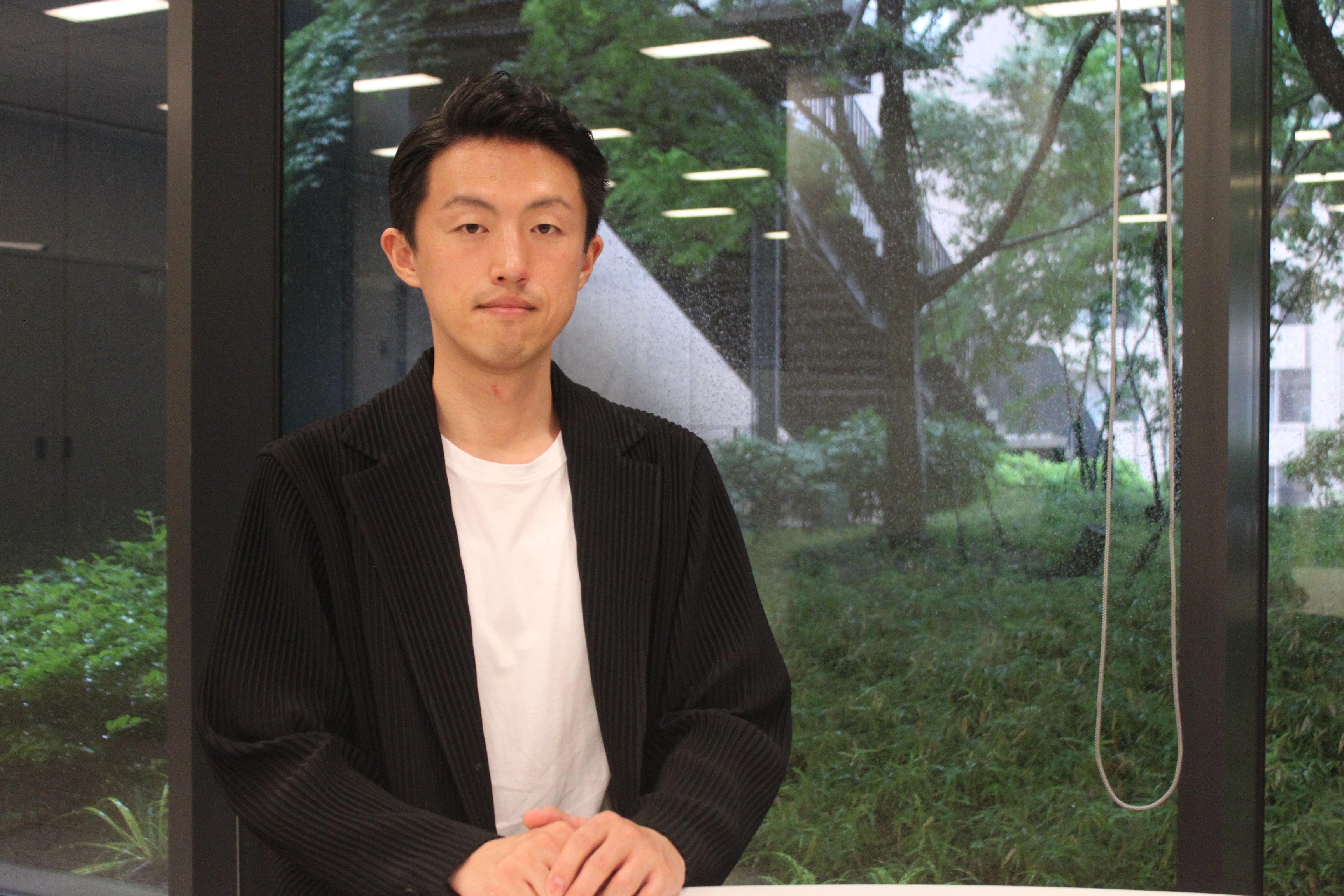
“Hiring and working through HANOWA also has the aspect of a ‘trial hire / trial job.’ By first having people work on limited days and hours, employers can actually see their skills and attitude toward work. Job seekers can likewise see the working environment and the director’s way of thinking for themselves. If full-time hiring follows after building up this time together, the accuracy of the match is very high.” (Representative Director Shohei Arai)
At dental clinics that have introduced HANOWA, staff keep saying “it has become easier to take paid leave,” and it is giving a big push to reforming how staff work. Being able to say “we’re registered with HANOWA, so you can take paid leave without worry” has become a big selling point when dental clinics recruit, and an important tool for solving the problem of “not being able to hire dental hygienists.”
An “adventurer” always thinking about business problems and solutions
Arai, now 34, first worked in sales at a company running a job information website. There, Arai learned how the staffing services industry works and felt a problem: “if things stay like this, the industry itself will be left behind by society.”
Having gained business experience, Arai next launched a freelance web production service. That was where Arai met dental clinics and helped them attract patients using the web. Drawing on experience from the previous job, Arai also began helping dental clinics hire staff, and came to think about running dental clinics together with the dentists who own them, as their partner.
“Almost all dental hygienists are women. Many of them get qualified and start working in their early twenties, and then go through all kinds of life events, such as marriage, childbirth, and raising children. Depending on those, there should naturally be diverse ways of working, such as shorter hours, part-time jobs, or working at several places at convenient times. But almost all dental clinics want dental hygienists who work full time exclusively for their own clinic. That was the decisive mismatch. Put the other way around, I thought that if there were a system to bridge this mismatch, both dental clinics and dental hygienists could be happy.”
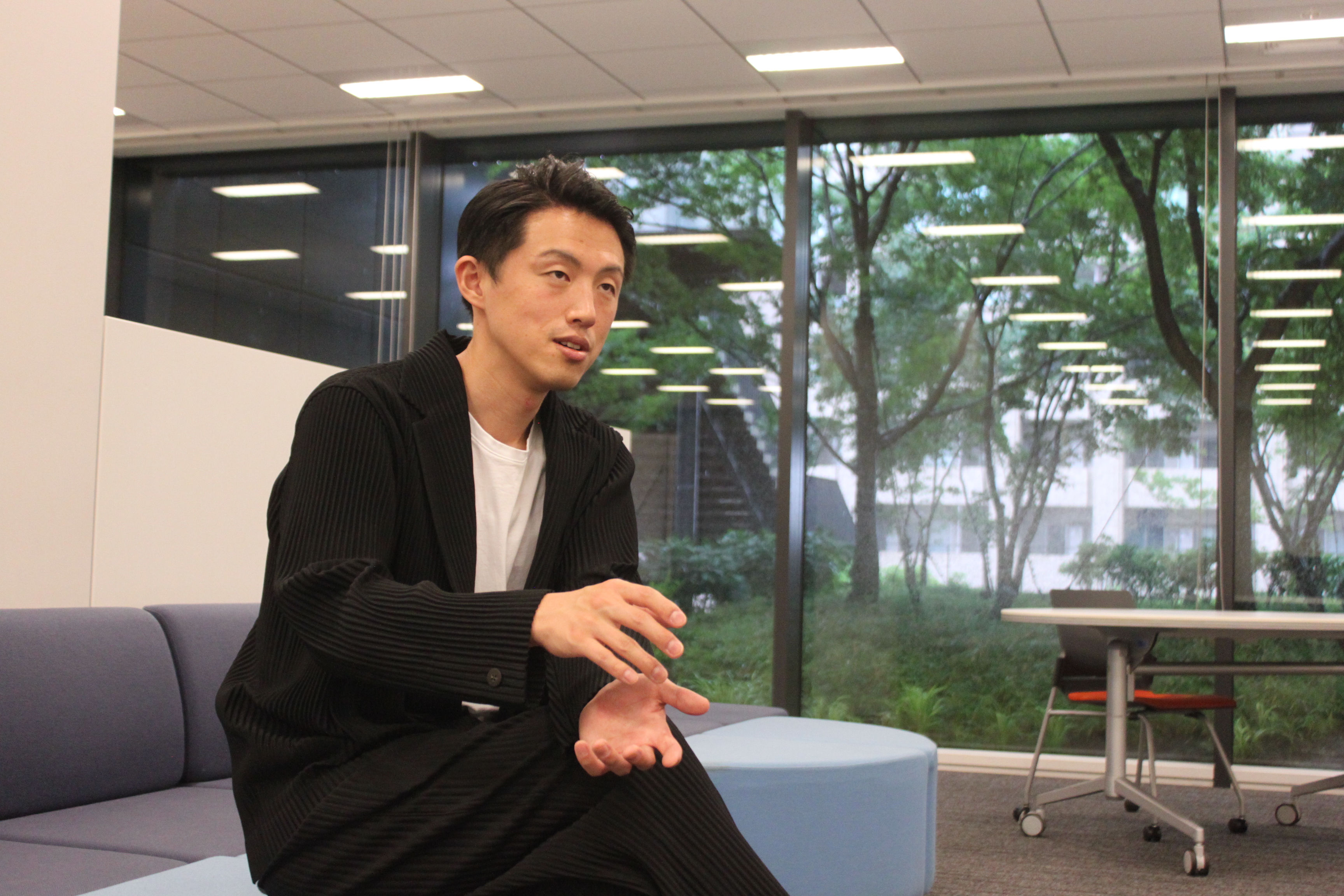
Experience in the staffing services industry and helping dental clinics hire also led Arai to feel that conventional staffing services could not solve the problem. At the same time, Arai was thinking, “Then what would I do?”
“When I take personality tests, I get results like ‘adventurer’ and ‘idea person.’ Come to think of it, I was always thinking, ‘It would be better if it were done this way’ or ‘I would do it like this.’ And I came to see that this was my strength. The activities that led to today’s HANOWA started from there.”
Taking action, Arai first searched online for an engineer who could give advice, and learned what kind of system would be needed to realize the service in mind and how much it would cost. Talking with the engineer, Arai also gained knowledge about startups.
“I also searched online for peers to build the service with. I posted messages on bulletin boards where interested people might gather and posted on Twitter. I sent about 100 Twitter DMs in three days. Then I held Zoom meetings and narrowed it down to the current members, who shared my vision.”
Incidentally, apart from Arai, more than half of the members live in the Kanto region. Partly because of the pandemic, they have hardly met in person to work over the past year or so, communicating remotely instead. But Arai says “there is no problem at all.”
“We keep our base in Osaka not only because distance does not get in the way of our work, but also because of the spirit of ‘better to be the head of a chicken than the tail of an ox.’ Rather than getting lost in the crowd in Tokyo, I want to lead the way in Osaka and make our presence felt.”
Starting a business is a means; value your purpose and sense of the problem
Arai began gathering information and peers to realize HANOWA in spring 2018, founded the company in January 2019, and launched the service in December 2019. In the meantime, Arai took part in “GET IN THE RING OSAKA,” an OIH pitch contest for startups aiming to expand overseas, and in the “OIH Seed Accelerator Program (OSAP),” working to refine the business plan, gather information, and build partnerships in many directions.
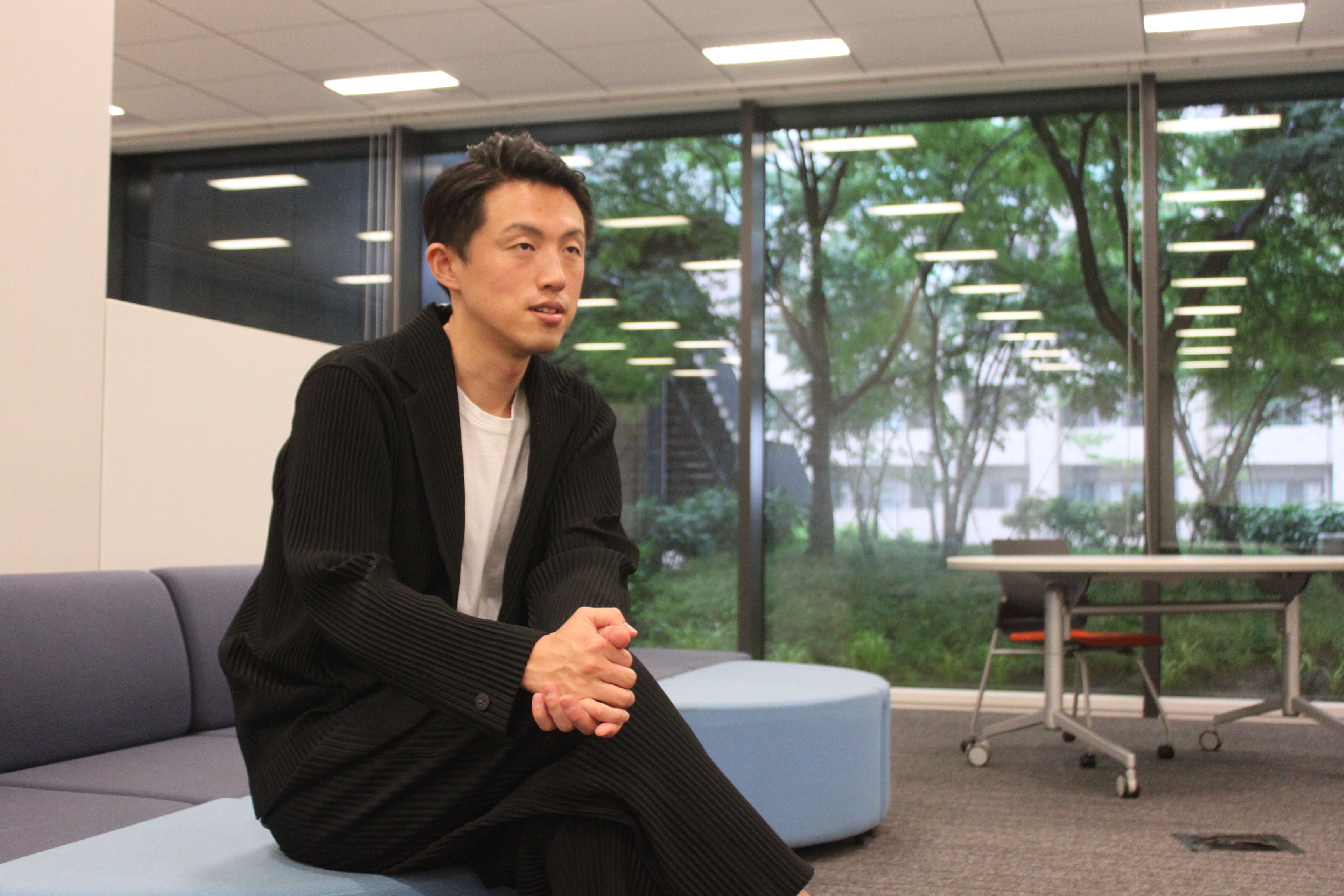
One benefit of taking part in these programs, Arai says, is raising awareness and expanding the customer base. In Arai’s case, activities in OSAP were featured in the media, and a dentist who saw it got in touch.
“And the biggest benefit of all is meeting people. Programs and public organizations that support startups bring together people with similar goals and worries, and people who support them. In my case, I met a venture capital firm in Tokyo and was able to expand my network further from there.”
Now climbing the steps of growth as a company, Arai sometimes receives advice requests from younger founders. What Arai feels in those conversations is a question: “Hasn’t starting a business itself become the goal?”
“Starting a business is only a means of achieving a goal. In my case, I could not accept a system in which a company’s fixed costs, starting with employees’ labor costs, are passed on to customers. As a result of wanting to do something about it, starting a business was the means to achieve that.” So Arai’s suggestion is, “First, work hard at the job in front of you.”
“Compared with starting a business, which looks glamorous, contract work, outsourced services, and consulting may look plain and monotonous. But through that work, you can see the challenges an industry faces and problems in how it works. Once challenges and problems come to the surface, you can think concretely about whether you should start a business. The experience of working hard at what pleases others and what helps them will surely be useful.”
Launching a dental clinic that provides its own software, hardware, and OS
Most recently, in April 2021, the company raised 60 million yen. It will spend the funds mainly on marketing, with the immediate goals of increasing the number of dental clinics using HANOWA and the number of registered dental hygienists. And in the long term, Arai says, “We want to have our own dental clinic.”
“The image is Apple. Apple provides everything from hardware to OS and software with a unified feel, and in doing so has given the world new experiences completely different from before. In our case, the hardware is the dental clinic, the software is the people working in dental care, and the OS is HANOWA, the talent platform. By having all three, we want to provide, like Apple, new dental care experiences no one has had before.”
In recent years, various kinds of ICT have been introduced to streamline work and innovate management. But much of the SaaS used there forcibly chops up work that is naturally continuous and covers only one part of it. What is more, different SaaS products are not compatible with one another, so they are not necessarily easy to use when looking at management as a whole. As a way to solve this problem, Arai thought, “Then let’s build our own dental clinic.”
“Because we will introduce a booking system, no one will be kept waiting in the waiting room. We will also get rid of the unpleasant sounds and smells unique to dental clinics. Payment will be cashless. Products will be ordered and paid for online and delivered by drone the next day. Of course, HANOWA will support staffing, so the right number of staff will be in place, providing high-quality dental care.”
HANOWA’s service began with questions about how dental hygienists work. The day it changes how dental clinics work, and how we as consumers relate to dental clinics, may not be far off.
Interview date: May 27, 2021
(Interview and text: Morinaga Matsumoto)