The birth of Biode, a bipolar electrode that solves the problems of conventional DC batteries
Environmental pollution, climate change, the depletion of energy resources, global warming: modern society faces many serious problems that must be tackled on a global scale.
In Japan, the “environmental business market” tackling these problems has expanded rapidly since the 1990s. EVs (electric vehicles) and renewable energy in particular are attracting high expectations as new businesses responsible for building the next generation of electrical infrastructure.
The key to developing these businesses of the future is the world’s first standalone AC battery, developed by AC Biode Inc.

“Electricity comes in DC and AC, but every battery in the world today is DC.
Almost all the electrical devices in our daily lives, such as home appliances, PCs, and smartphones, are DC, and ‘batteries mean DC’ is the mainstream in today’s world.
But it is also true that DC batteries have problems, such as insufficient capacity and safety.
Take EVs, for example: the outlet used to charge the battery is AC, and AC is also used as the power source to run the motor.
Power transmission, distribution, and motors come in both DC and AC, yet there are no AC batteries.
So I thought, why not have a battery that works with AC? That was how this project began,”
says Tadashi Kubo, the company’s CEO.
The company set out to develop the world’s first standalone AC battery, solving the problems of conventional DC batteries, such as improving safety, increasing capacity, and extending battery life.
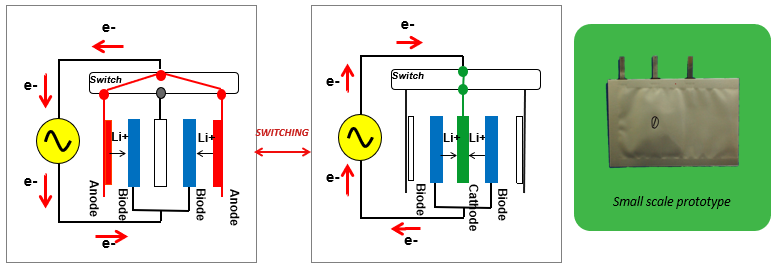
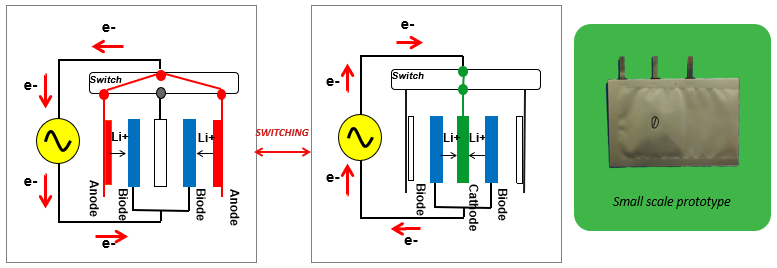
The mechanism is a unique structure in which a bipolar electrode named “Biode” is sandwiched between the negative anode and the positive cathode, and the company succeeded in generating alternating current in a single unit by switching it on and off.
The company has obtained a patent in Japan and applied for patents in Europe and internationally, and many companies have already approached it about business deals.
The leading fields are mobility such as EVs and drones, and energy storage for renewable energy.
The new deep tech created by AC Biode is right now set to greatly advance two environmental businesses that will shape the earth’s future.
“I want to take on what I want to do with my own strength”: that wish opened the path to independence
Kubo, who says, “I was always interested in environmental issues,” studied at Keio University’s Faculty of Environment and Information Studies. After graduating, Kubo joined a major trading company doing business worldwide.
One of the things Kubo came to see as a problem was the “battery” in EVs.
“My work, based on materials chemistry, which also covers batteries, was sales and finance related to energy, machinery and plants, and infrastructure. I had always wanted to solve environmental problems such as air pollution and climate change, which had interested me since my student days, from a business perspective.
Automakers around the world are now competing to electrify cars. One of the bottlenecks is the battery.
The lithium-ion batteries used today have a decisive problem: insufficient capacity. But developing new materials or mechanisms requires enormous cost and time, and in fact the fundamental principles of the lithium-ion battery have not changed since it was developed 30 years ago.
So I thought it would be interesting to make an AC battery, which the world does not yet have, while being able to use existing materials and production processes.”
However, it is not easy to work on developing new technology in a large organization.
“The possible conditions are, in terms of business stages, ‘Series A,’ when customers start to increase, or ‘Series B’ and beyond, when the business is on track and revenue is growing.
At the ‘seed’ stage before a company is founded, it is almost impossible to work on it within an organization. So I’ll do what I want to do with my own strength,”
Kubo resolved.
Kubo recalls that meeting CTO Mizusawa right around this time was also “a big force for taking a new step.”
“I was convinced that the technology we were trying to build was deep tech important to the world. And even if we failed, I could get another job.
Looking back on my life, what I felt was that money is not that important to me. If you don’t live extravagantly, you can get by on a certain amount of income.
So I thought, why not take on what I want to do while I am young?”
Kubo said with a light laugh.
The key to success as an entrepreneur is not a degree but meeting all kinds of people and building networks
After leaving the company where Kubo had worked for 12 years, Kubo went to study for an MBA at the University of Cambridge in the UK.
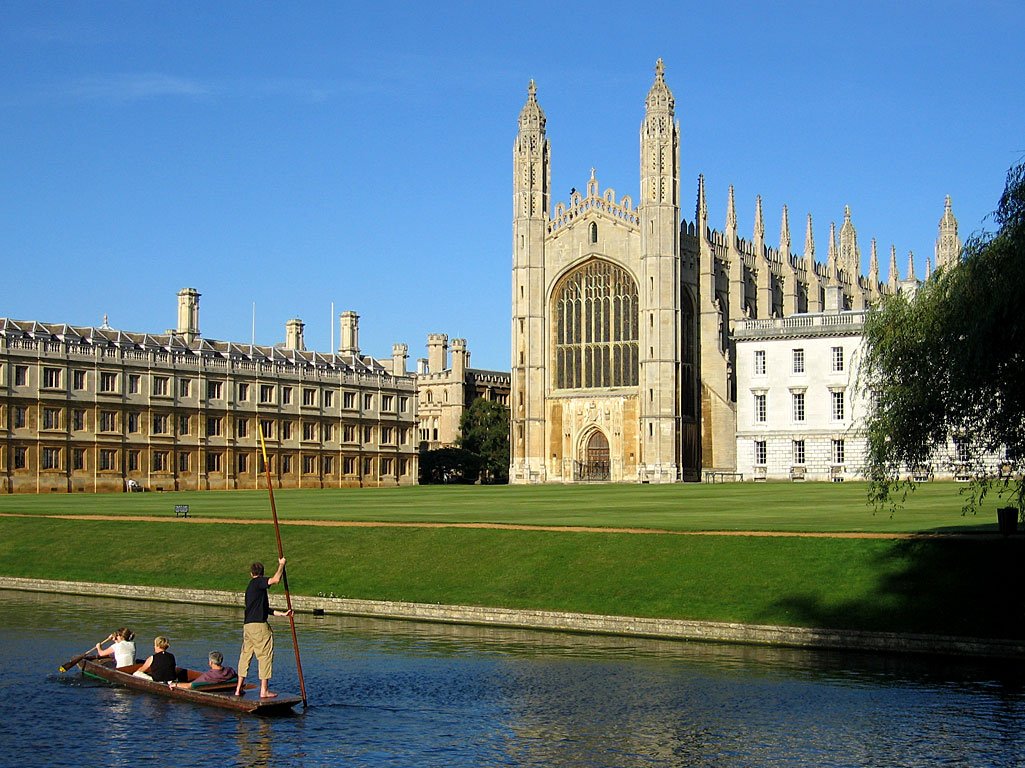
“First, I wanted to see the world. I chose Cambridge, a comprehensive university, in particular because I thought I could build networks with people from many faculties, rather than at a school only for MBAs.
In classes, there were many chances to deliberately form teams with people of different races, religions, and opinions and give presentations, and I learned to accept cultures and values different from my own. It was also training in conveying my intentions to people in all kinds of situations and positions.”
And, unexpectedly, part of AC Biode’s technology was originally developed at Cambridge, so Kubo says, “Connections are funny things.”

The company is now attracting attention from many quarters and steadily expanding business opportunities, but things did not go smoothly from the start.
“It is a world-first attempt, and businesses in technical fields are hard to get people to understand. On top of that, the interest of investors and VCs is concentrated on digital areas such as IoT and AI, and most of them do not cover hardware.
Raising funds was absolutely essential to move development forward. While translating technical terms as much as possible and explaining with easy-to-understand words and numbers, I took the stage at all kinds of pitch contests around the world from my student days, to raise awareness and gain objective credibility.”
As a result, the company won 16 pitch contests, including ones at the University of Cambridge in the UK, MIT in the US, the European Space Agency (ESA), and ComeUp in Korea.
As intended, being recognized around the world raised its credibility, and at the same time strengthened Kubo’s conviction of its success as a business.
It was also around this time that Kubo encountered OIH.
“Being selected for OSAP (OIH Seed Acceleration Program) was a great source of strength for me.
I was especially grateful that it created opportunities to meet all kinds of investors and companies at a time when COVID-19 made it hard to go out and develop new business.
Honestly, my personal view is that having an MBA or not is not that important for success as an entrepreneur. Whether for funding or business opportunities, what matters is networks and credibility; in the end, connections with people.
In that sense, meeting as many people as possible through challenges such as studying abroad and contests has been a great asset for our business.”

Expanding the business field further and energizing environmental business from Japan
AC Biode now has bases in the UK, Luxembourg, and Japan, moving forward with business talks and development.
With many inquiries from automakers and battery makers in Japan and abroad, the company will carry out demonstration trials with drones by March 2021. If all goes well, it also plans to start commercial production.
“Reaching demonstration trials in about two years from founding is quite fast in the battery industry, I think. The reason is that we can use existing materials and battery production lines for everything. That is a very big advantage.
AC batteries have two main uses: mobility and energy storage for renewable energy. We plan to start with micromobility, build up a track record and data, and then expand the business to cars and energy storage.
In the future, our business field will expand greatly, to airplanes, ships, flying cars, and more,”
Kubo says, with a firm sense of the response.
The world’s first standalone AC battery is the key to supporting the energy industry of the future. Its story has only just begun.
There are many problems to solve, including adapting to infrastructure built around conventional DC batteries.
“The more walls there are to overcome, the more motivated I am to move forward. For us now, excitement and enjoyment are bigger than the fear of failure.
Compared with Europe and North America, there are still few startups in Japan that put environmental issues front and center. Through new technology, I want to spread awareness of environmental issues further from Japan,”
Kubo told us passionately.
Interview date: October 16, 2020
(Interview and text: Mitsuko Yamashita)