
“Hard, yet soft hardware”
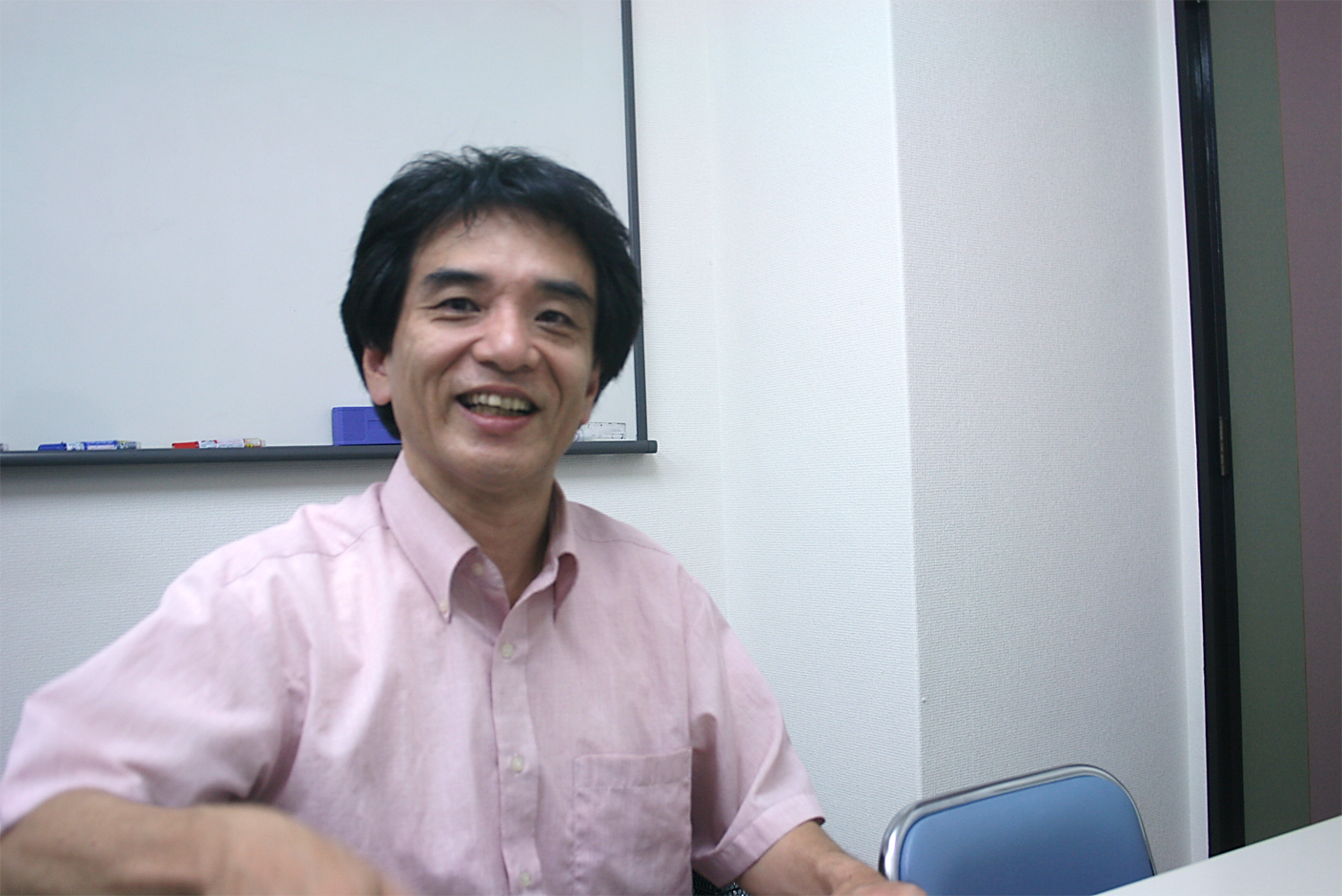
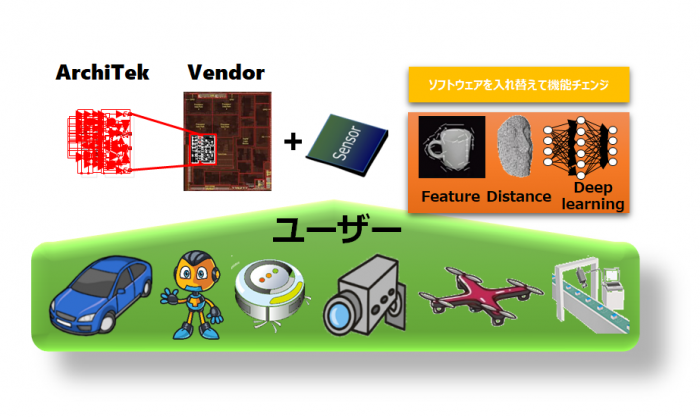
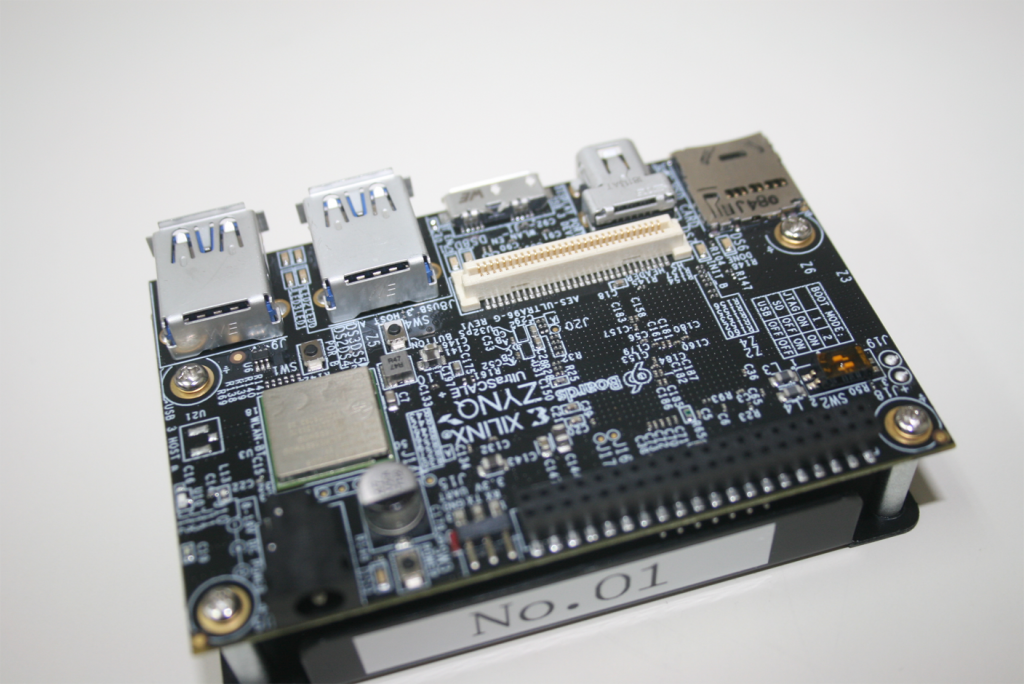
The aIPE image processor. aIPE (ArchiTek Intelligence Pixel Engine), developed by ArchiTek, is an image processing system with AI functions and a unique combination of high performance, compactness, and low price. It is expected to be used in a wide range of fields where it can serve as a replacement for human eyes in advanced digital devices, such as collision prevention devices and autonomous driving systems for cars, drones, factory line inspection, security cameras, medical diagnostic equipment, and mobile devices.
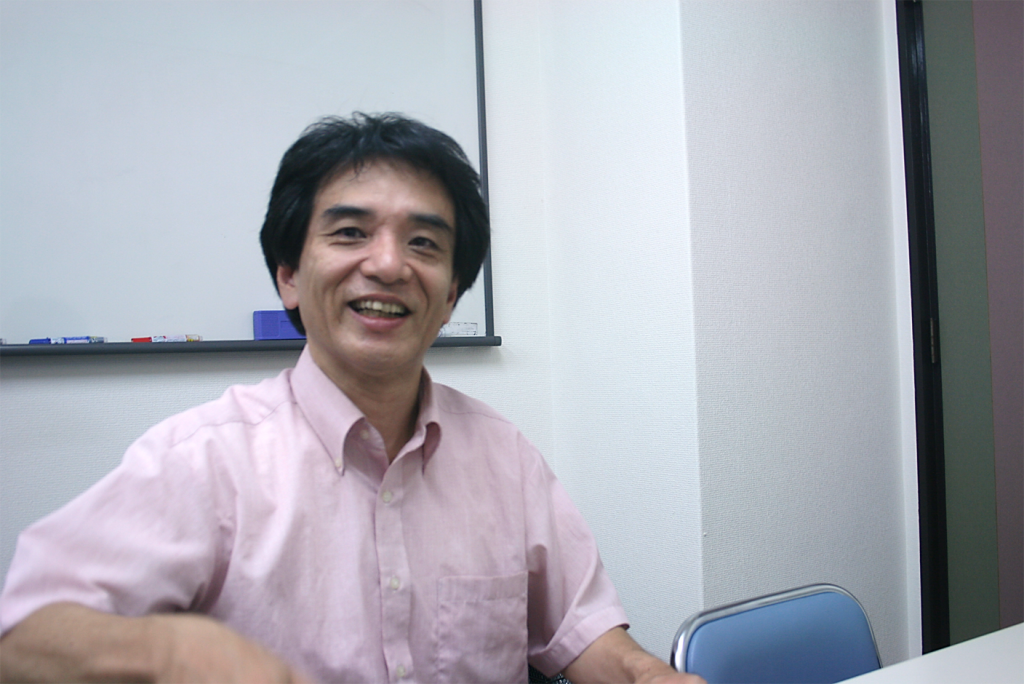
Takada describes its feature as “hard, yet soft hardware.” “For example, the image processor in a conventional car collision prevention device can only use image recognition. In other words, its function is fixed and becomes hard, but our aIPE, though it is hardware, can be programmed with various applications and use multiple functions flexibly. It is, so to speak, soft hardware. Trying to make hard hardware soft requires loading many CPUs, which raises costs, but aIPE does not need that. Also, when specifications change or are added, hard hardware requires remaking the chip from scratch, but aIPE can respond flexibly. It is truly an all-rounder.”
Leaving Panasonic to start a company alone
At a previous employer, Matsushita Electric Industrial (now Panasonic), Takada worked in the R&D division researching computer architecture, designing circuits for all kinds of digital devices, such as home appliances, game consoles, and mobile phones. But in 2010, the company’s semiconductor business ran into trouble and its future became uncertain, and thinking, “I can’t do what I want here anymore,” Takada left.
Having left a large company alone, Takada started a company taking on contract work designing prototypes and circuits for digital devices, but it coincided with the economic slump after the Great East Japan Earthquake, and orders were few. Even so, to build a foundation for the company, Takada invited two former colleagues and took on government-related work as a subcontractor, but thinking, “this has no future,” became absorbed in researching and developing original circuits. “In addition to our own funds, we covered research costs with grants from Osaka Prefecture and banks. The company had few sales, so we kept our salaries to a minimum. None of us even paid municipal tax. We managed to get by because we had savings from our salaried days and because the three of us had little to lose.”
NEDO’s research and development support program becomes a turning point
The research began to look promising around 2015. Being selected for NEDO’s FY2016 support program for research and development ventures completely changed the difficult situation. “We received offers from many companies, and our connections with engineers at large companies expanded. Then at the end of 2017, when we exhibited at a trade show, a TV station interviewed us and introduced us as ‘a company in Japan with technology that rivals Silicon Valley in the US,’ and offers increased further.” This led to large investments from VCs, and the funding outlook became clear.
In August 2018, the company joined NEDO’s “Project for Technology Development of AI Chips and Next-Generation Computing Enabling High Efficiency and High-Speed Processing.” The company handles circuit design, Socionext handles chip manufacturing, and Toyota Industries handles application development, and development of an autonomous driving system is under way.
The model is Konosuke Matsushita’s “tap water philosophy”: “I want to deliver good things to the whole world”
The strategy going forward is to spread aIPE around the world. Because it is impossible for the company to sell it worldwide on its own, it is also considering a buyout by a major semiconductor company in Silicon Valley or elsewhere to have it sold worldwide. “This strategy is based on the ‘tap water philosophy’ of the late Konosuke Matsushita, founder of Panasonic. The tap water philosophy is the idea that ‘tap water is valuable, essential to life, but because production and supply are abundant it is cheap and easy to get; let’s spread good things to the world at low prices.’ Major semiconductor companies in Silicon Valley and elsewhere make large chips costing 10,000 yen each, but aIPE, though small, has almost the same performance, and ultimately we want to offer it at one-tenth the power consumption and for a single coin (500 yen), spreading it widely around the world.”
But can this strategy secure enough profit? “Seven billion CMOS sensors, which serve as eyes, are shipped worldwide every year. If 3% of them adopt our aIPE, that would be about 100 billion yen in sales, but we cannot expect big profits from that. Our aim is developing software to be installed on aIPE chips afterward. We intend to earn large profits by developing software for aIPE, once it has spread around the world like water.”
Wanted! Excellent engineers
With this strategy, aIPE is expected to trace a J-curve in two to three years, but Takada says the current challenge is securing talent. On intellectual property strategy, obtaining even peripheral patents would be costly, so Takada wants to be selective and choose patents that cover as broad a scope as possible. Right now, securing engineers is urgent to further hone and deepen the technology. “We would really like engineers who will take on a big business with us to come join us,” was Takada’s message.
“If you are confident your business will succeed, please go for it, but if your resolve or business model is half-hearted, it is very risky, so I think you should stop and reconsider. Also, a business plan will never go exactly according to the story you first drew, so I think people with the flexibility and mental strength to change course along the way are suited to it.” It is advice that only Takada, who left a large company and is leading the business to success through many hardships, could give.
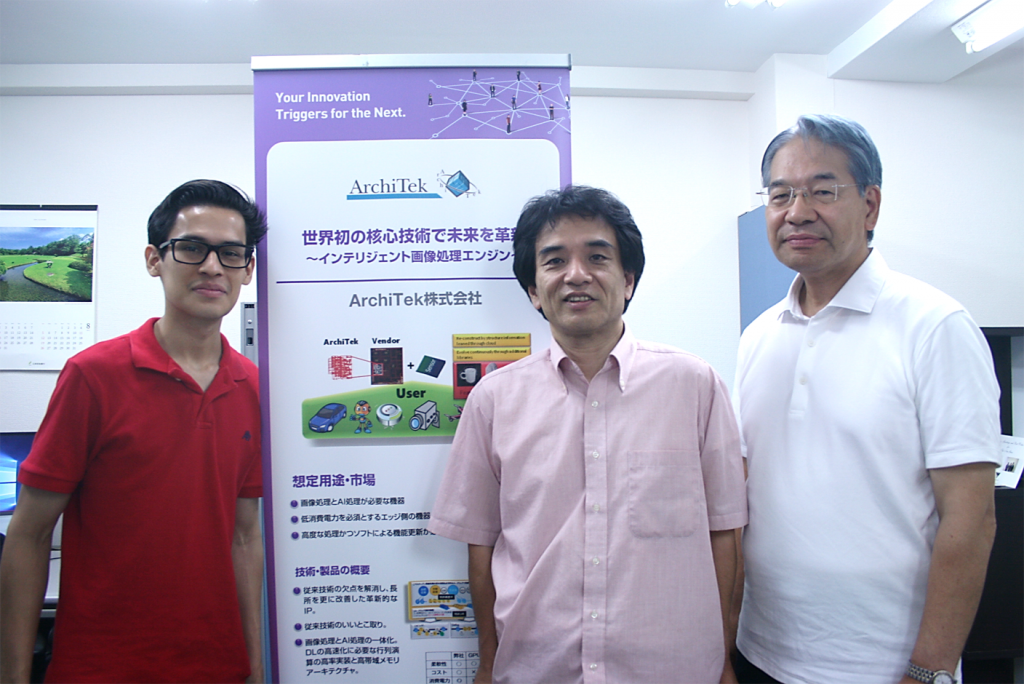
Interview date: August 10, 2018
(Interview and text: Isshin Ohashi)