
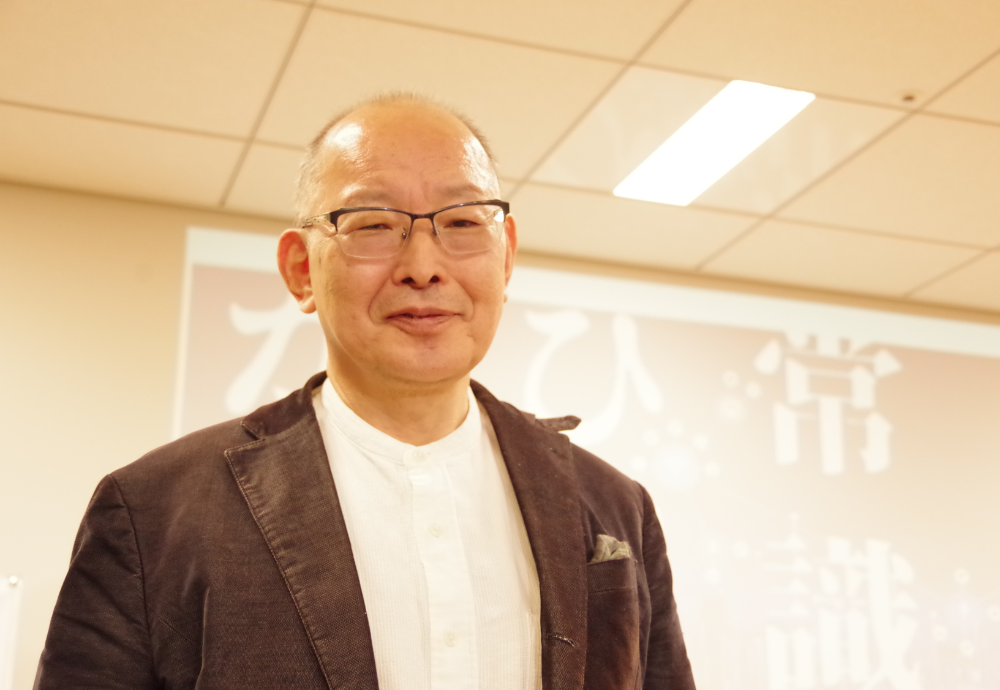
For older people, a fall can not only cause injuries such as fractures but also lead to becoming bedridden. Now that extending healthy life expectancy and curbing medical costs have become social issues, preventing falls and responding quickly when they happen is very meaningful. That is why many companies are tackling this field with all kinds of technologies and ideas. Qiznalo Inc. (Qiznalo), which stands out with the unique technology of using AI and focusing on joints, is a startup made up of senior engineers who call themselves “Jii-Tech” (from jii, Japanese for “grandpa”). We spoke with CEO Tomofumi Otsuki.
No image data needed: detecting falls from skeletal shape alone
Qiznalo’s core business is a “watch-over service” that quickly finds and detects when an older person living alone cannot move because of a fall or illness.
There are many ways to watch over people. In the past, some services were linked to an electric kettle and notified family living far away when hot water was poured. In recent years, cameras and sensors have come into use. These services share the problem that “they cannot report the abnormality itself.”
With a kettle, for example, you only know that “no hot water has been poured for a long time”; you cannot tell whether that is because of an abnormality such as sudden illness or simply because the person did not use hot water. Motion analysis with cameras can improve this somewhat, but then it runs into the problem that “people do not like having their private lives watched around the clock.”
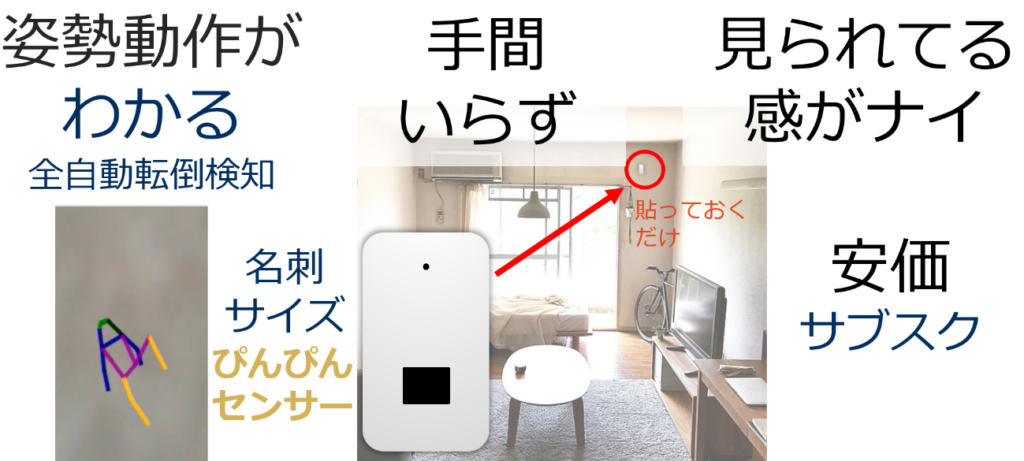
To solve these problems, we focus especially on human joints. Information is input with a camera, but because only joint position information is extracted and analyzed, the image data itself is not stored. This also makes it possible to respect privacy.
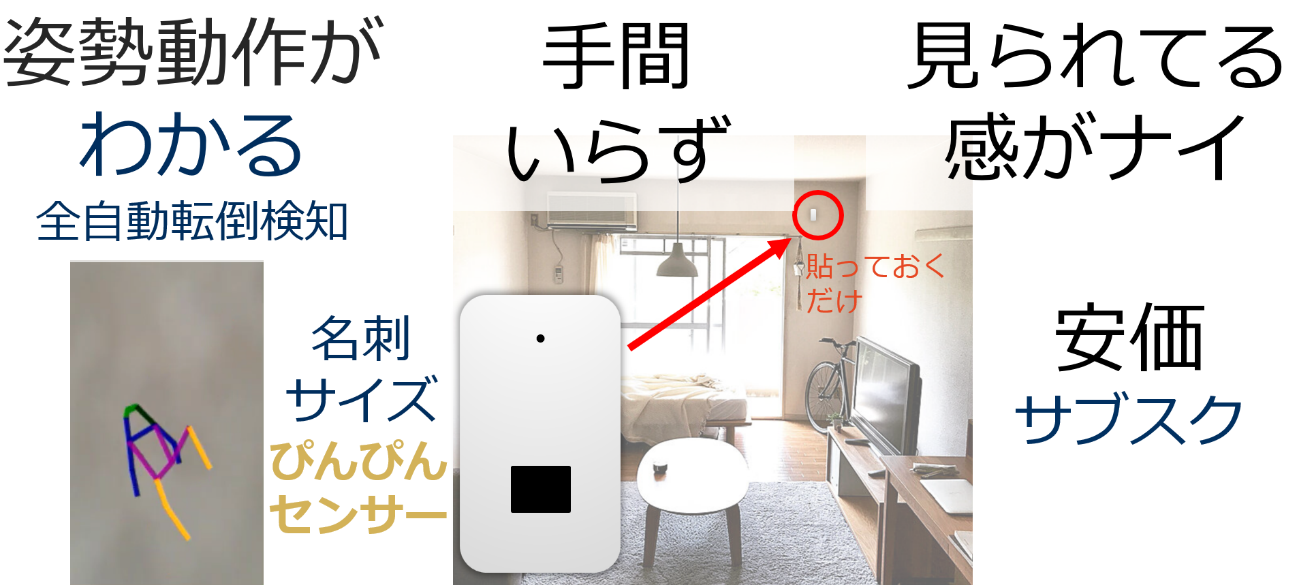
Skeletal data is “a combination of joint position information for one person.” We developed a system in which AI makes the judgment using our own algorithm, making it possible to tell whether a movement is a fall or a normal movement such as sitting or bending down, which image or skeletal shape analysis could not distinguish until now. When the AI judges that something is wrong, that information can be sent over the network to the person watching over in real time.
Our strengths: our own algorithm and an inexpensive, highly durable AI board
I originally worked at a bank. As a student, I had researched analyzing the economy with mathematical models from physics, so I was assigned to pricing financial products, researching mathematical models to derive appropriate prices.
Later, while developing a camera system to prevent shoplifting, I encountered AI. The system learned the behavior patterns of shoplifters and detected people who seemed high-risk. Around that time, my mother, who lived alone, fell at home and suffered a serious fracture of the ischium. That became a major turning point.
In fact, worried about my elderly mother, I had subscribed to a security company’s watch-over service at the time. It had an emergency button on a pendant, but my mother was not wearing the pendant at the time of the fall. Without a smartphone on hand either, my mother was left alone for several hours.
This incident led me to decide: “I will apply the shoplifting prevention system to build a watch-over system that can report abnormalities right away.”
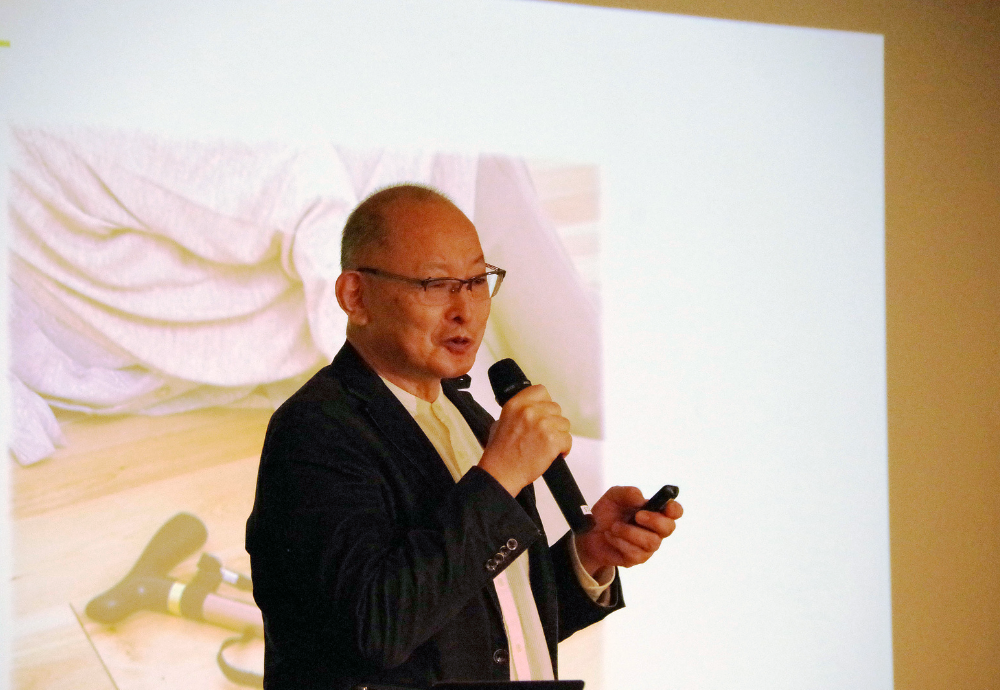
The main point of development was correctly recognizing abnormalities such as falls from skeletal information. The idea of analyzing posture by focusing on skeletal information had existed before, but it was hard to tell “whether someone is falling or bending down.” We developed our own algorithm to solve this problem.
The other point was “developing an AI board suited to our watch-over service.” The AI boards in ordinary cameras are high-performance and expensive. What we wanted was an AI board with only the minimum necessary functions that met the conditions of low power consumption, high durability, small size, and low cost. These were hard conditions, but after gathering information from around the world, we came across a promising technology in February 2023. By May of that year, the technology development was on track, and we founded the company.
A passion of the “retired generation,” different from that of young people
I am now 67. The Qiznalo team is made up of people my age. That is why we call our technology “Jii-Tech” (grandpa tech).
All of our members have careers as engineers at major companies. Some have even developed patented technologies. But at large companies, original technology does not always lead to a business. More or less all of our members have had the frustrating experience of seeing their technology never see the light of day for various reasons. That is exactly why Jii-Tech has a strong determination: “This time, we will see it through.”
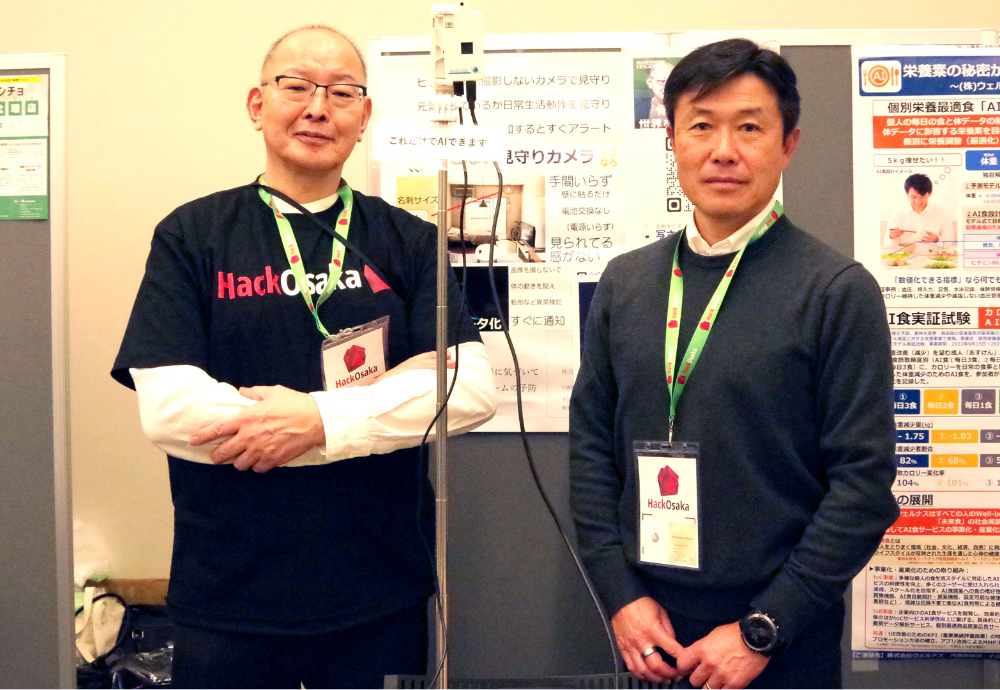
We have a passion different from that of young people. Our strength may be that we do not give up easily, or rather, our tenacity. We also have a kind of sense of responsibility: “We seniors must not become a burden on young people.”
Being able to compete on the same stage as young people is very rewarding for us. At pitches and similar events, we are greatly inspired by young people’s presentations. Having young people tell us “That’s amazing” is actually a great joy and also a source of motivation.
Aiming to grow into services that use PHR
We are currently running demonstration trials to see whether the technology we developed works as expected. The AI board is also scheduled to be completed in spring 2024. The time has finally come to move toward launching the service.
To spread the service, we are considering partnerships with local infrastructure companies and others whose business centers on “peace of mind in daily life.” We also want to work with communities for whom caring for parents is a concern, such as working women.
The information accumulated through watching over can be linked to all kinds of fields as a personal health record (PHR). It has endless potential: for example, recommending appropriate exercise, suggesting health-related services and products, or calculating disease risk from everyday behavior data so that people with low risk get discounts on life insurance.
Because our technology does not use images, it can be offered as a watch-over service even in Europe, where restrictions on personal information are strict, so we want to actively take on challenges in many directions.
How We Used OIH
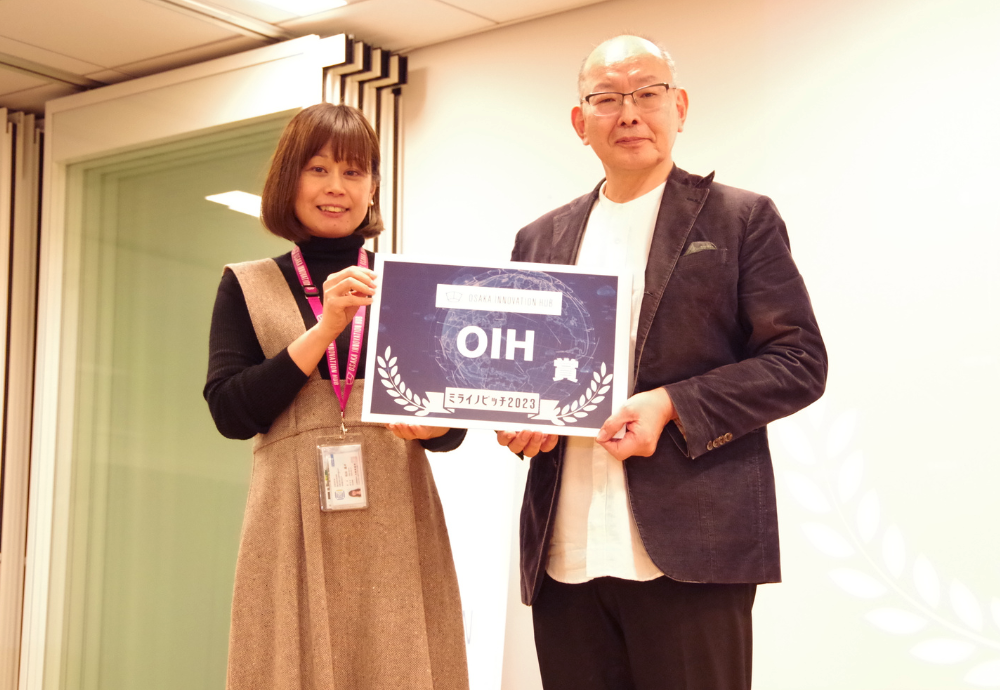
2023 was a major turning point for Qiznalo. At “Hack Osaka 2023,” which we joined in February, we came across the technology that became the basis of our own AI board. Another big gain was learning about an overseas need: “In Europe, cameras cannot be used for watch-over services, and the lasers used instead cannot detect falls.” In December, we also presented at “Mirainno Pitch 2023” and won the OIH Award.
Interview date: February 2, 2024
(Interview and text: Morinaga Matsumoto)