

DFree, a groundbreaking product bringing a ray of light to a worldwide era of super-aging
In today’s society, as many as 500 million people around the world are said to have problems with excretion. Many of them are thought to be older people and people with disabilities who have difficulty urinating or defecating on their own. Excretion is an essential activity of daily living. But when aging or physical disability causes problems with movement, excretion care is needed to deal with incontinence. One measure is using diapers, but many people, especially older people, may feel it hurts their pride and undermines their dignity. Some also limit their fluid intake out of fear of incontinence and fall ill, or tend to shut themselves in at home and lose social connections.
The problem is also very serious for the caregivers who support these people’s daily lives. According to a Cabinet Office survey conducted in August 2013, “excretion” topped the list of “factors that make caring for older people hard,” ahead of “bathing” and “eating.” Excretion problems not only lower the QOL (quality of life) of older people and people with disabilities, but also contribute to the growing burden and labor shortages in the care industry, one of society’s important challenges.
A product attracting attention as a ray of light that can break through this situation and solve the problem is DFree, the world’s first IoT wearable device that predicts when a person needs to go to the bathroom, developed by Triple W Japan Inc.
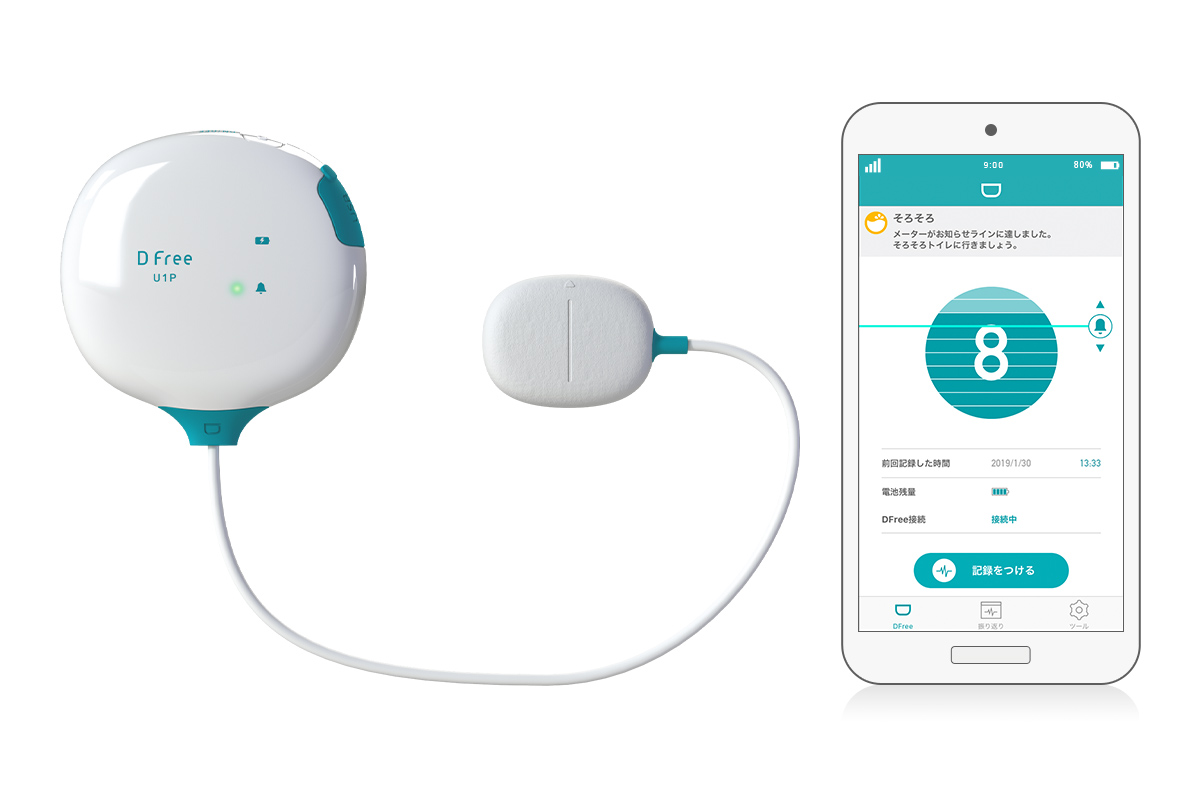
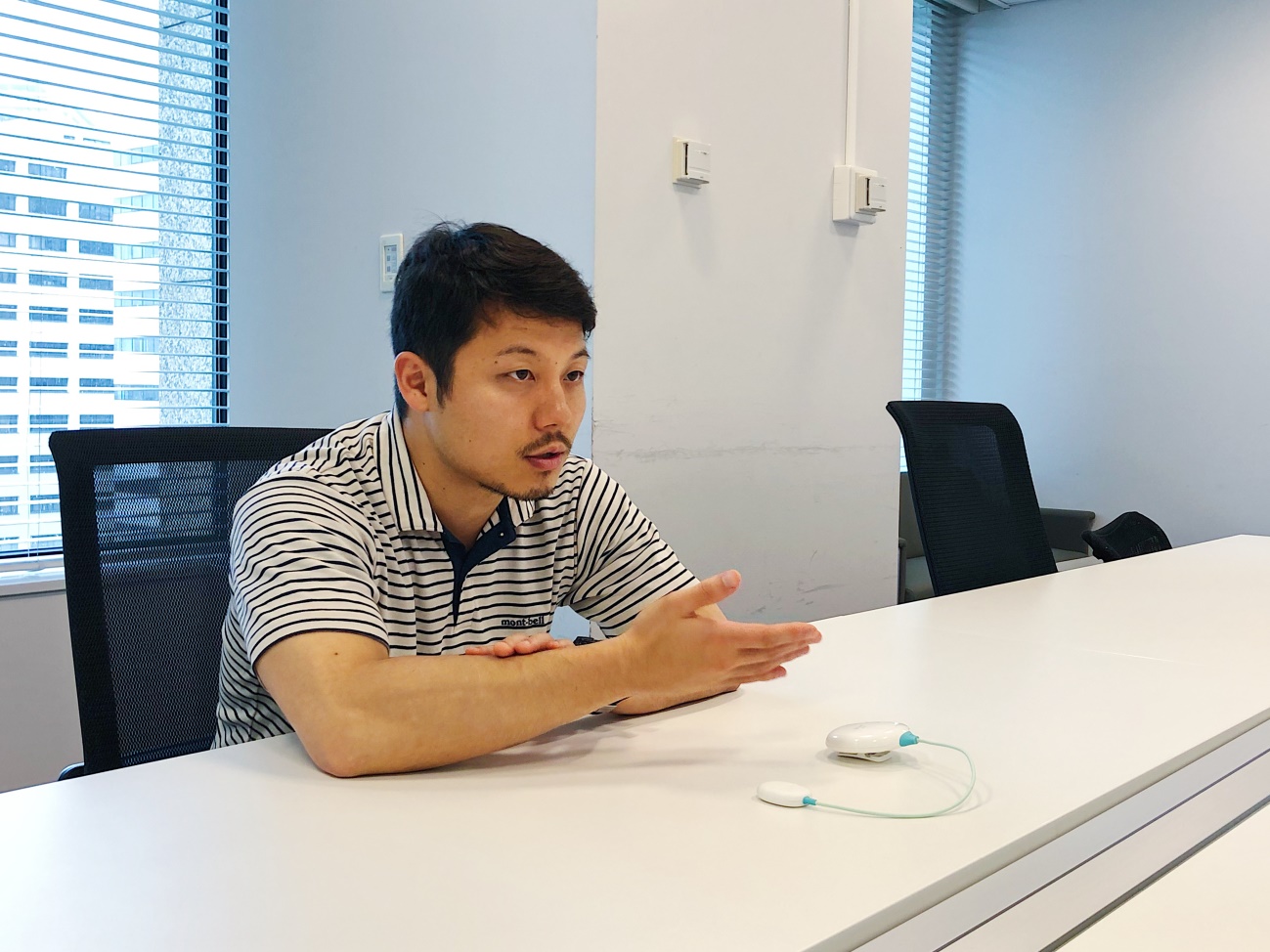
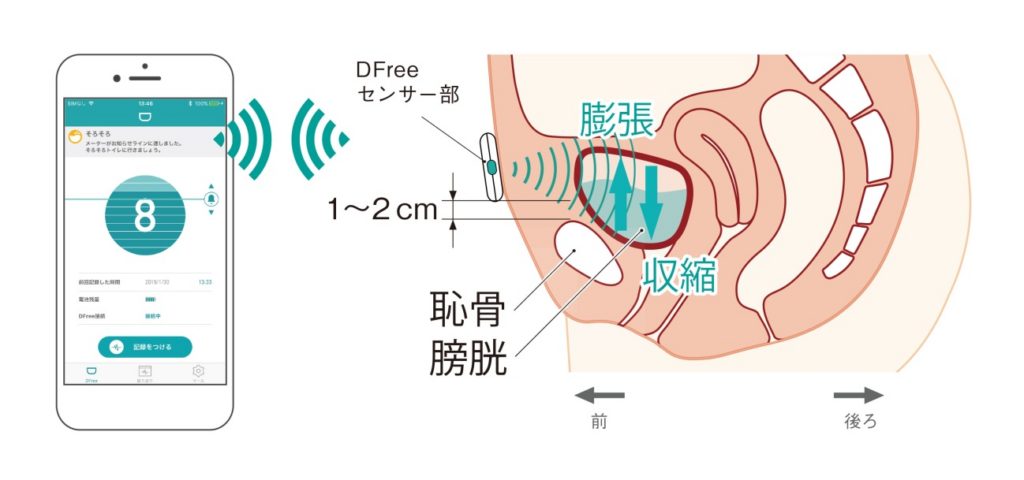
“It captures changes in the bladder with ultrasound, visualizes how full it is, and notifies a smart device when it is time to urinate. It can be expected not only to improve the QOL and ADL (activities of daily living) of older people and people with disabilities themselves, but also to reduce the burden on caregivers,” says Representative Director Atsushi Nakanishi. The urination product is already on the market, and one for defecation is under development. The world is now entering an era of super-aging, and DFree is attracting high expectations not only in Japan but from countries around the world.
A social need discovered through failure, rooted in a wish to be useful to the world
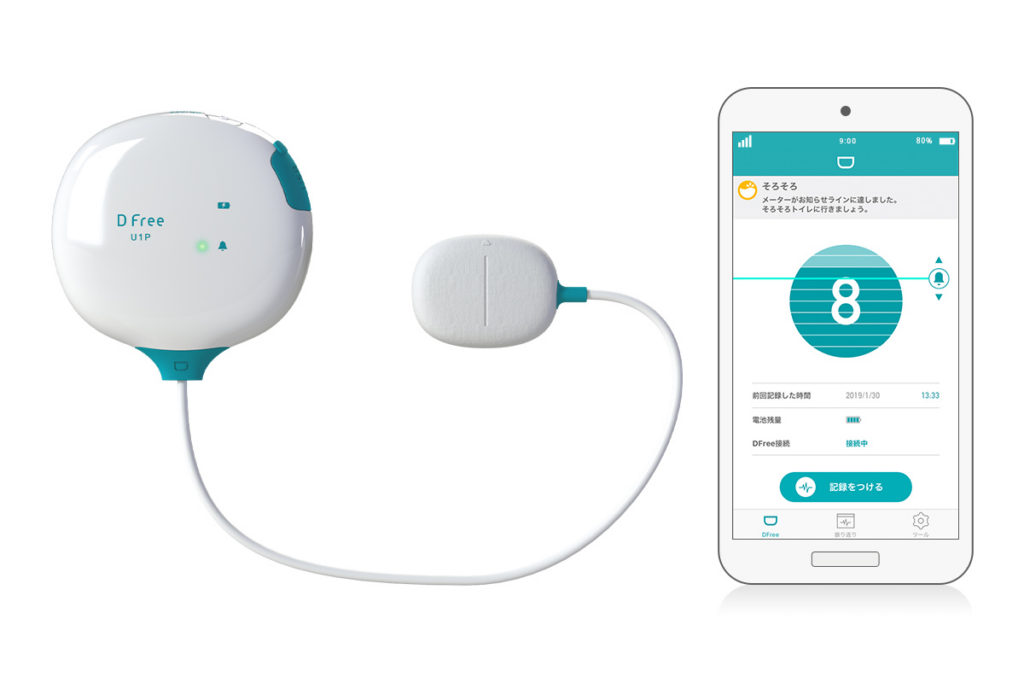
DFree has an oval sensor about 4 cm wide attached to the lower abdomen with medical tape. The built-in ultrasound sensor analyzes the state of the bladder and notifies a smartphone app. By knowing when it is time to urinate before feeling the urge, older people and people with disabilities can act with time to spare, and caregivers can guide them to the toilet at the right time and effectively help prevent incontinence. It is a groundbreaking product that could truly be called a savior for excretion problems, and its development reportedly began with a big mishap: Nakanishi personally had a bowel accident on the street.
“Influenced by my grandfather, who ran a business, I had longed to start a business since childhood. So after gaining experience at a consulting firm, I went to the Philippines with the Japan Overseas Cooperation Volunteers to look for business seeds, and then went to study in the United States. That was where I had the accident, and it was a real shock and very damaging. And then the idea came to me: ‘If I had known when I would need to go, couldn’t I have avoided the disaster?’”
What Nakanishi focused on was the ultrasound technology used in medical settings. “If you can observe a fetus in the womb, you should also be able to tell the state of waste inside the body,” Nakanishi thought, and reached out to everyone possible, from friends with development experience at medical device makers to engineers met in the United States. “I had always thought that if I started a business, I wanted to take on something that would not just make money but be useful to the world and overturn and greatly change common sense,” says Nakanishi. Expanding from a personal failure to others with the same problem, Nakanishi found the seed of an unprecedented business: predicting when people need to go.
Growing voices of “empathy” and “joy” for the product become the driving force toward the future
However, no matter how good a seed you find, that alone does not bring success. Turning an idea into a product and bringing it to the world requires the strength of many people, in product development and manufacturing, fundraising for them, building an organization, and more. DFree, which solves the pressing worries and problems of excretion, quickly won the empathy of many people.
“What convinced me most strongly of the need was the crowdfunding campaign we ran while working toward commercialization. Right after we launched it, we heard from people struggling with excretion, their families, and people in nursing care, and received happy comments like, ‘I’ve been wanting a product like this,’” says Nakanishi. This result helped persuade investors who had been skeptical at first, and Nakanishi says the confidence in the business and the connections with people gained then became great assets afterward.
Of course, the members who supported the launch of the business were also peers who empathized with DFree. “They were classmates from junior high, high school, and university, all around 30 at the time. That was just when our parents’ generation was starting to think about caring for our grandparents, so maybe they felt the significance and future potential of the theme.”
Then in 2015, Nakanishi founded Triple W Japan Inc. and started activities in earnest, further widening the circle of empathy. Meeting Osaka Innovation Hub (OIH) was one example. Nakanishi won the startup pitch contest “GET IN THE RING OSAKA 2016,” spreading the name DFree widely around the world. Inquiries poured in from more than 40 countries, mainly in the care field, and to meet the demand, the company set up bases in the United States and France. Going forward, it plans to expand its activities further, including to China, a huge market where the population is aging.
Even as the business grows like this, what brings Nakanishi the most joy is the voices of users: a husband who has cared for a bedridden wife for many years, an older person who had lost the will to live after a stroke, the parent of a child born with paralysis who cannot stop using diapers, and care staff who had patiently kept excretion records hoping residents could live even a little more independently and with pride… “The words ‘it’s helping’ and ‘it changed our lives’ that come from them are what motivate me in my work and drive me toward the future.”
Opening up further possibilities under the theme of “moving the world one step forward”
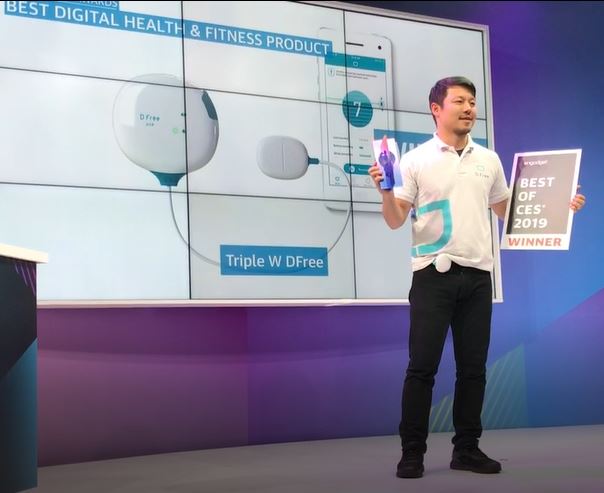
In January 2019, DFree exhibited at CES 2019, one of the world’s largest electronics trade shows, held in Las Vegas in the United States. Highly rated for its product value and social significance, it won four awards, including the CES “Innovation Awards – Fitness, Sports and Biotech” and Engadget’s “Best of CES – Digital Health and Fitness,” and attention and expectations keep growing.
Especially in Japan, where “healthy life expectancy,” living a healthy daily life rather than simply living long, is in question, the role DFree plays will only grow. Of course, expectations for DFree are not limited to the care of older people and people with disabilities. With more desk work and less exercise, urine leakage from weakened pelvic floor muscles is increasing, and it is no exaggeration to say that excretion problems are now shared by people of all ages and genders. Going forward, the company also wants to focus on raising awareness of taking early measures and prevention to stay healthy longer, rather than dealing with the problem after diapers become necessary. Because of strong negative feelings such as embarrassment and not wanting others to know, excretion problems have stayed hidden and grown more serious. That is exactly why Nakanishi believes DFree’s potential is immeasurable.
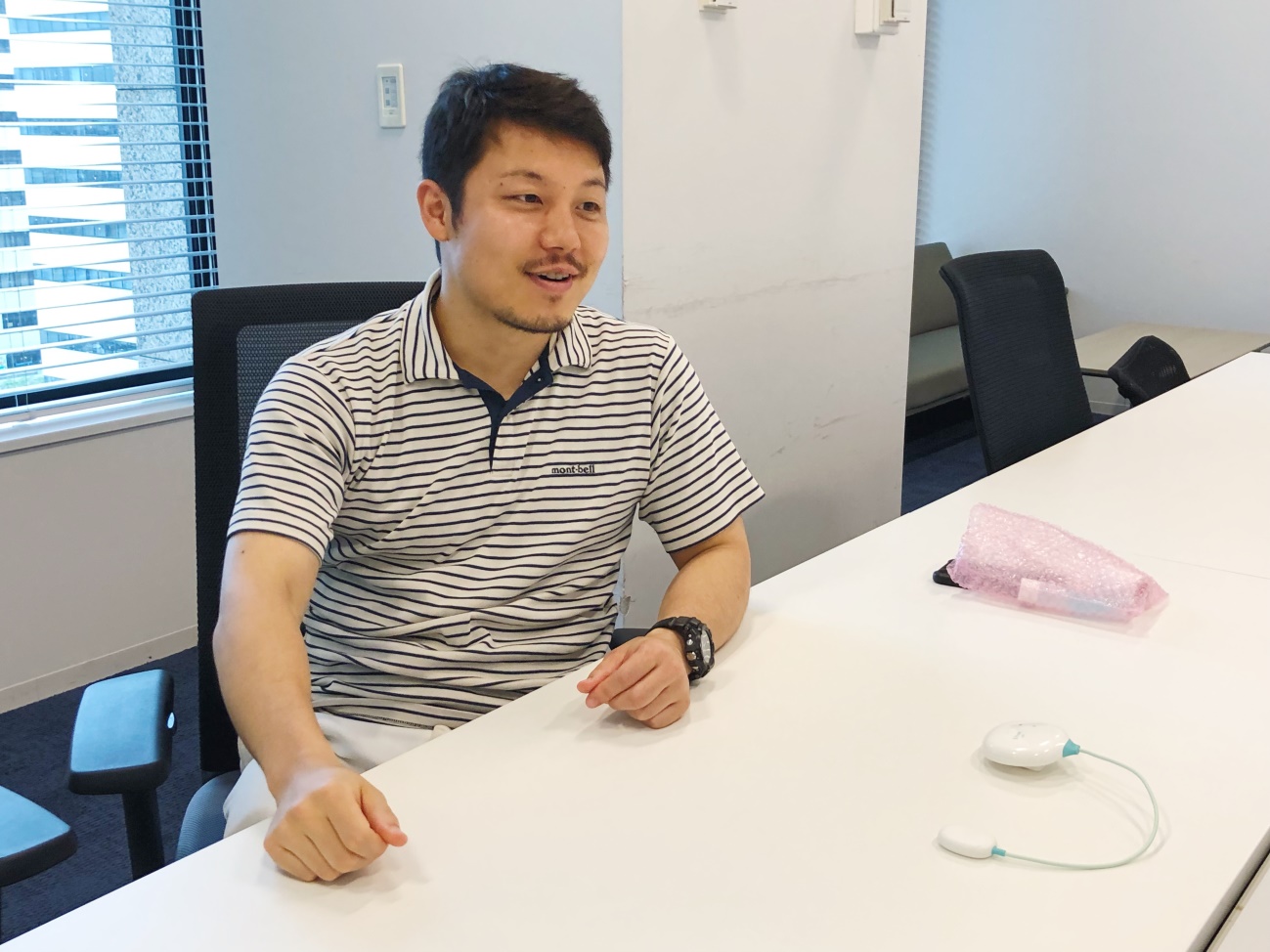
“What matters in business is not being self-centered. If you keep a firm eye on whom the business is for and why, the path will naturally open up.” With “moving the world one step forward” as the corporate philosophy, Nakanishi runs the business through products that help people and save them from difficulties.
A business predicting when people need to go, long desperately wanted but never realized by anyone until now, is right now about to change the world.
Interview date: January 25, 2019
(Text: Mitsuko Yamashita)