

Supporting companies and researchers taking on world change by commoditizing AI!
AI research and adoption are accelerating worldwide, spreading to making business management and operations more efficient, speeding up new product development, and, in academia, analyzing research data. Building excellent AI technology is becoming a top priority in research across increasingly competitive industries.
The foundation for AI’s evolution, the equivalent of greater intelligence in people, is machine learning, and within it, deep learning automatically encodes data such as images, sounds, and language and goes as far as inference and generation according to preset goals. Taking in the knowledge gained from this research as new knowledge, researchers develop AI with more accurate recognition, judgment, and analysis.
“In a world waiting for new innovations using AI, from automating production that supports industrial growth and analyzing the huge amounts of data that form the basis of research to improving people’s lives today, deep learning is the key to breakthroughs.
But working with deep learning requires expensive machines with high-performance GPUs and large-capacity data storage, which means considerable initial investment. Of course, AWS (Amazon Web Services), the well-known cloud, also offers subscription services, but they are very costly too, from hundreds of thousands to millions of yen a month. The reality is that not everyone can easily adopt them.”
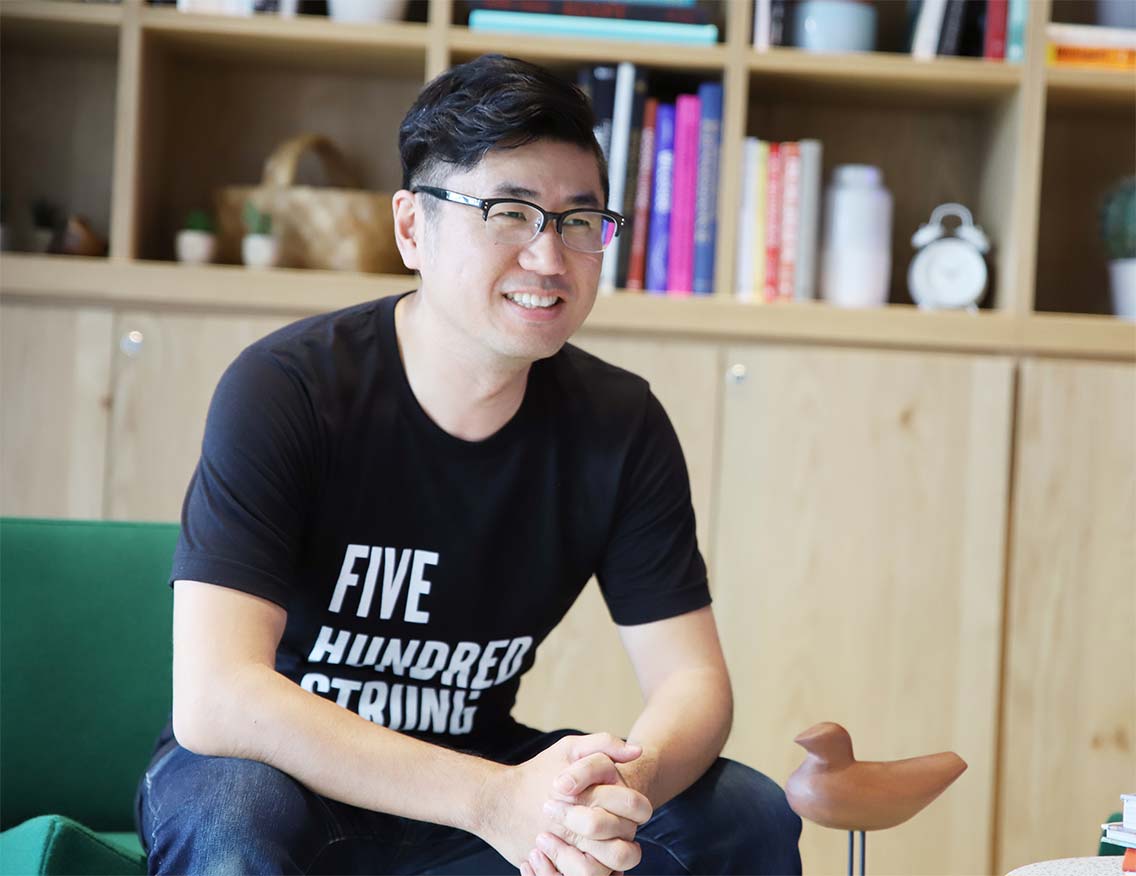
So says Syunsuke Ichihara, Representative Member of Pegara Japan LLC.
The service that greatly changes this situation in AI research, which faces many challenges, is GPU EATER, released by the company in 2018.
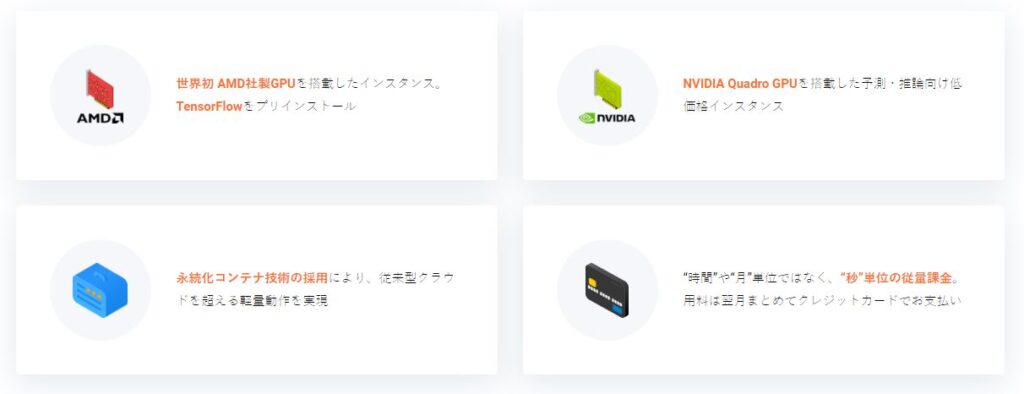
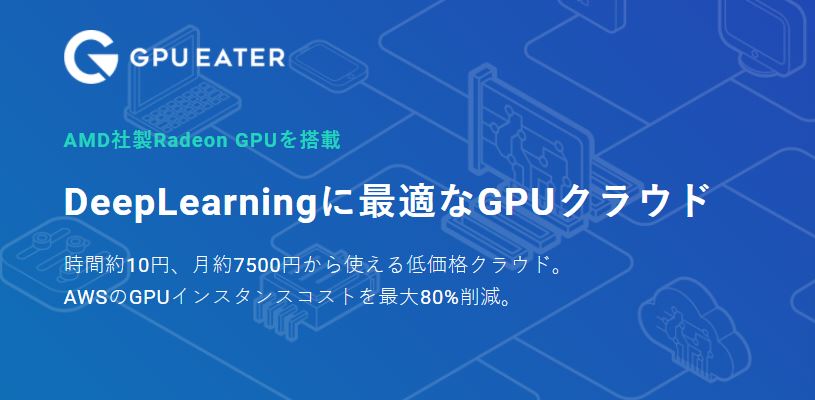
Born from the mission “The benefits of artificial intelligence, for everyone,” this cloud service is up to 80% cheaper than AWS, which has by far the largest number of users in the world, and delivers up to 50% faster performance, earning growing recognition as a new solution in the AI field.
It already has users at more than 400 companies in 40 countries, and further growth is expected. Here, we look at how it was developed and at Ichihara, who created this innovative service.
Giving up the dream of becoming a musician and taking on new businesses in the IT world
To fulfill a childhood dream of becoming a classical pianist, Ichihara went to a music college. At first Ichihara was devoted solely to music, but was eventually stunned by the gap in level with the students around.
“Around me were quite a few students who had taken lessons from famous teachers since childhood or studied music in Vienna. The music they played was on a completely different level, and I realized that competing among them, I could never become the professional I aimed to be. I came to think I would enjoy music as a hobby,” Ichihara says of deciding to change course.
Having reset the future and started from zero, Ichihara came across the internet. That sparked an interest in programming, and after teaching the skills and knowledge to themself, Ichihara started out as a freelance programmer after graduating.
On being able to gain IT skills that others respected, Ichihara says, “I think it was because my intellectual curiosity was stronger than most people’s, and because music gave me a personality that doesn’t mind concentrating and working hard.”
Then, believing that “in the near future, engineers and companies that can handle large-scale databases will be needed more,” Ichihara founded RAIJIN Inc. in 2005, at the age of 25, mainly doing consulting and contract development related to big data. It steadily grew its results and expanded.
As revenue plunged during the Lehman shock, the company restarted by shifting from contract development to IT consulting. In 2014, recognized for the company’s know-how, its team of excellent engineers, and Ichihara’s own sense for management and business planning, the business was sold to Webcrew Inc., a company listed on the Mothers market. As Director and Head of the President’s Office there, Ichihara was involved in creating new businesses and showed true ability as an entrepreneur.
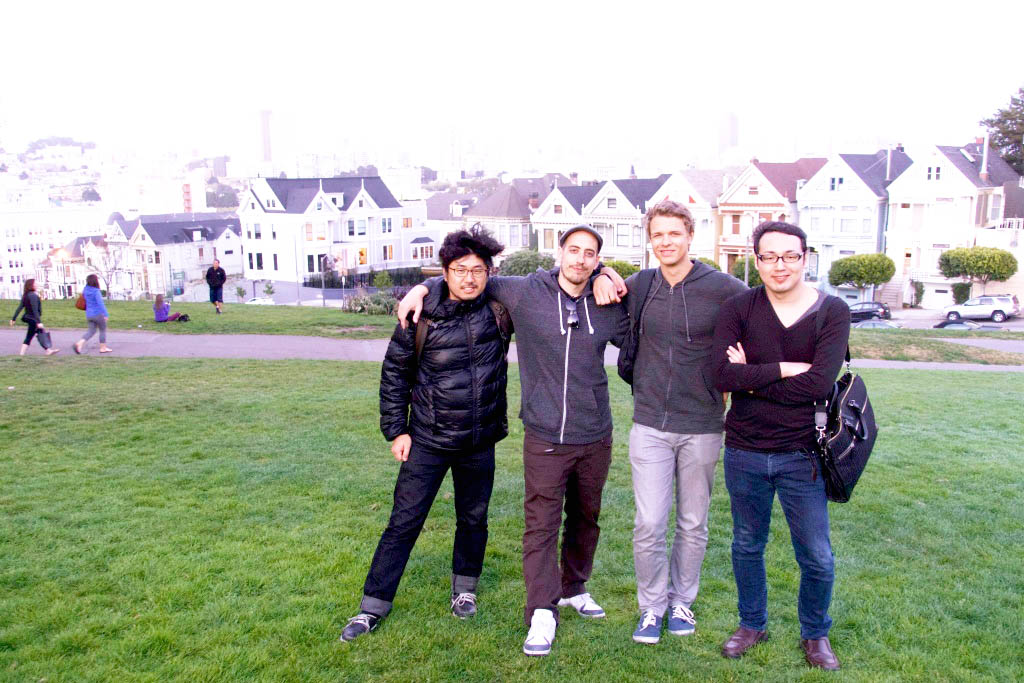
After gaining a lot of experience with large-scale businesses at a listed company, Ichihara left at the end of 2014. Ichihara went to Silicon Valley, the world’s IT frontier, just two of them, with Nakatsuka, an acquaintance (now co-founder and CTO of the US company Pegara, Inc.), but new challenges awaited there…
Changing the world’s AI landscape with an AI business born and refined in the holy land of IT!
In Silicon Valley, looking for business seeds, Ichihara attended meetup events held there every day. Ichihara says the days among the world’s top IT minds and engineers were inspiring.
“What I felt in Silicon Valley was that many people naturally had the mindset that ‘anyone can change the world’ and acted to bring about change. It was such a shock that I regretted never having known this world in all my years in IT.
And with people gathering from all over the world, not only the US but Italy, India, China, and elsewhere, it was easy to get information from around the world, and I thought it was a place with a very good view for doing IT business.
At the time, I had gone from executive at a listed company to unemployed, standing at a starting point of zero, and I remember a strong determination taking root then: ‘I will create a completely new business that changes the world.’”
Struck as if by lightning in the holy land of IT, Ichihara’s team decided to do business in the US and founded Pegara, Inc. in September 2015. They worked on building a business using AI to prevent dementia, something no one in the world had yet taken on.
However, because of the difficulty of commercializing it without healthcare expertise and because the timing was not right, they decided to give it up…
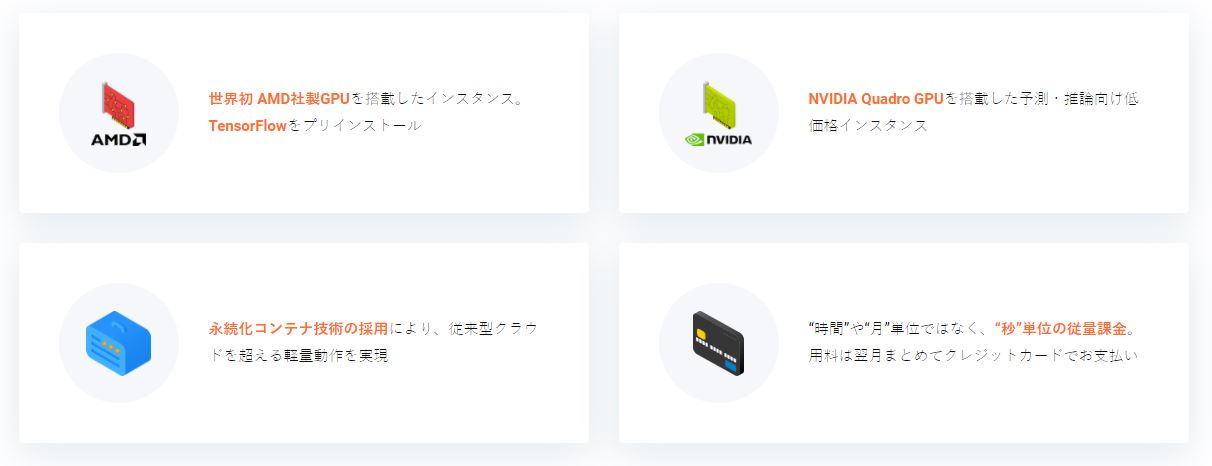
Going back to basics and trying to develop a business centered on IT and AI, their areas of strength, they gained a new insight: every time they bought PCs, servers, and other equipment for developing and researching AI and cloud environments, it cost a great deal.
Then NVIDIA, the largest GPU maker, changed its rules to say “our inexpensive consumer GPUs must not be used in data centers.”
“Being stuck at that time gave me the idea: then why not build a cloud environment with inexpensive GPUs from another maker? Right around then, AMD was entering deep learning software development and about to push sales as a company, and the timing matched. We were fortunate that it led to our GPU EATER.”
And so, three years after arriving in Silicon Valley, the GPU cloud GPU EATER was finally born.
Continuing to realize the wish “The benefits of artificial intelligence, for everyone.”
After releasing the service, Ichihara presented at meetups in Japan and abroad to raise awareness among investors and improve the company’s image for hiring engineers.
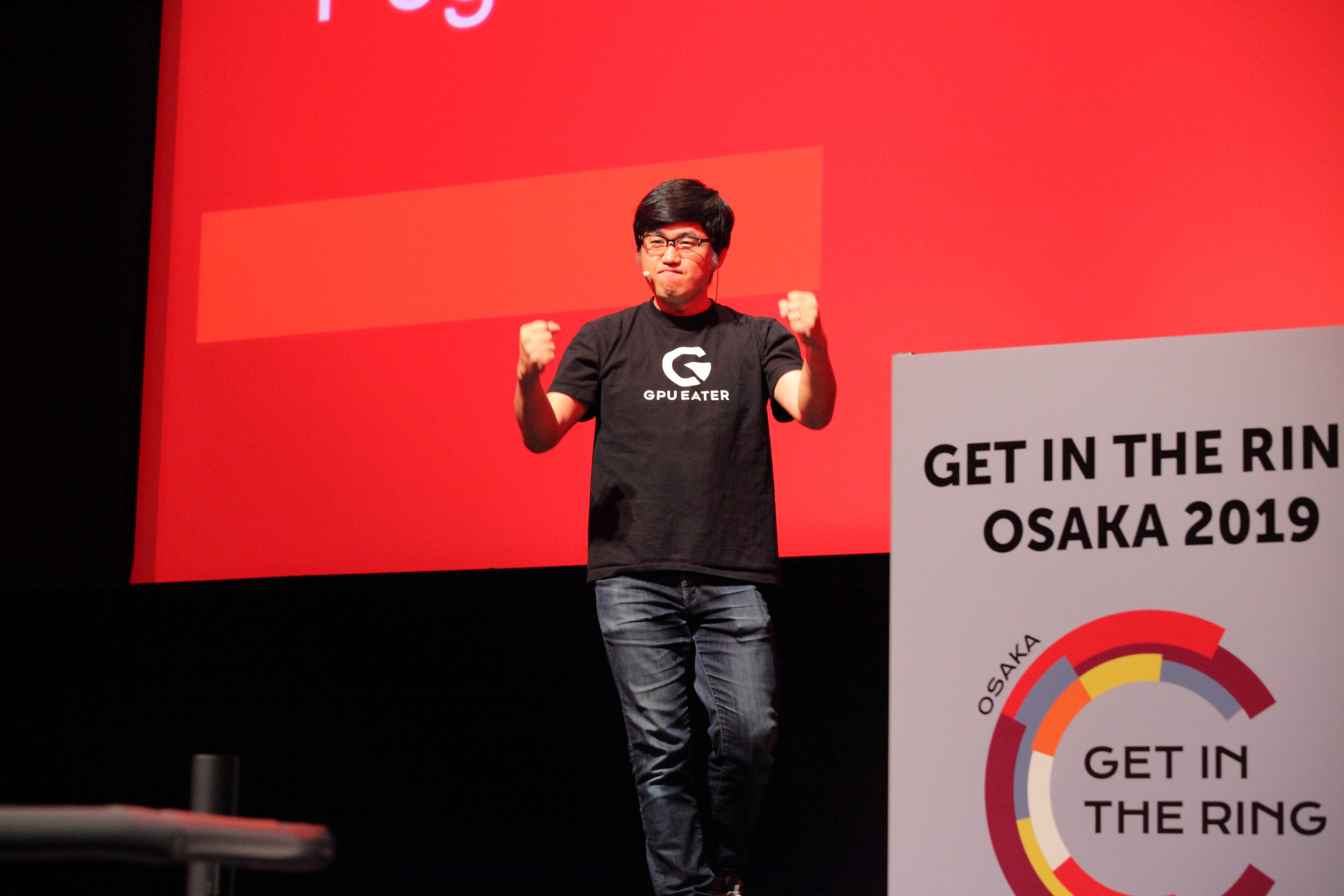
In February 2019, Ichihara presented at “GET IN THE RING OSAKA 2019,” organized by Osaka Innovation Hub, with great results, and in September of that year the company raised 1.04 million US dollars in a seed round. It then steadily solidified the company, hiring excellent engineers from around the world.
Now, with businesses around the world forced to stall by COVID-19, the company’s business has reached a critical moment. On the other hand, there are aspects that work in its favor: the push for working from home has boosted the use of the cloud, and in terms of social distancing, introducing AI is useful from the standpoint of BCP (business continuity planning).
In these tough times of living with COVID-19 and the new standard, expectations are only growing for Pegara Japan’s AI services, starting with GPU EATER, which also contribute to people’s lives in fields such as industry, marketing, and learning. It is not all hardship.
“Since 2019, we have narrowed our target to Japan and have been expanding our business here. Our aim is to commoditize AI in line with our mission, ‘The benefits of artificial intelligence, for everyone.’
Looking ahead, we are working to further expand sales of GPU EATER and evolve it, and have also started developing AI software. The social changes brought by COVID-19, which will continue, are sure to have a big impact on people’s lives.
But there are many ways AI can help people’s lives amid them. That is exactly why we want to work on creating a world where anyone can use AI more easily.”
In Ichihara’s last words, we could feel a passionate sense of mission: “I want to support the people of the world with AI.”
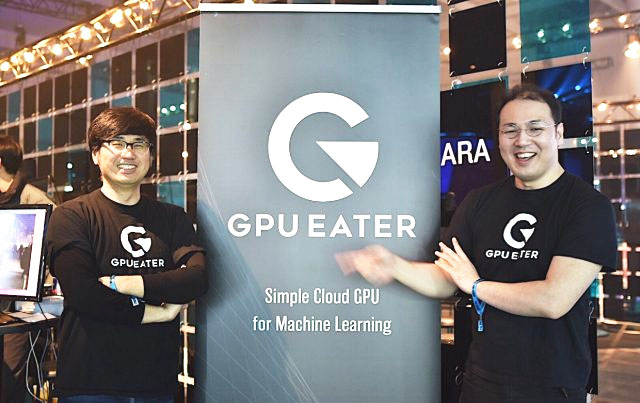
Interview date: June 22, 2020
(Interview and text: Mitsuko Yamashita)